

 Emily Walker
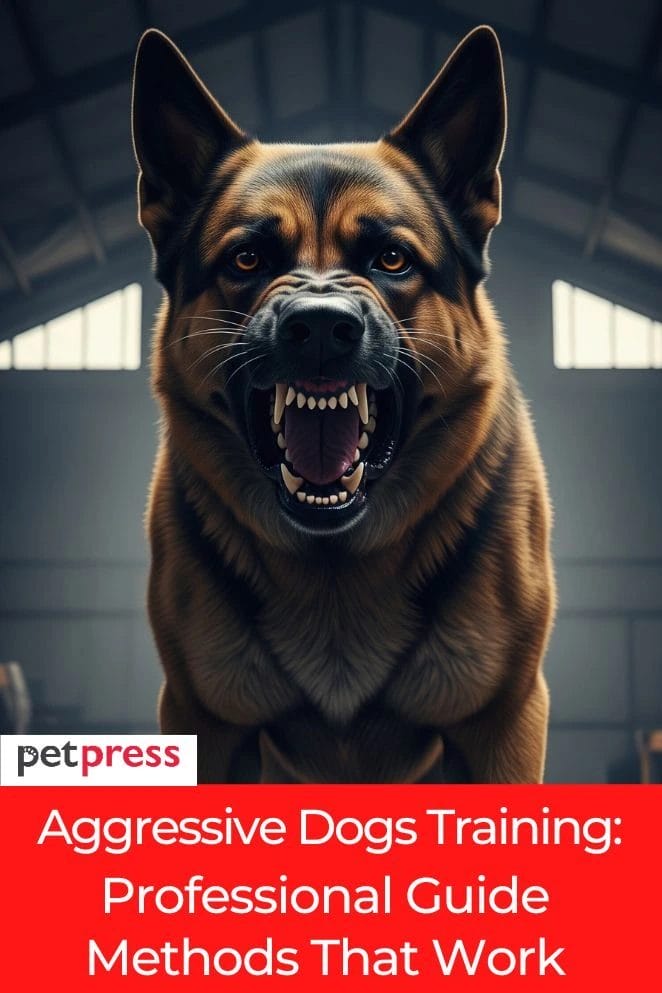
Dog aggression isn’t just scary—it’s common. Over 4.5 million people get bitten each year.
If your rescue pup’s got baggage or your loyal buddy’s acting out, you need real training—not just crossed fingers.
This guide breaks down the “why” behind the growls and gives you pro-backed tips to calm the chaos and build trust (without turning into the Dog Whisperer overnight).
Understanding Canine Aggression
Before you jump into training, pause. Aggression isn’t random.
Dogs don’t just snap because it’s a full moon or Mercury’s in retrograde.
Something’s always behind it—pain, fear, bad pasts, or even just poor communication.
Let’s break down what might really be going on.
What Causes Dog Aggression?
1. Fear-Based Aggression
This is the “back off or I’ll bite” kind. A lot of rescues have this.
If a dog had a rough past or didn’t meet many people growing up, they might panic when they feel cornered.
They’re not trying to be mean—they’re scared.
2. Territorial Aggression
Some dogs are obsessed with guarding their turf.
Think of them like overprotective bouncers—your couch, your yard, even your bedroom becomes a no-go zone for anyone they didn’t invite.
3. Resource Guarding
This is the “my toy, my rules” behavior. Dogs will snap if you get too close to their food bowl, chew toy, or anything they see as treasure.
It’s basically doggy capitalism—what’s mine is mine.
4. Dominance Stuff
Old-school dog trainers used to think this was the main problem.
Spoiler: it’s not always about being alpha. But yes, sometimes dogs want control and push back when they don’t get it.
Especially if they think you’re being a pushover.
5. Medical Causes
Pain can make anyone cranky. Dogs are no different.
A sudden growl or bite might be their way of saying “something hurts.”
Always rule out health issues first—especially if this is new behavior.
Early Signs to Watch Out For
Dogs don’t just bite out of the blue. They drop hints. Learn their signals and you can stop problems before they start.
Look for this body language:
- Tail held high and stiff
- Ears pinned back
- Tense, statue-like posture
- Hard stare (like a creepy doll)
- Lips curling up
- Deep growling
- Raised fur on the back
- Heavy panting when they’re not hot or tired
When you see any combo of these, don’t try to play the hero.
Give them space and reassess. Spotting these signs early helps you train smarter—and keeps everyone safe.
The Science Behind Positive Reinforcement Training
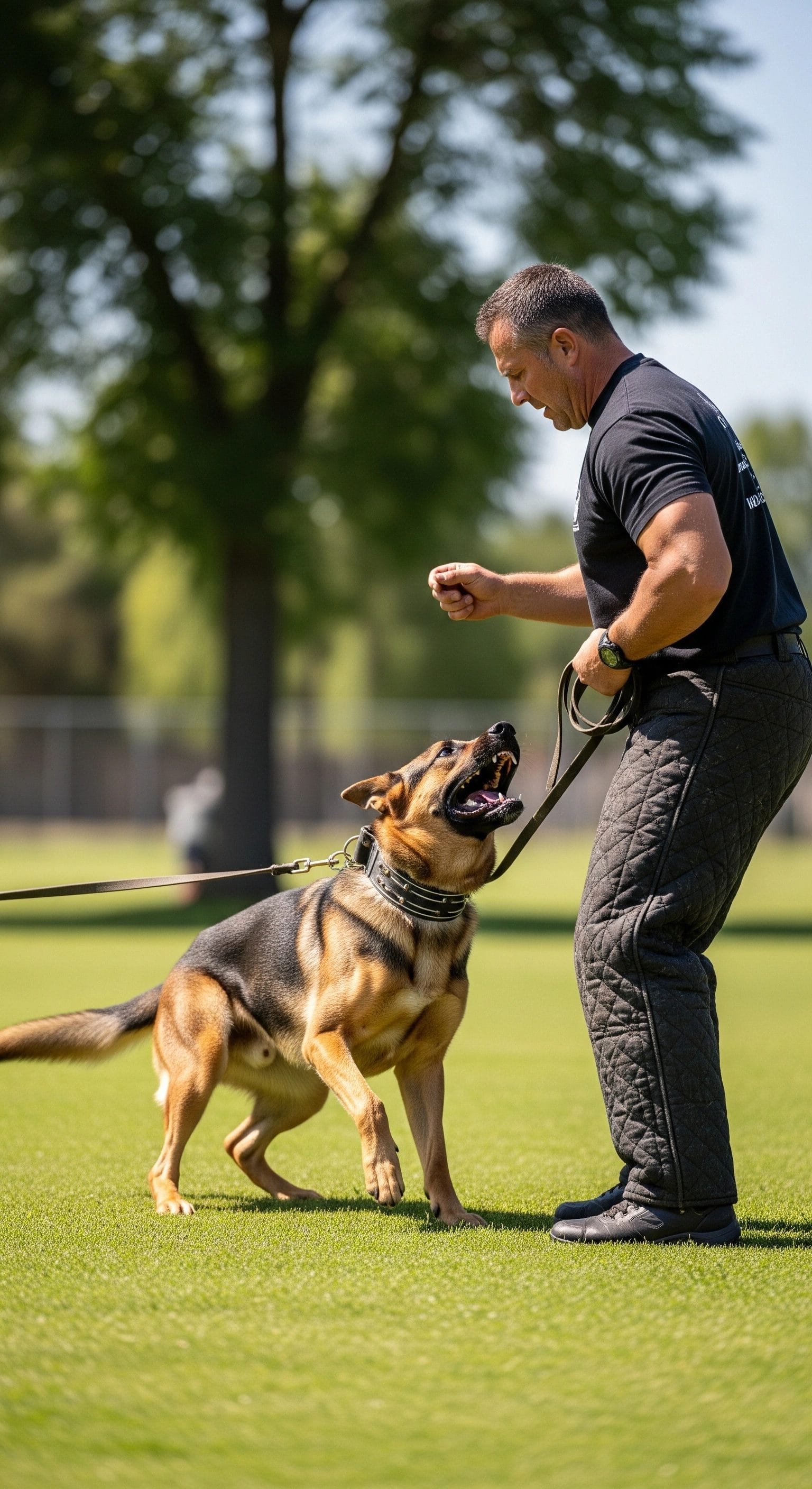
Most good dog trainers have ditched the old-school “show them who’s boss” mindset.
Instead, they’re using positive reinforcement—aka rewarding good behavior with treats, toys, or a “good boy!” to teach dogs what to do, not just what not to do.
This isn’t just feel-good stuff. It works—especially with aggressive dogs.
Why This Method Wins
1. It Builds Trust
Punishment freaks dogs out. It can make fear worse.
But when you reward good behavior, dogs actually want to work with you. They see you as safe, not scary. Big win.
2. It Gets to the Root
Punishment shuts behavior down (maybe). It doesn’t fix the why.
Positive training helps dogs feel less anxious and more in control.
You’re teaching them better choices, not just saying “no.”
3. It Actually Lasts
Bribes? Nope. It’s brain science. Dogs remember what works.
If sitting calmly gets a treat instead of barking getting ignored, guess what they’ll do next time?
4. It’s Safer for Everyone
Trying to “dominate” an aggressive dog can backfire fast.
Positive methods help keep emotions (and teeth) under control during training.
Professional Training Techniques for Aggressive Dogs
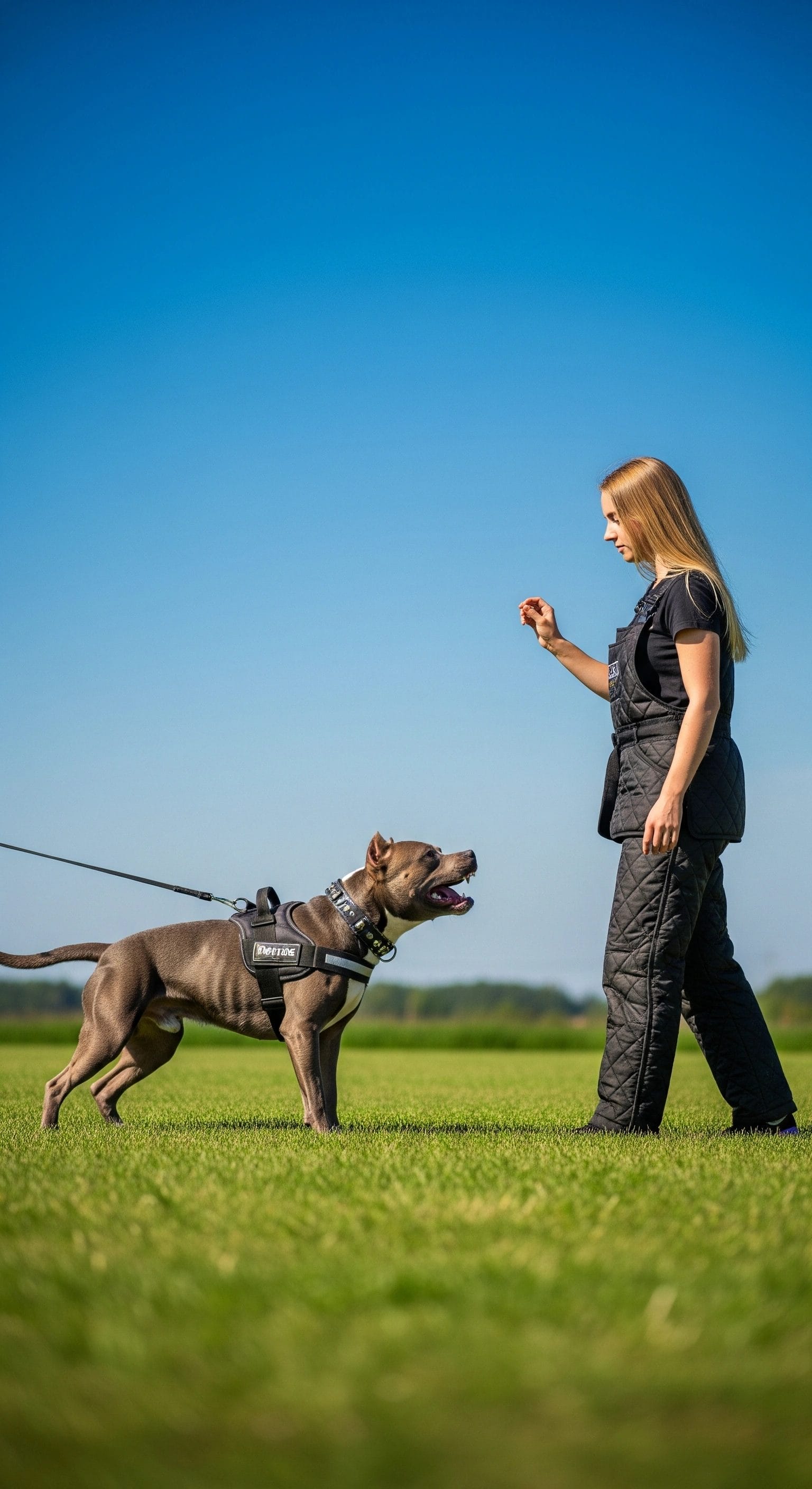
Dealing with aggression isn’t about yelling louder or being “alpha.” It’s about smart strategy.
Let’s get into four pro-level techniques that help dogs chill out and make better choices—without wrecking your relationship with them.
1. Manage the Environment
Before you fix behavior, you gotta control the setup.
Management isn’t “training”—it’s making sure your dog isn’t set up to fail while you do train.
Here’s what that looks like:
- Safe zones: Give your dog a quiet spot (crate, corner, room) to escape to when they’re stressed. No one bugs them there. Not even your clingy cousin.
- Control the triggers: Know what sets your dog off? Limit those things for now. Avoid that one dog park. Mute the doorbell. Skip chaotic walks until you’ve got a plan.
- Use barriers: Baby gates, crates, short leashes—they’re not forever, but they stop surprise attacks while you work on long-term stuff.
- Stick to a schedule: Dogs love routines. Feed, walk, rest—same time, every day. Predictability lowers stress.
2. Counter-Conditioning + Desensitization
Sounds fancy, but it’s just slowly helping your dog not freak out at stuff.
You teach their brain, “This thing isn’t scary. It actually means snacks.”
How to do it:
- Step 1 – Find triggers: Write down what sets your dog off. People? Bikes? Loud claps? Be specific.
- Step 2 – Test the threshold: Watch from a distance. When does your dog notice the trigger but doesn’t flip out yet? That’s your starting point.
- Step 3 – Add the good stuff: Right when the trigger appears at a safe distance, give treats. Not kibble—something juicy. Cheese. Hot dogs. Chicken.
- Step 4 – Level up slowly: Move a little closer over time. Always stop before they go full Cujo. You’re building new reactions, not triggering old ones.
3. Teach a New Job (aka Alternative Behaviors)
Dogs don’t just “stop” aggression—they replace it with something else. So give them a better option.
Try these:
- “Look at me” command: Teach your dog to make eye contact on cue. This breaks their focus when things get tense. Super useful on walks.
- Relaxation cues: “Place” or “settle” means “go chill over there.” Use it when guests visit or something sketchy happens.
- Emergency recall: This is your “Come back NOW” command. Practice it like a game so they learn to bolt to you when called.
- Reward calm: Catch them being chill. Reinforce the boring stuff like lying down, being quiet, and ignoring drama.
4. Redirect and Reset
When things are starting to go south—growling, staring, tension—you need a soft reset.
This method breaks the moment without freaking your dog out.
How to do it:
- Make a gentle noise or say a short cue like “uh-oh” or “hey.”
- As soon as they pause, give them a new task: “Sit,” “touch,” or toss a toy.
- Reward them hard for switching gears.
- Over time, your dog will learn to self-reset without needing a cue.
Creating a Safe Training Environment
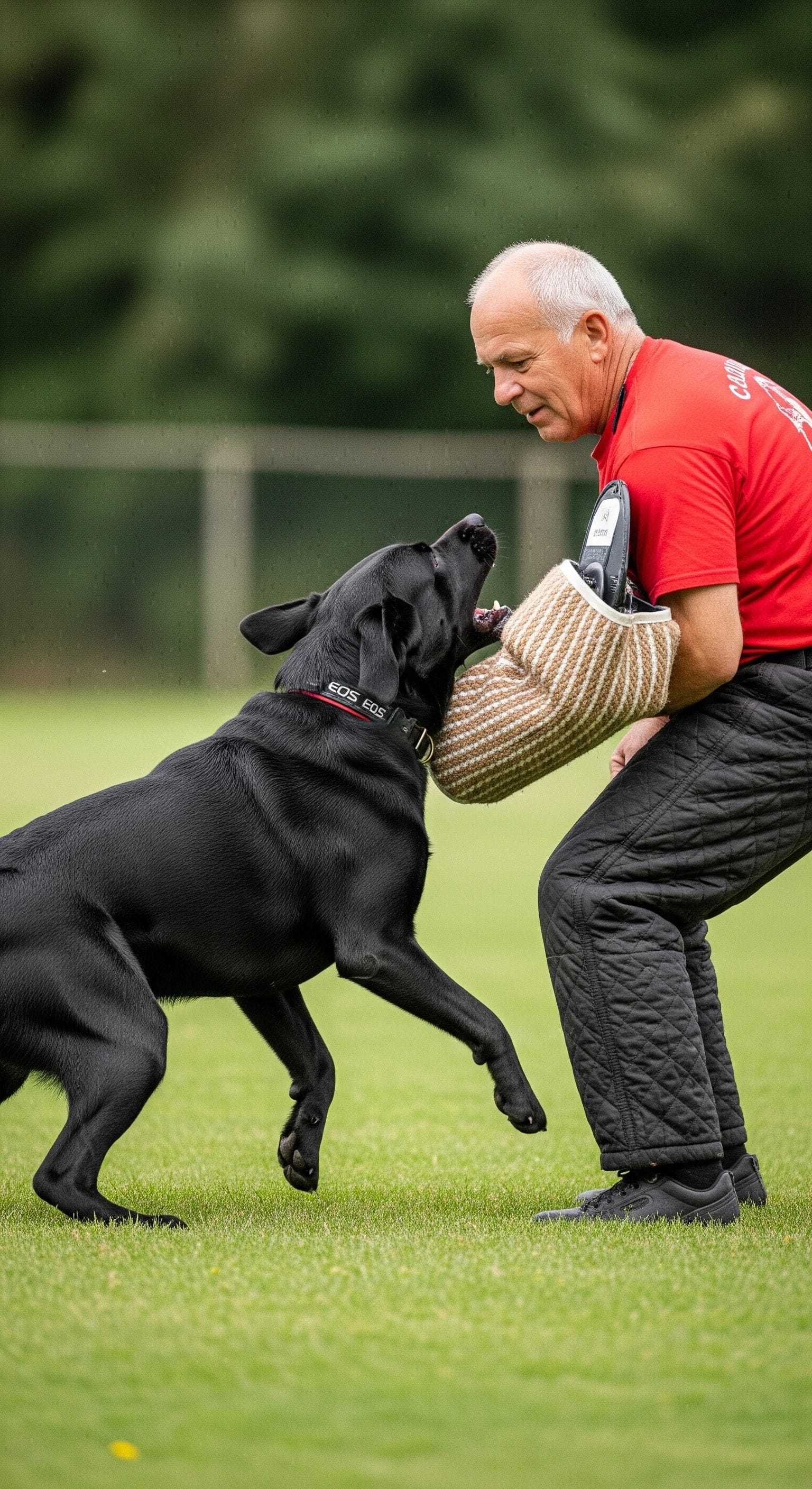
Training an aggressive dog isn’t something you just “wing.”
You need the right setup so things stay calm, safe, and productive—for you, your dog, and everyone nearby.
Step One: Make It Physically Safe
Use the right gear.
Skip the old-school punish-y stuff like shock collars and prongs.
Those can make things worse. Use a strong harness, a reliable flat collar, and a leash you trust not to snap.
Bonus: hands-free leashes work great for indoor drills.
Pick your spot wisely.
Start training in a chill space. Think: your living room or backyard, not a loud park with ten barking dogs and a guy mowing the lawn.
Your dog should feel safe, not distracted or on edge.
Have a safety plan.
Things can go sideways fast. Know how to exit if your dog reacts badly—like walking behind a barrier, tossing a distraction treat, or separating dogs calmly if needed.
Keep that backup plan in your mental pocket at all times.
Step Two: Know When to Call in the Pros
Aggression isn’t a DIY YouTube project if things get dangerous.
Some dogs need expert-level help—and that’s totally okay.
Get professional help if:
- Your dog has bitten or nearly bitten someone (even a warning nip counts)
- Aggression keeps showing up in new situations
- You’ve tried training and nothing sticks
- Your family feels scared around the dog
- The dog’s reactions feel totally random or out of nowhere
Look for trainers with real credentials—not just people who “love dogs.” Go for:
- CPDT-KA (Certified Professional Dog Trainer – Knowledge Assessed)
- CDBC (Certified Dog Behavior Consultant)
These folks know how to deal with serious cases without using fear or force. Think of them as behavior therapists—for dogs with teeth.
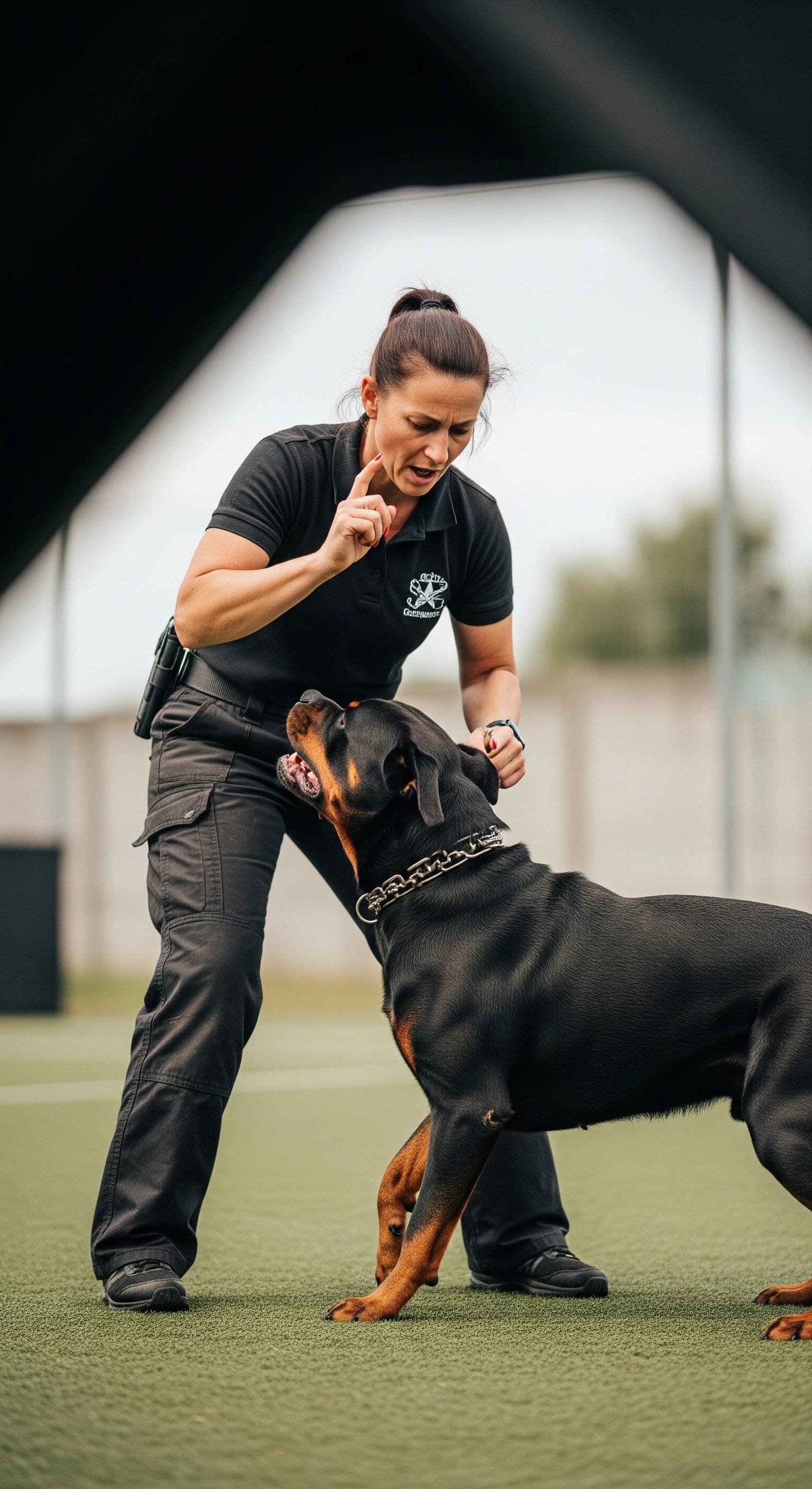
Common Mistakes to Avoid
Training a reactive or aggressive dog is hard enough. Don’t make it harder by falling into these common traps:
1. Using Punishment
Old-school “alpha” stuff—like yelling, yanking the leash, or flipping your dog on their back—doesn’t fix aggression. It just makes dogs scared or defensive.
That fear can turn into bigger problems, fast.
2. Going Too Hard, Too Fast (a.k.a. Flooding)
Imagine being scared of spiders and someone dumps a bucket of them in your lap “to get over it.” That’s flooding.
Exposing your dog to too much of a trigger at once only freaks them out more. It doesn’t build confidence—it blows it up.
Work at their pace, not yours.
3. Inconsistent Training
If you only train “when you have time” or change the rules every other day, your dog will stay confused—and stuck. Dogs love patterns.
They learn faster with short, regular sessions and clear expectations.
Pro tip: Even 5–10 minutes a day beats one big session a week.
4. Ignoring the Signals
Dogs always tell you how they feel. Staring hard? Tense body? Lip lick? That’s their version of “Hey, I’m not okay.”
If you miss those signs and push anyway, you risk a meltdown.
Watch their body language like it’s subtitles in a foreign film. It tells you everything.
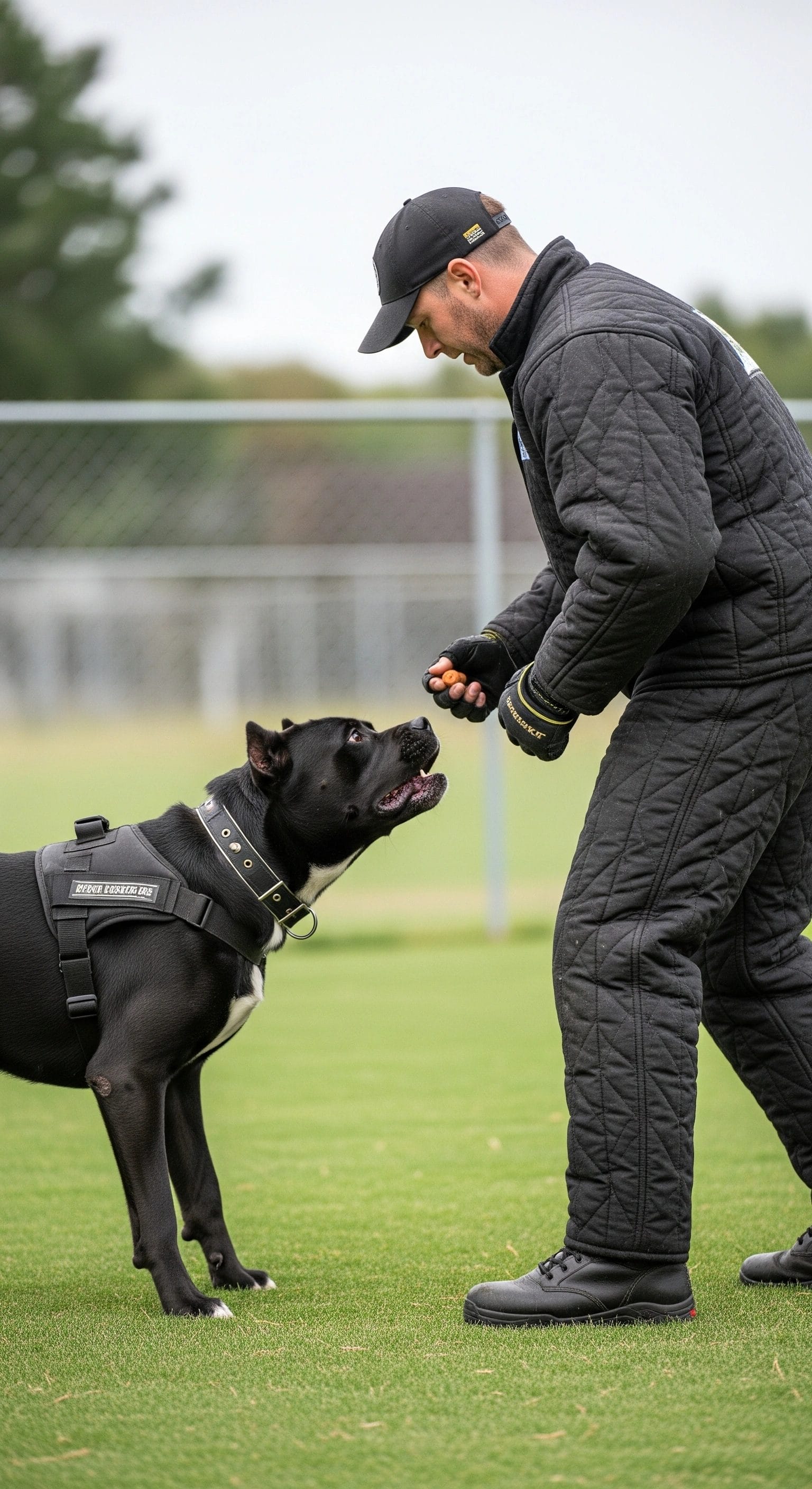
When to Seek Immediate Professional Help
Some dog problems are too big to handle alone. If things feel serious or unsafe, it’s time to call in the experts.
Don’t wait and hope it gets better—it usually doesn’t.
Call a certified trainer or vet behaviorist right away if:
- Your dog bit someone or tried to more than once
- The aggression keeps getting worse or happens more often
- People in your home say they don’t feel safe
- Your dog’s behavior feels random or out of the blue
- You tried training before and it made things worse
This isn’t about being a bad dog owner. It’s about knowing when to tag in a pro.
Certified trainers (like CPDT-KA or CDBC) or vet behaviorists can help before things spiral.
Moving Forward: What to Expect
Training an aggressive dog takes time, patience, and consistency.
Setbacks happen, and not every dog becomes totally chill—but most can improve a lot with the right plan.
Stick to positive methods, know your dog’s triggers, and don’t rush it.
Some dogs might always need management, and that’s okay.
The goal isn’t perfection—it’s progress. And with the right approach, your dog can live a safer, calmer life. You’ve got this—and so does your dog.

- Does Cat Litter Melt Ice? The Complete Guide to Winter Safety - January 30, 2026
- Happy Tail Dogs: Understanding This Common Canine Condition - January 29, 2026
- How Cold Can Outdoor Cats Handle? Feline Winter Safety - January 27, 2026
GIPHY App Key not set. Please check settings