

 Lauryn Dell
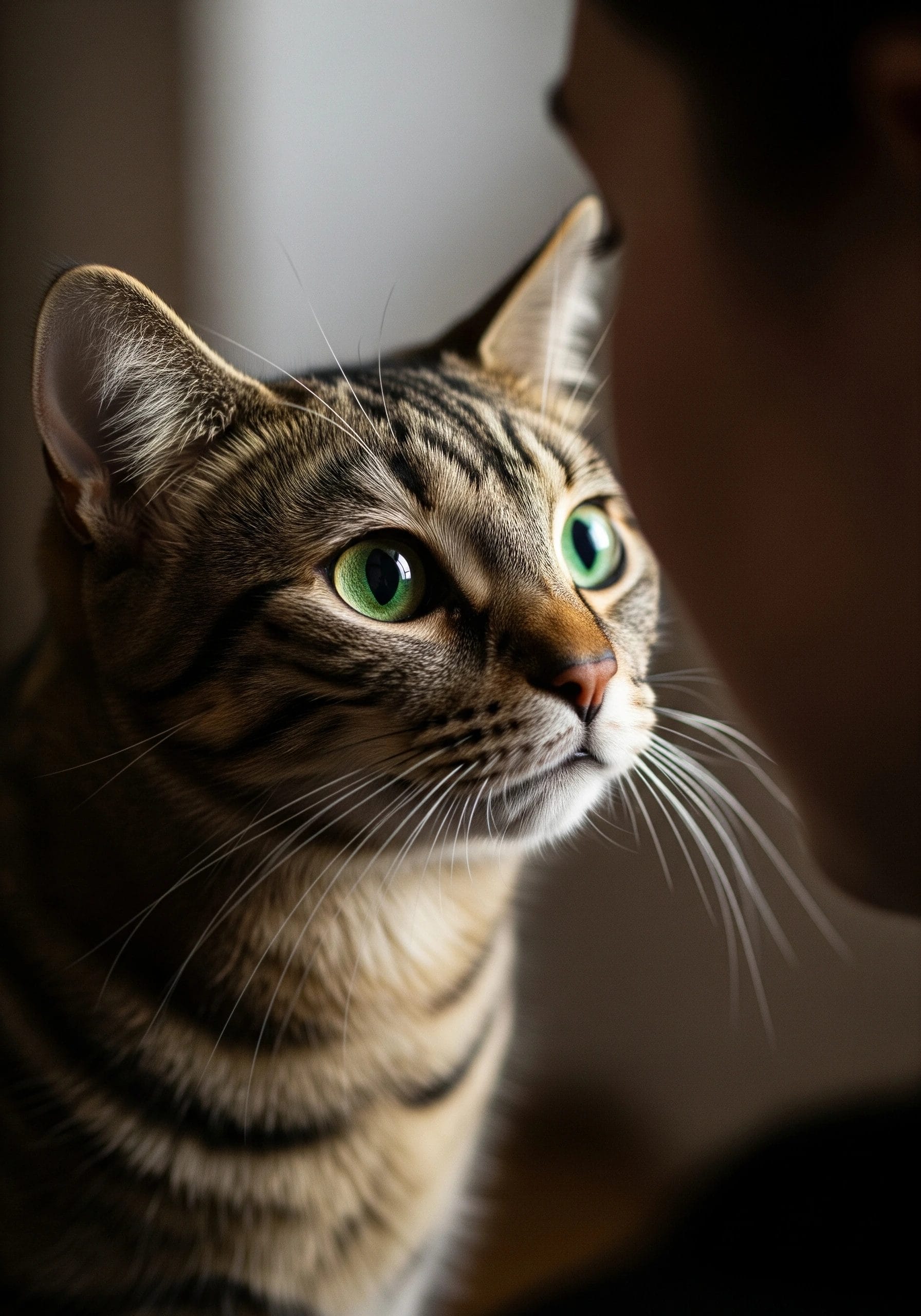
Cats have a mysterious way of showing affection. They might ignore you all day, then curl up on your lap the moment you settle down. But does your cat truly recognize you, your face, your expressions, your identity? Or are they just responding to your scent, voice, or routine?
In this blog post, we explore the science behind feline facial recognition, the subtle ways cats interact with their humans, and what studies have discovered about how cats identify their owners.
You’ll also learn how to strengthen your bond with your cat and decode their often-misunderstood behavior.
Do Cats Have Good Vision?
To understand whether cats can recognize your face, we need to start with how well they see.
Cats have excellent night vision, which evolved to help them hunt in low light. However, their color vision and fine detail detection are not as strong as in humans.
While cats can detect some colors, their visual acuity is about 20/100 to 20/200. This means a cat sees at 20 feet what a human with normal vision sees at 100 to 200 feet.
So, while they might not see your face in high resolution, they can certainly see your outline, movements, and key facial features.

How Do Cats Recognize Their Owners?
Cats don’t rely solely on vision to identify people. In fact, they use a combination of senses, including:
- Smell: Cats have 200 million scent receptors in their noses (compared to humans’ 5 million). They often recognize people and animals more by scent than by appearance.
- Voice: A 2013 study published in Animal Cognition found that cats can distinguish their owner’s voice from a stranger’s. Even if they don’t respond, obviously, they know it’s you.
- Routine and Habits: Cats are creatures of habit. They recognize behaviors like how you walk, how you open the door, or how you prepare their food.
But can they recognize your face specifically?
What Science Says About Facial Recognition in Cats?
The Research
A study conducted by researchers from the University of Tokyo tested whether cats could recognize human faces. In one part of the study, cats were shown pictures of their owners and strangers on a screen.
The cats did not consistently choose their owners’ faces over unfamiliar ones. However, when combined with vocal cues, their ability to recognize their humans improved.
Another study published in Animal Cognition (2021) investigated whether cats could match their owner’s face to their voice. The researchers found that many cats could correctly identify their owners when shown a picture that matched a familiar voice.
This suggests that multimodal recognition (combining different senses) plays a key role.
Interpretation
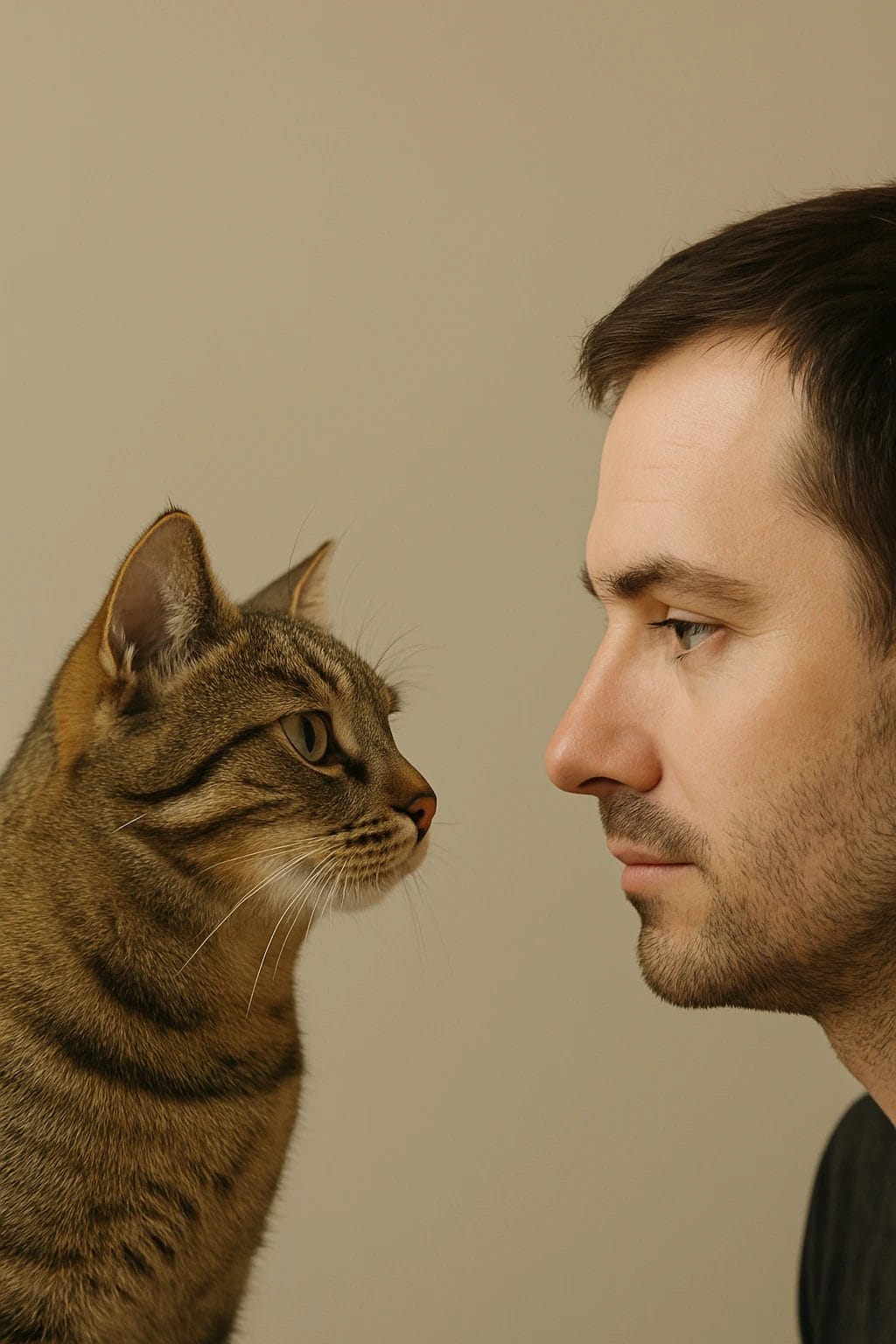
The conclusion is nuanced: Cats can recognize their owners’ faces, but they are better at doing so when other familiar cues like voice or smell are also present. Unlike dogs, which have been bred to read human expressions and faces more directly, cats may not rely on facial features as their primary identification method.
Do Cats Care About Human Faces?
Whether your cat recognizes your face and whether they care are two different things.
While cats may not focus on your face as much as a dog might, it doesn’t mean they’re indifferent. Studies suggest cats form strong attachments to their owners and can experience stress when separated. They may not express it through tail-wagging or jumping, but they might follow you, rub against you, or choose to nap near you, all signs they know and trust you.
Also, just because cats don’t always show overt affection doesn’t mean they don’t notice changes. Many cat owners report their feline friends acting differently when they’re sad, sick, or stressed.
Can Cats Recognize Emotions?
While cats might not “read” faces the way humans or dogs do, they are surprisingly sensitive to emotional cues.
A 2015 study published in Animal Cognition found that cats can differentiate between human facial expressions, especially smiles vs. frowns. Cats tended to respond more positively, like purring or rubbing, when humans smiled.
Cats also pick up on tone of voice and body language. If you’re stressed or angry, your cat is likely to become more cautious. On the flip side, a relaxed voice and gentle movements can comfort them.
Strengthening the Human-Cat Bond
If you want your cat to recognize you more easily—and strengthen your bond—here are some tips:
1. Speak to Your Cat Regularly
Use a consistent tone. Cats can recognize familiar voices and associate them with safety and comfort.
2. Spend Quality Time
Daily play, brushing, or just sitting together strengthens recognition and trust.
3. Maintain Routine
Cats thrive on routine. Feeding, playtime, and even your return home at a regular time build familiarity.
4. Use Scent
Leave a piece of worn clothing near your cat when you’re away. It helps reinforce your scent and presence.
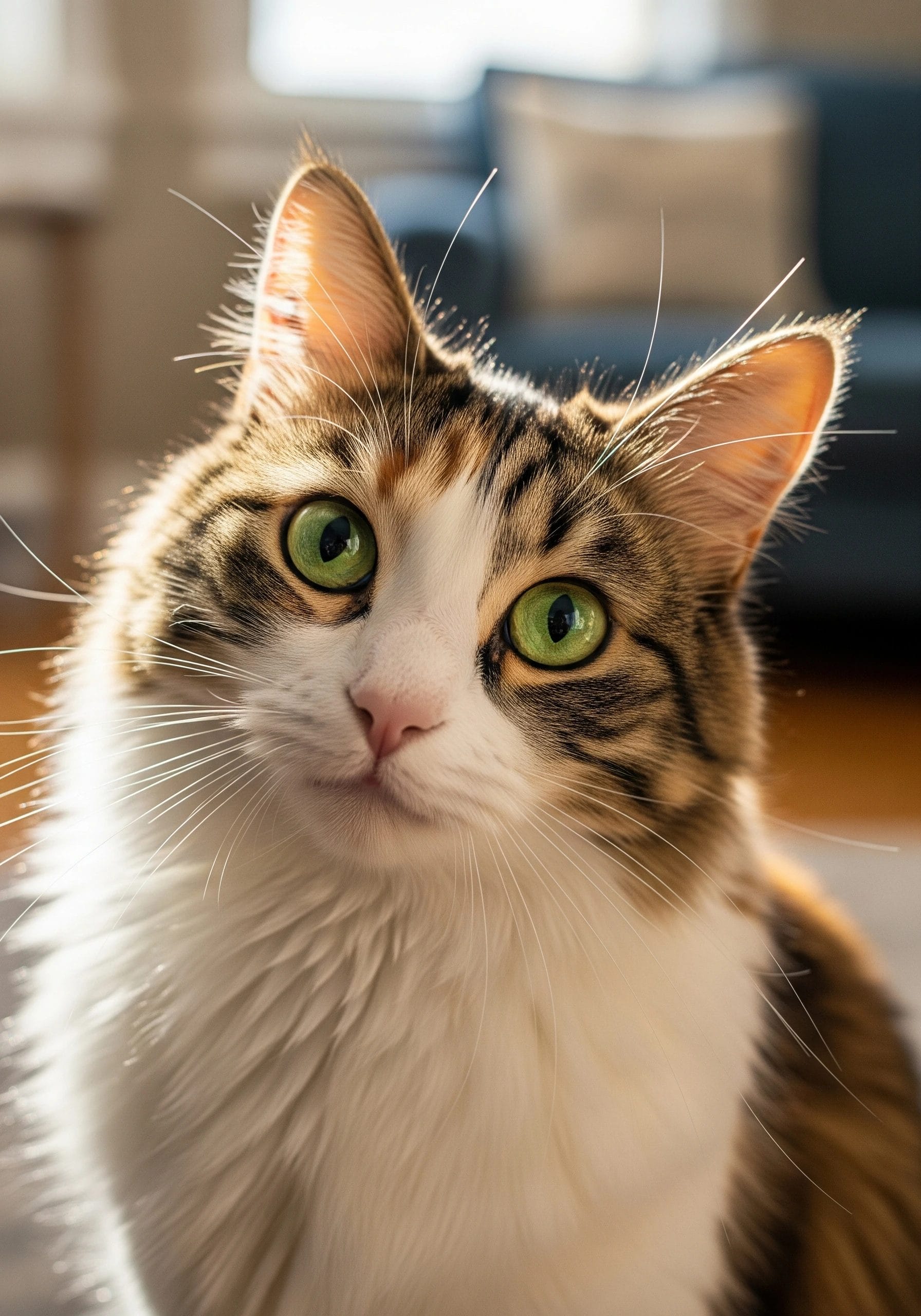
5. Make Eye Contact with a Slow Blink
Known as the “cat kiss,” slow blinking at your cat is a sign of trust. If your cat returns the gesture, they recognize and trust you.
Conclusion
So, can your cat recognize your face? The answer is a cautious yes, with some qualifiers.
Cats are not as visually focused on faces as humans or dogs. Instead, they rely on a combination of scent, voice, behavior, and routine. Scientific research confirms that cats can match faces to voices and even respond differently to human facial expressions.
While your cat may not gaze lovingly into your eyes, they do know who you are and they care in their own subtle, feline way.
Understanding the unique ways your cat sees the world helps you connect more deeply and build a meaningful relationship based on trust, familiarity, and love.
FAQs Related To Can Your Cat Recognize Your Face
Cats can recognize faces to some degree, but they’re more accurate when voice, scent, or routine behaviors are included. Facial recognition alone isn’t their strongest skill.
No, most cats do not recognize themselves in mirrors. They lack self-recognition and often treat their reflection as another cat or ignore it entirely.
Cats can recognize your voice but may choose not to respond. It’s not a lack of recognition but rather a difference in behavior compared to dogs.
Yes, many cats experience stress or behavioral changes when their owners are away. They may eat less, become more vocal, or act withdrawn.
You can strengthen facial recognition by pairing your face with positive experiences—gentle talk, treats, and affection. Over time, your cat may become more responsive to your facial presence.

- 15 Meaningful Dog Memorial Tattoo Ideas & Costs - March 20, 2026
- Best Horse Hoof Supplement Reviews for Beginners (2026) - March 19, 2026
- Pet Rat Hammock Setup Guide: Best Layouts & Prices - March 19, 2026
GIPHY App Key not set. Please check settings