

 Lauryn Dell

For decades, scientists and pet owners alike have debated whether animals show a preference for one side of their body, much like humans do with handedness.
This phenomenon, known as laterality, has been observed across multiple species, from primates to birds. But what about our most beloved companions, dogs and cats?
Can Dogs and Cats Be Right- or Left-Pawed, and does this tell us something about their personality?
Recent studies suggest that paw preference is not only real in pets, but it could also provide surprising insights into their emotional tendencies, behavior, and even stress levels.
This article unpacks the science of pet laterality, what it means for your furry friend, and how you can spot the signs at home.
Understanding Laterality in Animals
Laterality refers to the tendency of an animal to favor one side of its body over the other for certain tasks. Right- or left-handedness is the most common manifestation of this in humans.
In animals, the same concept applies, except we measure it in terms of paw, limb, or even eye preference.
For dogs and cats, paw preference is observed in tasks such as:
- Reaching for treats
- Stepping forward when walking or climbing stairs
- Holding toys or objects
- Grooming themselves
Scientists measure laterality using repeatable tests, such as the Kong Test for dogs (watching which paw they use to stabilize a treat-filled toy) or the First Step Test (recording which paw steps forward first).

What Research Says About Paw Preference in Pets?
Studies from universities such as Queen’s University Belfast have shown that both dogs and cats can exhibit clear paw preferences, but these vary between individuals. Interestingly, research indicates that:
- Dogs: Males tend to favor their left paw more often, while females are more likely to be right-pawed.
- Cats: Female cats often prefer their right paw, while males lean towards the left.
These patterns aren’t absolute, some pets are “ambilateral” or show no strong paw preference. However, the fact that there’s a consistent sex-related trend hints at hormonal or neurological influences.
Paw Preference and Pet Personality: Is There a Connection?
Beyond curiosity, paw preference might reveal deeper insights into your pet’s personality and stress resilience. Research in animal behavior suggests:
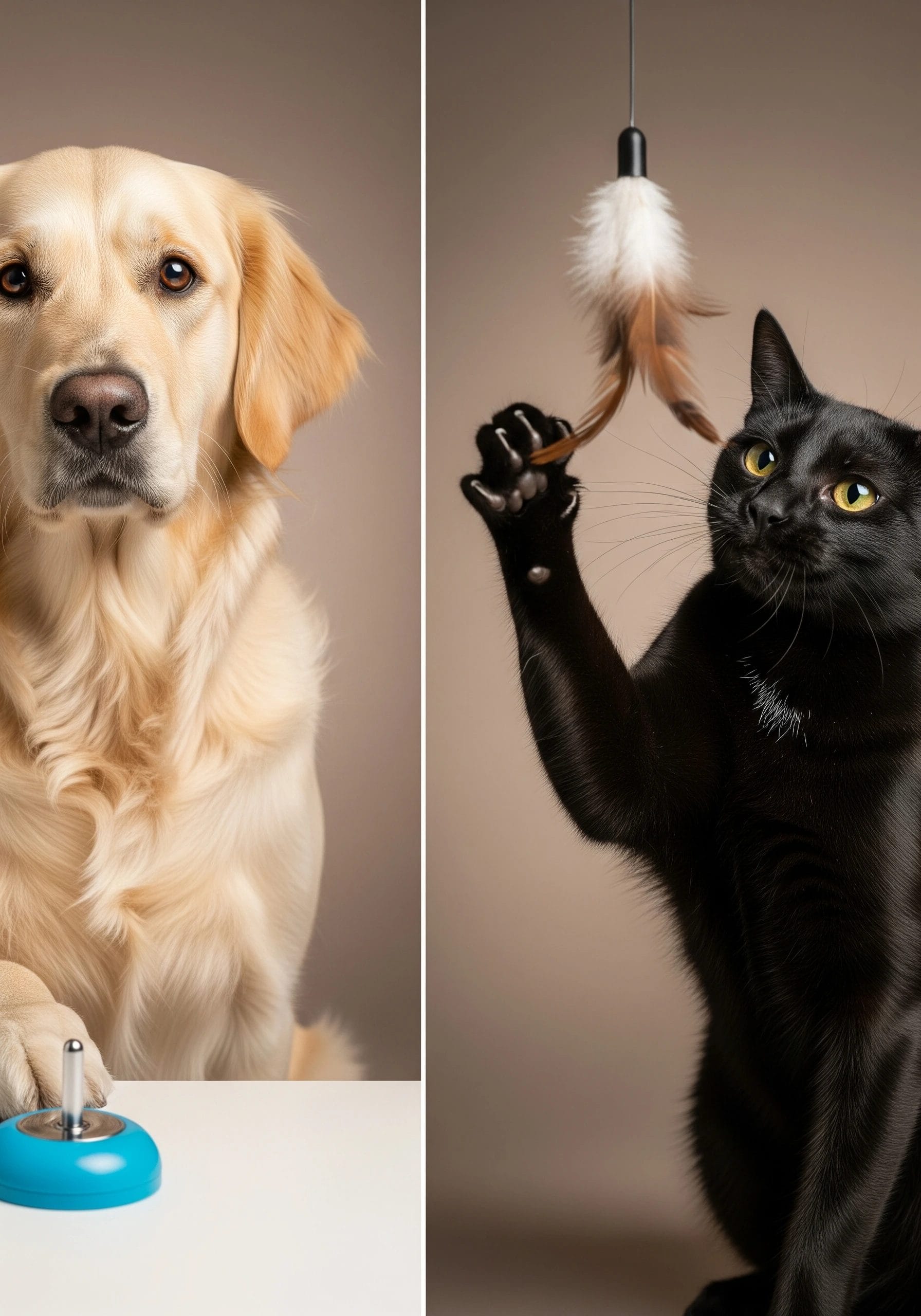
- Right-pawed pets: May have a calmer temperament, better adaptability, and lower stress reactivity.
- Left-pawed pets: Might be more reactive to unfamiliar stimuli and more prone to anxiety-like responses.
- Ambilateral pets: Can be more unpredictable in behavior, showing flexible adaptability but also potential for inconsistent responses.
The link between laterality and personality likely stems from brain hemisphere specialization. In mammals, the left hemisphere controls the right side of the body and is associated with routine, positive social interactions, and stable behavior.
The right hemisphere, which controls the left side, is more involved in processing new, potentially threatening situations.
Why Laterality Matters for Pet Owners
Understanding your pet’s paw preference can help you:
- Tailor Training Methods
A left-pawed dog that’s more sensitive to new environments may require slower, positive reinforcement-based training to prevent stress.
- Enhance Enrichment Activities
Knowing your cat’s dominant paw can guide you in setting up puzzle feeders or play sessions that match their comfort zone.
- Improve Vet Visits
Pets that are more reactive might need gradual exposure to vet clinics or calming aids before check-ups.
- Spot Early Stress Signs
If a pet consistently uses its left paw and shows anxiety in novel situations, owners can take proactive steps to build their confidence.
How to Test Your Pet’s Paw Preference at Home?
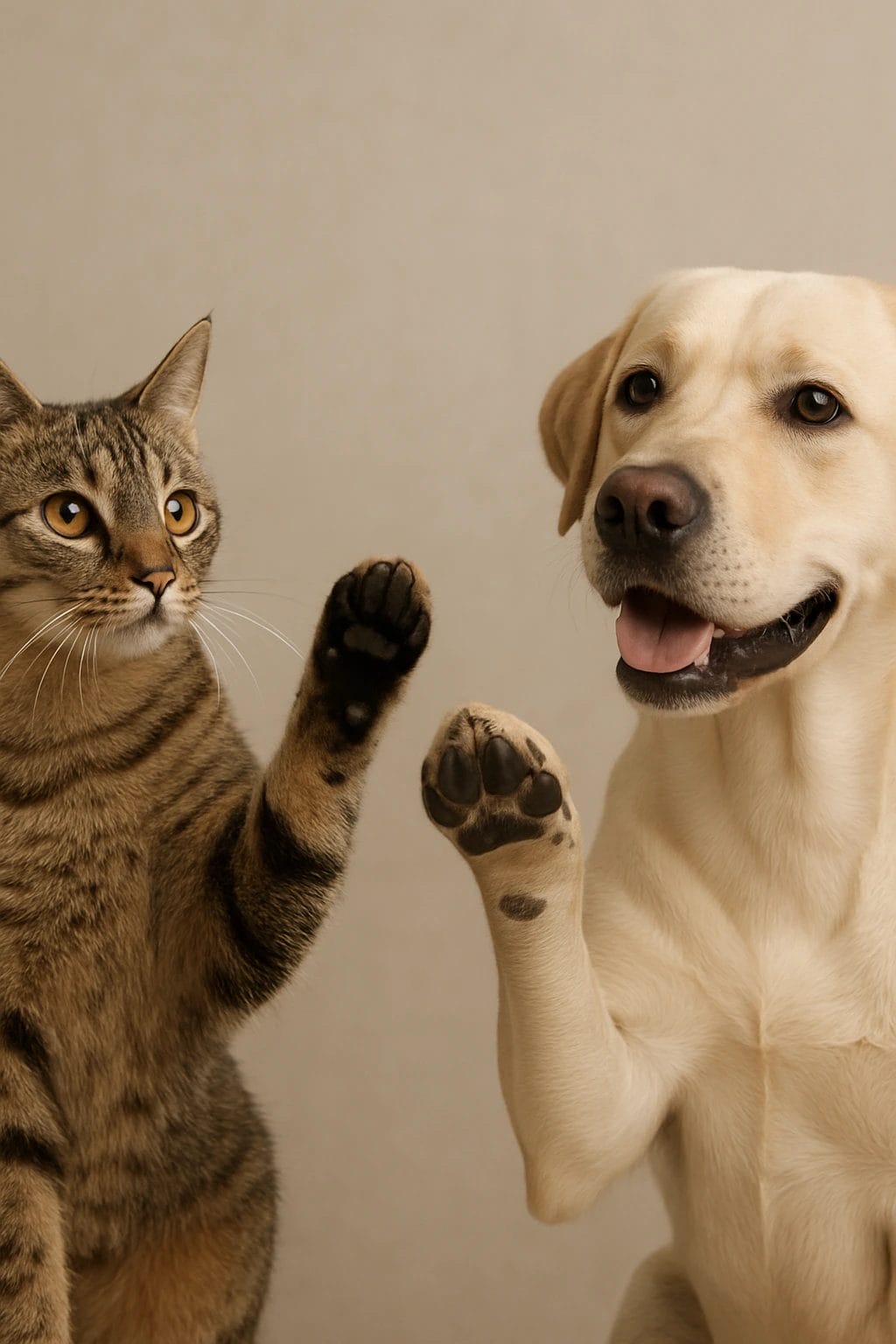
You can try simple, observation-based tests at home to determine your dog’s or cat’s dominant paw. It’s important to repeat tests multiple times to ensure results aren’t just random.
Test Ideas
- Treat Grab Test – Place a treat just out of reach and see which paw they use first to get it. Repeat at least 20 times and record results.
- First Step Test – Watch which paw your pet uses first when getting up from a lying position or stepping onto stairs.
- Toy Hold Test – Give your dog a chew toy or your cat a soft ball and observe which paw they use to hold it steady.
Tip: Keep testing sessions short and fun so your pet stays engaged.
Factors That Influence Paw Preference
While genetics and brain lateralization play a role, other factors can influence which paw your pet favors:
- Age: Older pets may shift paw preference due to arthritis or injury.
- Training History: Pets trained for agility or tricks may develop stronger muscle memory in one paw.
- Health Issues: Limping or joint discomfort can temporarily affect paw use.
It’s essential to consider these factors before drawing firm conclusions about your pet’s personality based on paw preference alone.
What Scientists Are Still Discovering?
Laterality research in domestic animals is still in its early stages. Questions scientists are exploring include:
- Can paw preference predict a pet’s suitability for service or therapy work?
- Does paw dominance change over a pet’s lifetime?
- Is there a genetic marker for laterality in cats and dogs?
- Can laterality assessments improve animal welfare in shelters by matching pets with compatible owners?
The growing body of research points to exciting potential applications, from better training to improved animal welfare policies.
Conclusion: Can Dogs and Cats Be Right- or Left-Pawed?
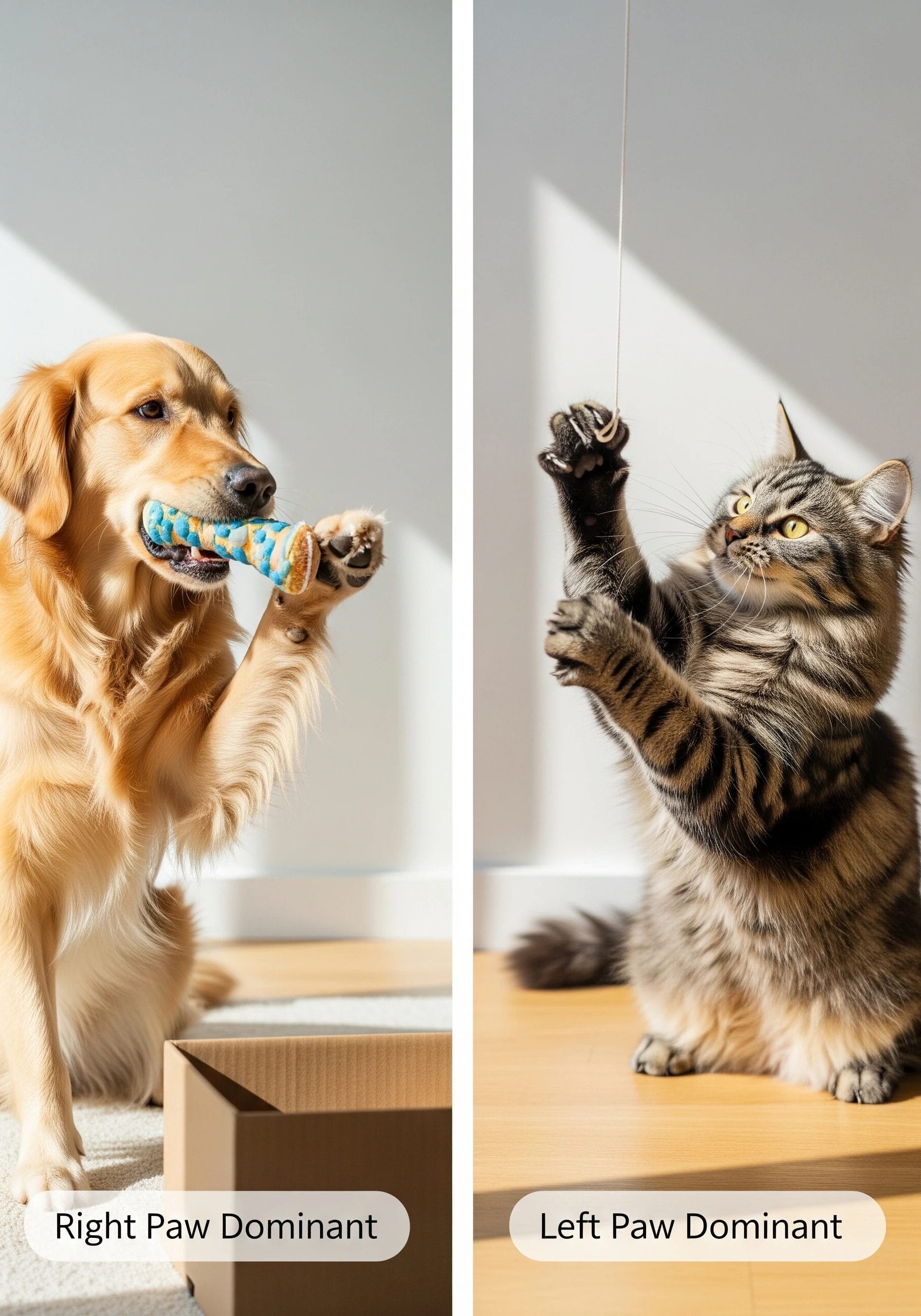
Yes — Dogs and Cats Be Right- or Left-Pawed, and this trait may offer valuable clues about their personality and behavior.
While not every pet shows a strong paw preference, those that do may reveal insights into their stress responses, adaptability, and temperament.
Understanding laterality isn’t just a fun fact for pet lovers; it could become a practical tool for improving training, enrichment, and welfare.
As research continues, paw preference might one day be a standard part of behavioral assessment for pets, helping us connect with them on an even deeper level.
FAQs
Yes, this is especially true for pets that experience injury, arthritis, or other mobility changes. Some pets may also become more ambidextrous with age.
Not directly. Laterality is more closely tied to emotional processing and stress response than raw intelligence.
Yes. Knowing your pet’s paw preference can help in designing agility courses or teaching tricks that play to their strengths.
Not necessarily. They may be more reactive in new situations, but with patience and positive reinforcement, they can learn just as effectively as right-pawed pets.
Yes. Many wild species, from parrots to kangaroos, exhibit side preferences in movement or tool use, suggesting laterality is widespread in the animal kingdom.

- 15 Meaningful Dog Memorial Tattoo Ideas & Costs - March 20, 2026
- Best Horse Hoof Supplement Reviews for Beginners (2026) - March 19, 2026
- Pet Rat Hammock Setup Guide: Best Layouts & Prices - March 19, 2026
GIPHY App Key not set. Please check settings