

 Emily Walker
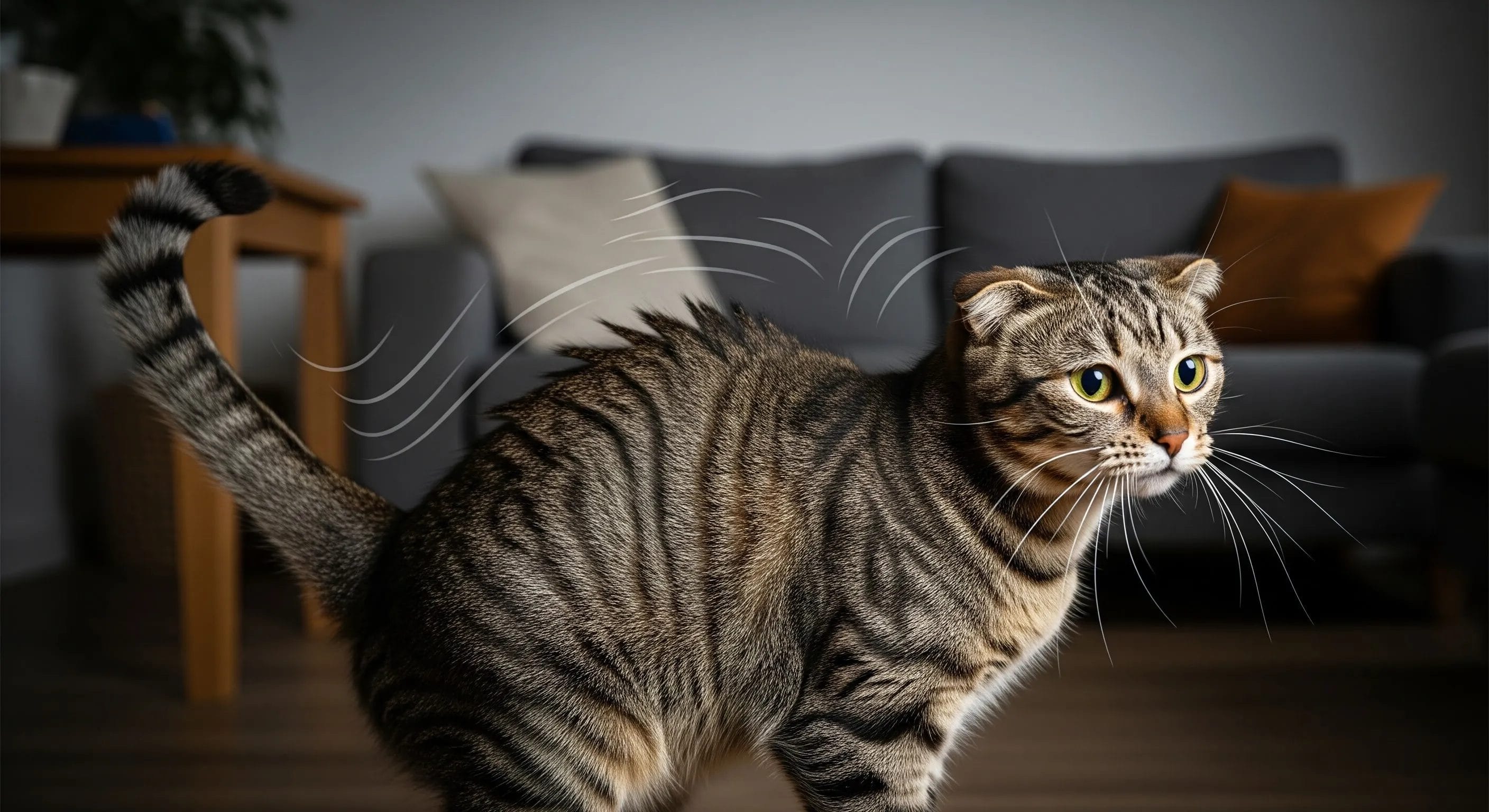
Has your cat ever gone from chill loaf mode to full-on zoomies demon in two seconds—licking their back like it’s on fire and sprinting through the house like they saw a ghost? Yeah… that’s not your cat being “extra.” That could be feline hyperesthesia syndrome (FHS)—and it’s as weird as it sounds.
What Is Feline Hyperesthesia Syndrome?
Feline hyperesthesia syndrome—also called rolling skin syndrome or twitchy cat disease—is when a cat’s skin (especially along the back and near the tail) becomes super sensitive.
Imagine if someone lightly poked you and it felt like an electric shock. That’s kind of what these cats experience.
It was first described in 1980, and it can affect almost any cat. During episodes, cats may freak out, over-groom, yowl, or bolt like they’re in an action movie.
The tricky part? These episodes show up randomly, which makes owners feel confused and cats feel stressed.
Here’s the wild part: studies suggest many “normal” cats show at least one FHS-like behavior. So yeah—your cat might not be possessed… just dealing with a glitchy nervous system.
Recognizing the Signs: Common Symptoms of FHS
Spotting feline hyperesthesia syndrome is all about watching your cat like a detective. Episodes can last seconds or minutes, and when they hit, you’ll know something is off.
Physical Manifestations
The classic giveaway? Their skin ripples like a wave down their back, right before the tail—like there’s an invisible bug crawling under their fur.
You might also see huge pupils, twitchy tails, drooling, or sudden muscle spasms. Some cats even lose bladder control. Yep… it can get intense.
Behavioral Changes
This is where things get dramatic. Cats may bolt across the house like they’re being chased, scream out of nowhere, attack their own tail, or obsessively lick and bite their lower back.
Try touching them during an episode and—bad idea—they may lash out. They often look spaced out, like they’re in another universe, and snapping them out of it is nearly impossible.
Self-Mutilation Concerns
In severe cases, cats hurt themselves—scratching or biting so hard they cause bald spots or wounds. This isn’t “bad behavior.” It’s a serious red flag and means it’s vet time, ASAP.
If your cat looks like they’re battling invisible enemies, trust your instincts. They’re not being weird for fun—they’re struggling.
The Mystery Behind the Condition: Potential Causes
Here’s the frustrating truth—even vets argue about why feline hyperesthesia syndrome happens. After decades of research, there’s still no single villain.
Think of FHS like a mystery movie with three main suspects.
The Behavioral Theory
Some experts think FHS starts in the mind. Stress, boredom, or anxiety can push a cat into obsessive behaviors, like nonstop licking or tail chasing.
Imagine being overwhelmed and biting your nails… but your whole body joins in. Big changes, crowded homes, or not enough play can flip that switch.
The Neurological Theory
Others believe it’s more like a mini seizure. The sudden screaming, wild running, and zoning out look a lot like epileptic activity.
Some cats even act confused afterward—and the fact that seizure meds help some cats makes this theory hard to ignore.
The Multifactorial Theory
The most realistic answer? It’s probably a mix of things. Pain, allergies, old injuries, spine issues, or even food sensitivities can all mess with a cat’s nerves.
Different cats, different triggers, same scary-looking result.
Who’s at Risk? Demographics and Predisposing Factors
Short answer? Any cat can get FHS. But patterns do show up. Most cats develop it between 1 and 5 years old, once they’re fully grown.
Certain breeds—like Siamese, Burmese, Abyssinian, Persian, and Himalayan—seem more likely, hinting at a genetic “oops.”
Surprisingly, indoor cats may be at higher risk. Studies show indoor-only cats display FHS-like behaviors more often than outdoor cats, possibly because of stress, boredom, or fewer chances to act like, well… cats.
Getting a Diagnosis: The Veterinary Approach
Here’s the tough part—there’s no single test for FHS. Vets diagnose it by playing medical detective and ruling everything else out first.
Initial Examination
Your vet will start with a full exam and ask lots of questions: When do episodes happen? Is your cat stressed? Any big changes at home? This info matters more than you think.
As one top neurologist puts it, the goal is to make sure nothing treatable is being missed.
Diagnostic Testing
To eliminate other causes, vets may run blood tests, check urine, look for allergies or parasites, and sometimes take X-rays or scans of the spine or brain.
Basically—they want proof your cat isn’t reacting to pain, illness, or a sneaky infection.
The Role of Specialist Referral
If things get complicated, your vet may call in the big brains—a veterinary neurologist or behaviorist—to fine-tune the diagnosis and build a game plan just for your cat.
Treatment Options: Managing FHS Effectively
Good news first—there’s no cure, but most cats can live happy lives with the right plan. Treating FHS is like tuning a playlist: you try a few things until it finally hits right.
Environmental Modifications
Step one: chill the vibe. Cats love routine, so keep schedules steady, reduce chaos, and give them safe hideouts. More litter boxes, more food spots, more vertical climbing = less stress.
Playtime, puzzle feeders, and slow changes help burn off nervous energy instead of turning it into freak-outs.
Medication Management
If vibes alone don’t fix it, meds can help—a lot. Many cats go months (or longer) without episodes once on the right medication.
Drugs like gabapentin calm nerves, fluoxetine helps with anxiety and obsessive behavior, and seizure meds help cats with neurological signs.
Some cats need one med, some need a combo—every cat is their own science experiment.
Behavioral Therapy
A veterinary behaviorist can teach your cat new ways to handle stress. Think of it like therapy—but with more whiskers and fewer couches.
Pain Management
Sometimes FHS is fueled by pain. Treat the pain, and the episodes chill out. This can include physical therapy, acupuncture, or meds for old injuries or spine issues.
What to Do During an Episode
Rule number one: don’t panic. Don’t touch, grab, or yell—your cat’s brain is already on fire. If possible, gently distract them with a toy.
If they’re hurting themselves, protective gear like a cone may be needed until you reach the vet. And never punish them—this isn’t bad behavior, it’s bad wiring.
Long-Term Management and Prognosis
FHS is usually a lifelong thing, but don’t panic—most cats still live happy, comfy lives.
With the right care, the outlook is good. Episodes might come back sometimes, or they might stay gone for months. Regular vet check-ins help keep things under control.
Prevention: Can FHS Be Avoided?
Not always. Some cats just draw the short straw. But you can lower the odds by keeping stress low, playing with your cat daily, feeding well, and treating health issues early.
A bored, stressed cat is way more likely to glitch.
The Importance of Early Intervention
Catching FHS early is huge. If you see the signs, don’t wait. Early treatment = fewer episodes and less risk of your cat hurting themselves.
Mild cases can be watched, but self-injury or worsening episodes mean it’s vet time immediately.
Working with Your Veterinary Team
Think of this as a group project—you, your vet, and your cat. Track episodes, note triggers, and speak up if something isn’t working. Every cat is different, and tweaking the plan is totally normal.
Conclusion: Hope for Cats with FHS
FHS looks scary. It is frustrating. But it’s not hopeless. With modern treatments, patience, and teamwork, most cats go back to being their weird, lovable selves.
If you suspect FHS, act fast. Helping your cat feel safe in their own body? Totally worth it.

- Does Cat Litter Melt Ice? The Complete Guide to Winter Safety - January 30, 2026
- Happy Tail Dogs: Understanding This Common Canine Condition - January 29, 2026
- How Cold Can Outdoor Cats Handle? Feline Winter Safety - January 27, 2026
GIPHY App Key not set. Please check settings