

 Lauryn Dell

Cats are everywhere – from cosy apartments to sprawling farms, they are among the most popular pets in the world.
Yet, unlike dogs, the domestication of cats remains a mystery that continues to spark debate among historians, scientists, and cat lovers alike.
While dogs were deliberately bred to serve human needs such as hunting, herding, and guarding, cats appear to have followed a very different path.
This brings us to the central question: Did humans domesticate cats, or did cats domesticate us?
The answer lies in a fascinating history of mutual adaptation, human psychology, and feline independence.
The Origins of Cat-Human Relationships
The Wild Ancestors of Cats
Modern domestic cats (Felis catus) trace their lineage back to the African wildcat (Felis silvestris lybica).
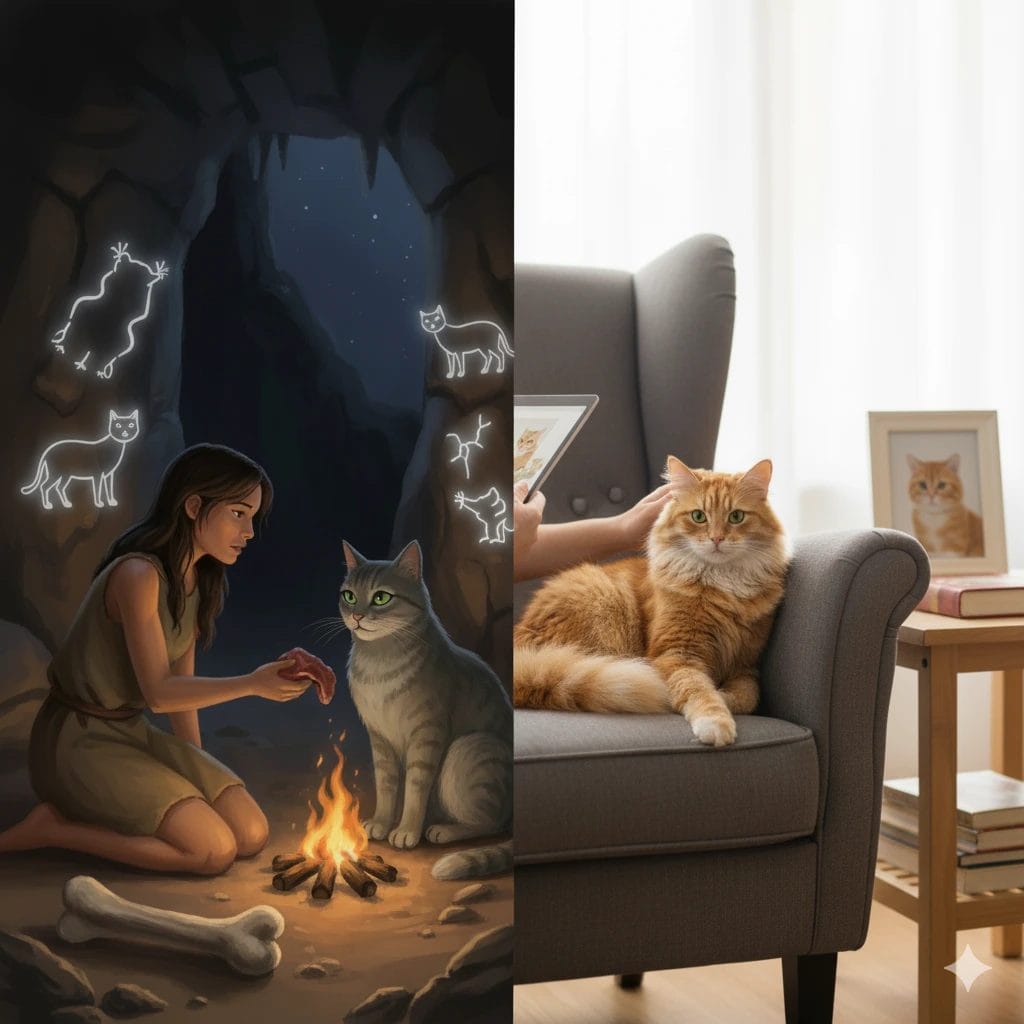
Around 10,000 years ago, humans in the Fertile Crescent began settling into agricultural societies. These early farmers stored grain, which inevitably attracted rodents.
Wildcats, opportunistic hunters, began frequenting these human settlements for easy prey. Unlike dogs, which humans actively domesticated, cats seemingly domesticated themselves by gravitating toward environments that benefited them.
Symbiotic Beginnings
This relationship was mutually beneficial: humans had fewer rodents threatening their food supplies, while cats had an abundant source of prey.
Over generations, certain cats grew more tolerant of human presence. Instead of being forced into domestication, cats chose to remain close to humans because it worked to their advantage.
The Case for Cats Domesticated by Humans
Selective Breeding and Adaptation
Though cats initially chose humans, there’s evidence of some level of human intervention over time. Ancient Egyptians revered cats, even worshipping them as sacred beings.
They likely encouraged breeding tamer, friendlier cats to keep them within households.
Today, selective breeding has produced specific cat breeds such as Siamese, Maine Coon, and Persian, each with unique traits in appearance and temperament.
This process mirrors human-led domestication patterns, though to a much lesser extent than in dogs or livestock.
Cultural Integration
Cats became integral to human culture and society. From being protectors of grain in ancient farms to companions in modern households, they adapted to fit into human lives.
This suggests that, at least partially, humans shaped feline domestication by giving them roles and cultural significance.

The Case for Cats Domesticated Humans
Minimal Physical Changes
Domesticated animals usually undergo significant physical and behavioral changes. Dogs, for instance, diverged drastically from their wolf ancestors.
Cats, however, remain strikingly similar to their wild relatives in terms of appearance, hunting instincts, and independence.
This limited change suggests that humans didn’t truly domesticate cats in the traditional sense. Instead, cats adapted just enough to coexist with humans while maintaining their wild instincts.
Training Humans Through Behavior
Cats are masters of manipulation. Studies show that cats developed a unique “solicitation purr”—a sound that combines their normal purring with a high-pitched cry resembling a human baby’s. This sound effectively triggers a nurturing response from humans.
By evolving behaviors that exploit human psychology, cats arguably trained us to provide food, shelter, and affection on their terms. This dynamic supports the argument that cats domesticated us rather than the other way around.
How Cats Differ from Dogs in Domestication
Dogs and cats represent two contrasting models of domestication:
- Dogs: Actively domesticated through breeding for specific tasks. They rely heavily on humans for food, direction, and purpose.
- Cats: Self-domesticated, maintaining independence while selectively engaging with humans when it benefits them.
This difference explains why cats often appear aloof, independent, and less obedient compared to dogs. Cats never needed to be obedient; their relationship with humans was always about choice, not necessity.

Modern Science on The Cat Conundrum
Genetic Insights
Recent genetic studies confirm that the DNA of domestic cats remains remarkably close to that of wildcats.
Unlike dogs, cats have not been radically reshaped by domestication. The small genetic changes mainly involve coat patterns, temperament, and adaptability to human environments.
Behavioral Research
Research shows that while cats can form strong emotional bonds with humans, they still retain many solitary traits.
They do not rely on human approval in the same way dogs do. Instead, cats view humans as partners—or, in many cases, as staff.
Why Cats Captivate Humans?
Cats may not be traditionally domesticated, but they have perfected the art of fitting into human lives. Their mysterious personalities, independence, and ability to show affection selectively make them irresistible to many.
Psychologically, humans may also be drawn to cats because they represent both wildness and companionship. Unlike dogs, cats allow humans to feel connected to nature while enjoying the comfort of having a pet at home.
The Future of Cat-Human Relationships
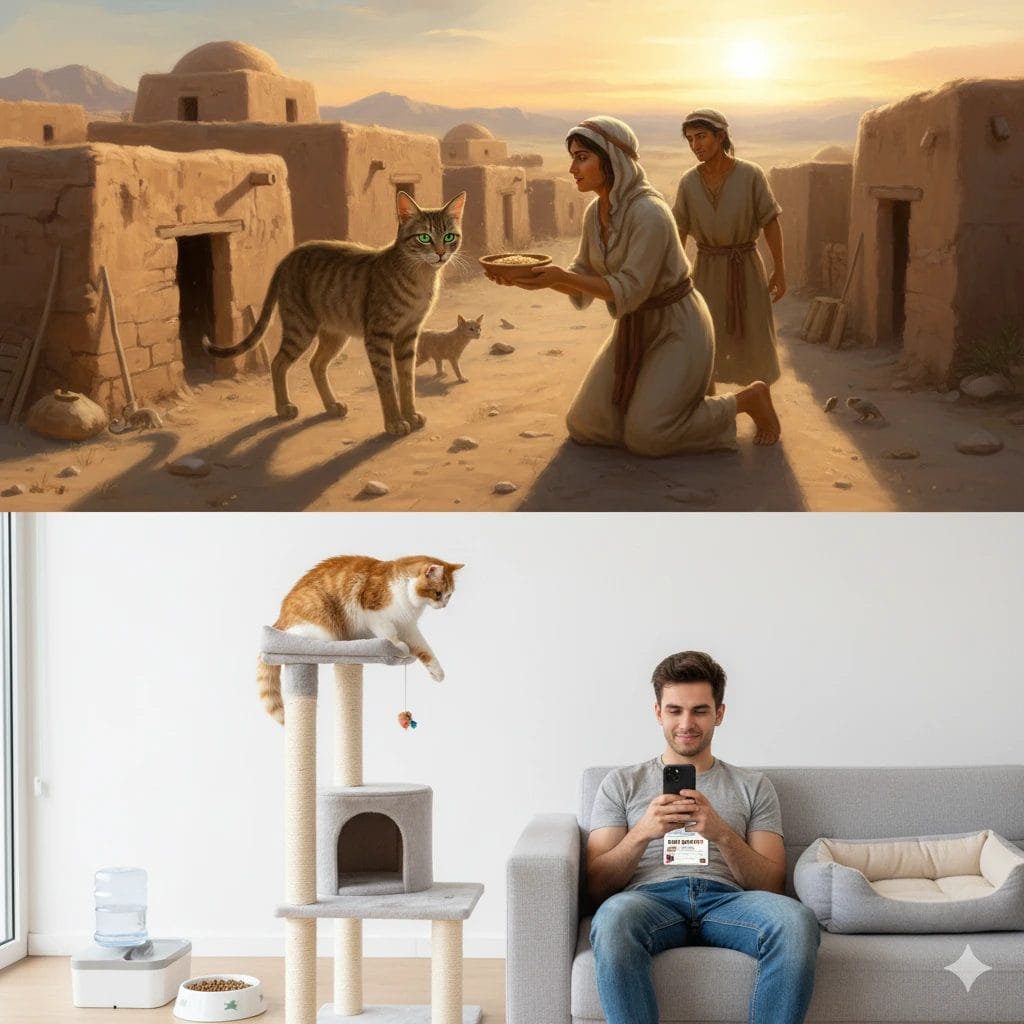
As urban living expands, cats are becoming increasingly popular as household pets due to their adaptability and relatively low maintenance. At the same time, debates over outdoor versus indoor cats, conservation issues, and ethical breeding practices are shaping the future of how humans and cats coexist.
One thing is clear: whether or not cats are fully domesticated, they are here to stay as beloved companions, cultural icons, and perhaps even as our self-appointed masters.
Conclusion: The Cat Conundrum
The truth lies somewhere in between. Cats were never domesticated in the traditional sense like dogs or cattle. Instead, they chose to associate with humans when it served their interests.
Over time, humans adapted to meet feline needs, ensuring cats not only survived but thrived within human societies.
So, are cats domesticated? Yes, but only partially. Did they domesticate us? Quite possibly.
Although there is no definitive solution to the cat conundrum, one fact remains: cats have mastered the balance of independence and companionship, securing a permanent place in our lives.
FAQs About The Cat Conundrum
No, cats are only partially domesticated. They remain genetically and behaviorally closer to their wild ancestors compared to dogs.
Humans began coexisting with cats around 10,000 years ago, during the agricultural revolution in the Fertile Crescent.
Hunting is an instinct deeply rooted in feline genetics. Even well-fed cats retain the natural drive to stalk and kill prey.
Research suggests that cats may view humans as parental figures or as larger companions, though they also maintain a sense of independence.
It’s mutual. Humans benefit from companionship and pest control, while cats gain food, shelter, and safety. However, some argue cats benefit more since they maintain control over their independence.

- 15 Meaningful Dog Memorial Tattoo Ideas & Costs - March 20, 2026
- Best Horse Hoof Supplement Reviews for Beginners (2026) - March 19, 2026
- Pet Rat Hammock Setup Guide: Best Layouts & Prices - March 19, 2026
GIPHY App Key not set. Please check settings