

 Lauryn Dell
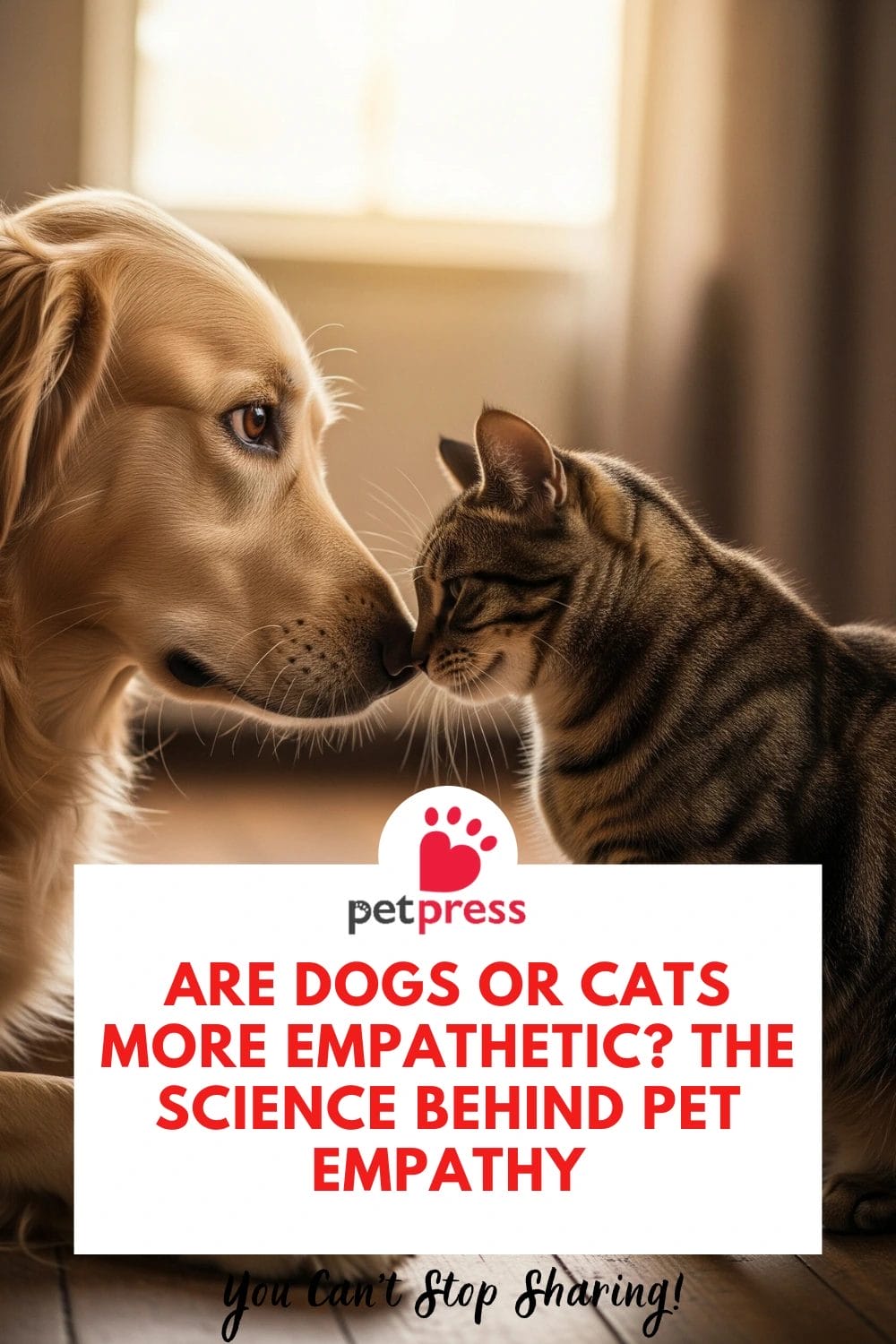
For centuries, the question has been asked: Are dogs or cats more empathetic? While dogs are often praised for their loyalty and affection, cats are cherished for their independence and mysterious charm.
But when it comes to empathy, the ability to sense and respond to human emotions, the conversation becomes far more intriguing.
Do dogs truly understand our sadness and joy more than cats, or do cats simply express empathy in subtler ways?
This blog dives deep into scientific studies, behavioral insights, and real-life experiences to unpack the great debate of Are Dogs or Cats More Empathetic?
By the end, you’ll have a clearer perspective on which pet might be the true empath of the animal kingdom or whether empathy takes different forms across species.
What Does Empathy in Pets Really Mean?
Before we compare cats and dogs, it’s important to define empathy in the context of animals. In humans, empathy refers to recognizing and understanding another person’s emotional state and responding appropriately. For animals, researchers often measure empathy by observing behaviors such as:
- Recognizing distress or joy in their human companions
- Offering comfort or affection during difficult times
- Adjusting their behavior based on human mood or tone of voice
- Demonstrating concern through physical proximity, vocalizations, or actions
Understanding this framework helps us evaluate empathy not as a human trait forced onto animals, but as a behavioral response rooted in evolutionary survival and social bonding.

Dogs and Empathy: Science-Backed Affection
Dogs have been human companions for over 15,000 years, and in that time, they have developed an extraordinary sensitivity to human emotions. Research consistently shows that dogs are adept at reading human body language, facial expressions, and vocal tones.
Key Evidence of Canine Empathy
- Oxytocin Connection: Studies reveal that when dogs look into their owner’s eyes, both human and dog experience a rise in oxytocin—the hormone associated with love and bonding. This biological response strengthens their ability to emotionally connect with us.
- Responding to Distress: In experiments, dogs are more likely to approach and comfort crying humans than those who are humming or talking. This suggests dogs can distinguish between emotional states and adjust their behavior accordingly.
- Social Synchrony: Dogs often mirror their owner’s moods. If you’re stressed, your dog might also exhibit signs of stress, such as pacing or whining. Conversely, a joyful tone can excite them instantly.
Why Dogs Excel in Empathy
Dogs evolved as pack animals, relying on strong social bonds for survival. This evolutionary background may explain their heightened attunement to human emotions. In many ways, their empathy is an extension of their instincts to bond, protect, and maintain harmony within a group.

Cats and Empathy: Subtle but Present
Cats, often labeled as aloof or independent, are sometimes dismissed as less empathetic. However, modern research and attentive observation reveal a more nuanced truth: cats can show empathy, but in ways that differ from dogs.
Evidence of Feline Empathy
- Emotional Responsiveness: Cats have been shown to recognize their owner’s voice and can adjust their behavior based on tone. Some will approach or rub against their owners when they detect sadness or illness.
- Comfort-Seeking and Giving: Cats often choose to sit on laps, purr near distressed owners, or sleep close to people experiencing grief or stress. Purring itself may provide calming effects, acting as a soothing mechanism for both cat and human.
- Attachment Styles: Research from Oregon State University suggests that cats can form secure attachments to humans, much like dogs and even infants. This means they may rely on us for comfort and respond empathetically when they perceive emotional shifts.
Why Do Cats Show Empathy Differently?
Unlike dogs, cats evolved as solitary hunters. Their survival did not depend on pack cooperation, which explains why their empathy may appear less overt. Instead, cats often express empathy through proximity, quiet presence, or subtle body language, which can be harder for humans to interpret.
Dogs vs. Cats: The Empathy Showdown
When comparing empathy in dogs and cats, it’s important to recognize that the differences are less about capability and more about expression.
- Dogs are overt empaths: They display their concern through physical affection, vocalization, and active engagement. If you cry, a dog may nuzzle you, lick your face, or whine in distress.
- Cats are subtle empaths: They often respond by staying close, curling up beside you, or quietly observing until you calm down. While less dramatic, this form of empathy can be deeply comforting for many owners.

Which one is better?
The answer depends on the individual pet and the human’s expectations. If you value open displays of affection and visible concern, dogs may feel more empathetic. If you prefer quiet companionship and subtle gestures of support, cats may resonate more deeply with you.
The Role of Human Perception
Interestingly, much of the debate around pet empathy is shaped by human perception. People tend to interpret behaviors through their own emotional lens. For example:
- A dog jumping on your lap while you cry may feel like immediate empathy.
- A cat sitting quietly near you may be overlooked, even though it reflects emotional attunement.
This difference highlights that empathy in pets is not only about their behavior but also about how humans recognize and value it.
Modern Insights: Empathy in a Multi-Pet Household
Many households today include both cats and dogs, offering a unique perspective on empathy. Owners often report that:
- Dogs respond first to overt emotions like crying or excitement.
- Cats provide longer-lasting comfort, often choosing to stay near their humans after the emotional outburst subsides.
- Together, they create a balanced support system, dogs offering immediate reassurance and cats providing a steady, calm presence.
This suggests that empathy may not be about competition between species but about complementary roles in human emotional well-being.

The Science of Empathy and Mental Health Benefits
Both dogs and cats play critical roles in human emotional health, regardless of how their empathy is expressed. Research has linked pet companionship with:
- Reduced stress and anxiety
- Lower blood pressure and heart rate
- Increased feelings of safety and belonging
- Enhanced mood and reduced risk of depression
Empathy, whether overt or subtle, is at the heart of these benefits. It’s not about which species is better but how their unique expressions of empathy enrich human lives.
Conclusion: Are Dogs or Cats More Empathetic?
The great debate of who’s more empathetic, dogs or cats doesn’t have a simple winner. Dogs shine with their visible, enthusiastic demonstrations of care, while cats provide a quieter, more nuanced form of empathy.
Both approaches are valid, powerful, and deeply impactful to the humans who love them.
Ultimately, empathy in pets is less about comparison and more about connection.
Whether you’re a dog person, a cat person, or both, your furry companion likely understands and responds to your emotions in their own special way. And that, perhaps, is the most empathetic truth of all.
FAQs
Yes. Studies suggest cats can detect changes in your tone of voice, body language, and behavior. Many will respond by staying close, purring, or offering quiet companionship.
Dogs evolved as pack animals, making them more responsive to social cues and distress signals. This evolutionary history shapes their more overt expressions of empathy.
Not at all. Cats express empathy differently, often through proximity and subtle behavior. Their love is no less real; it’s simply less demonstrative than a dog’s.
Yes. Both dogs and cats can reflect their owner’s moods. Dogs may become excited or anxious, while cats may adjust their activity levels or remain nearby in times of distress.
Both can significantly benefit mental health. Dogs may provide more active reassurance, while cats offer a calming presence. The choice depends on your lifestyle and emotional needs.

- Mushroom Complex Supplements for Dogs with Cancer: A Guide - March 25, 2026
- 15 Meaningful Dog Memorial Tattoo Ideas & Costs - March 20, 2026
- Best Horse Hoof Supplement Reviews for Beginners (2026) - March 19, 2026
GIPHY App Key not set. Please check settings