

 Lauryn Dell

The best vitamins for pets’ joint health are always essential. As pet parents, we want our furry (or scaly, or feathery) companions to live long, healthy, and active lives. One common issue, especially as pets age, is joint pain and mobility issues.
The good news is that proper supplementation can make a significant difference. This post explores the best vitamins for pets’ joint health, whether you have a dog, cat, or even a more exotic companion.
Whether your pet is already showing signs of joint discomfort or you’re looking to prevent arthritis in pets, this guide will help you choose the right vitamins, understand what each does, and know how to support your pet’s overall mobility.
Why Joint Health Matters in Pets
Just like humans, pets experience wear and tear on their joints over time. Joint stiffness in dogs, limping, hesitation to jump, or even mood changes can be signs that your pet’s joints need support.
Common reasons for joint problems in pets include:
- Aging
- Breed predispositions (like arthritis in Labradors or hip dysplasia in German Shepherds)
- Obesity
- Past injuries or surgeries
- Lack of exercise or improper nutrition
The earlier you start supporting your pet’s joints, the better. Vitamins and supplements can slow down joint deterioration and even reduce inflammation and pain in pets.
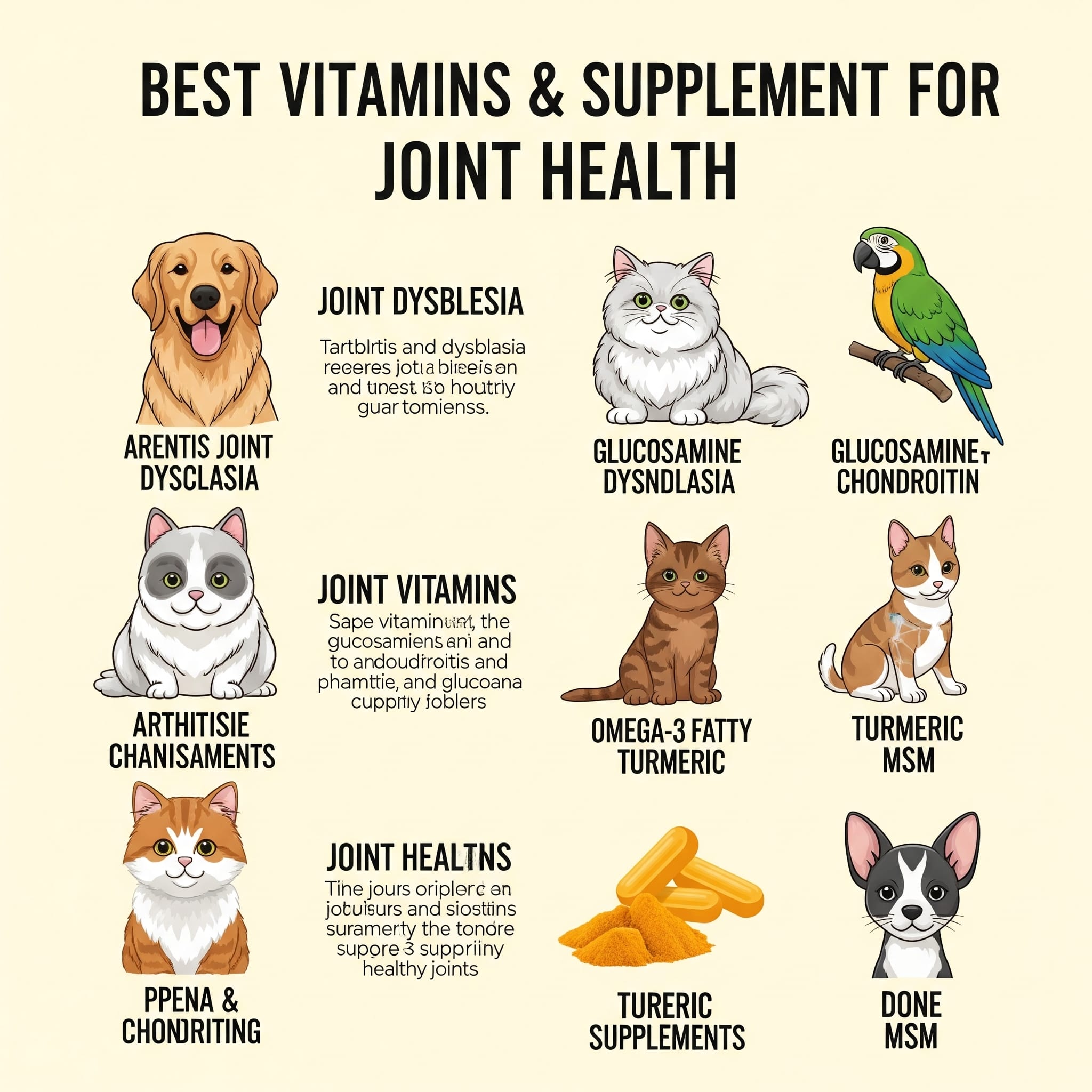
Top Vitamins and Nutrients for Pet Joint Support
Let’s break down the most essential vitamins and compounds for healthy pet joints.
Glucosamine
- Naturally found in cartilage, glucosamine helps maintain and rebuild joint tissue.
- Especially effective for dogs with osteoarthritis.
- Best used in combination with chondroitin for increased effectiveness.
Recommended Dosage
- Dogs: 250–1,500 mg/day depending on size
- Cats: 125–250 mg/day
Chondroitin Sulfate
- A common partner to glucosamine, chondroitin helps prevent cartilage breakdown and supports joint repair.
- Also acts as an anti-inflammatory.
Pro Tip: Choose a glucosamine-chondroitin supplement for pets that includes both ingredients for maximum benefit.
Vitamin C (Ascorbic Acid)
- Known for immune support, Vitamin C also helps produce collagen, a vital component of healthy joints.
- Acts as a natural anti-inflammatory and antioxidant.
Note: Dogs and cats produce their own Vitamin C, but supplementation may help older or stressed pets.

Omega-3 Fatty Acids
- Derived from fish oil, omega-3s reduce joint inflammation, improve mobility, and even support brain and heart health.
- Helps with stiff joints in older pets.
Source: Fish oil, krill oil, or flaxseed oil supplements.
MSM (Methylsulfonylmethane)
- A naturally occurring compound that reduces inflammation and pain.
- Often included in joint supplements for pets.
Bonus: May also improve skin and coat health.
Vitamin D
- Supports calcium absorption and bone health.
- Deficiency can lead to joint and bone pain in pets, especially in cats and reptiles.
Hyaluronic Acid
- Helps with joint lubrication and maintaining fluid between bones.
- Can significantly improve mobility in aging dogs.

Best Joint Supplements for Dogs
If you’re specifically looking for joint supplements for dogs, here are some high-quality, vet-recommended options to consider:
- Dasuquin with MSM: Includes glucosamine, chondroitin, MSM, and ASU (avocado/soybean unsaponifiables).
- Cosequin DS: One of the most popular supplements; often recommended by vets.
- Zesty Paws Mobility Bites: Chews with glucosamine, chondroitin, MSM, and turmeric.
Tip: Look for chewable supplements or powders that are easy to mix with food.
Best Joint Vitamins for Cats
Cats can be trickier since they’re more sensitive to dosages and taste.
Recommended products:
- Nutramax Cosequin for Cats: Sprinkle capsules for joint support.
- VetriScience GlycoFlex: Bite-sized chews suitable for fussy eaters.
- Nordic Naturals Omega-3 Pet: Liquid fish oil that supports joints, coat, and cognitive function.
Cats are less likely to show signs of joint pain, , so prevention is key—especially for older cats and overweight cats.
Joint Health for Exotic Pets & Birds
Even exotic pets like rabbits, reptiles, ferrets, and birds can suffer from joint problems.
- Birds: Vitamin D3 and calcium are crucial for bone strength.
- Reptiles: Ensure they have UVB lighting and proper calcium to avoid metabolic bone disease.
- Rabbits and Guinea Pigs: Supplement with vitamin C and encourage regular activity.
Always consult an exotic vet before starting supplements for non-traditional pets.

Signs Your Pet May Need Joint Support
Watch for these red flags:
- Limping or stiffness (especially after rest)
- Trouble standing or lying down
- Hesitating to jump or climb stairs
- Decreased interest in play
- Behavioral changes (irritability or withdrawal)
If you notice these, consult your vet and ask about pet joint supplements.
Tips for Supporting Pet Joint Health Naturally
Besides supplements, there are lifestyle changes that can make a huge difference:
- Maintain a healthy weight to reduce joint stress
- Daily low-impact exercise (like swimming or short walks)
- Orthopedic pet beds for extra joint support
- Massage and physical therapy options
- Regular vet checkups to monitor mobility
Conclusion: Start Supporting Your Pet’s Joints Today
Whether you’re trying to relieve existing joint pain or looking for the Best Vitamins for Pets’ Joint Health, the right combination of vitamins and supplements can make all the difference.
From glucosamine for dogs to omega-3s for cats, modern pet nutrition gives us powerful tools to extend our companions’ healthy years.
Your pet deserves a happy, mobile life, start supporting their joints today!

FAQs about Best Vitamins for Pets’ Joint Health
The most recommended supplement is Dasuquin with MSM, as it contains glucosamine, chondroitin, MSM, and additional ingredients like ASU for inflammation control.
No. Human supplements may contain doses or ingredients that are toxic to pets. Always choose products specifically formulated for animals.
Some mild supplements (like omega-3s or vitamin C) are safe in low doses. Always consult a vet before supplementing young pets.
Results can vary. Some pets improve within 2–4 weeks, while others may take up to 8 weeks to show visible improvement.
Yes! Starting joint supplements early—especially in large-breed dogs or aging cats—can help prevent arthritis and support long-term mobility.

- 15 Meaningful Dog Memorial Tattoo Ideas & Costs - March 20, 2026
- Best Horse Hoof Supplement Reviews for Beginners (2026) - March 19, 2026
- Pet Rat Hammock Setup Guide: Best Layouts & Prices - March 19, 2026
GIPHY App Key not set. Please check settings