

 Lauryn Dell
Have you ever looked at your furry feline friend and wondered, “Cat’s Age in Human Years” if you were human?”
You’re not alone! Many cat owners want to better understand their cat’s age, not just out of curiosity but also to provide better care throughout their pet’s life stages.
While the old saying goes that one cat year equals seven human years, that’s not entirely accurate. Cats age at a different rate than humans, especially in their early years.
In this blog post, we’ll break down how cat years translate to human years, what each life stage means, and how to ensure your cat lives a long, healthy life.
Why Cat-to-Human Year Conversion Matters
Understanding your cat’s age in human terms helps you:
- Anticipate health needs
- Provide age-appropriate nutrition
- Prepare for behavior changes
- Detect age-related issues early
Whether you’ve adopted a kitten or a senior cat, knowing their approximate human age helps you connect more deeply with your pet and tailor your care to their needs.

How Cats Age: The Basics
Cats mature rapidly during the first two years of their lives and then age more gradually afterward. This uneven aging curve makes straight multiplication unreliable.
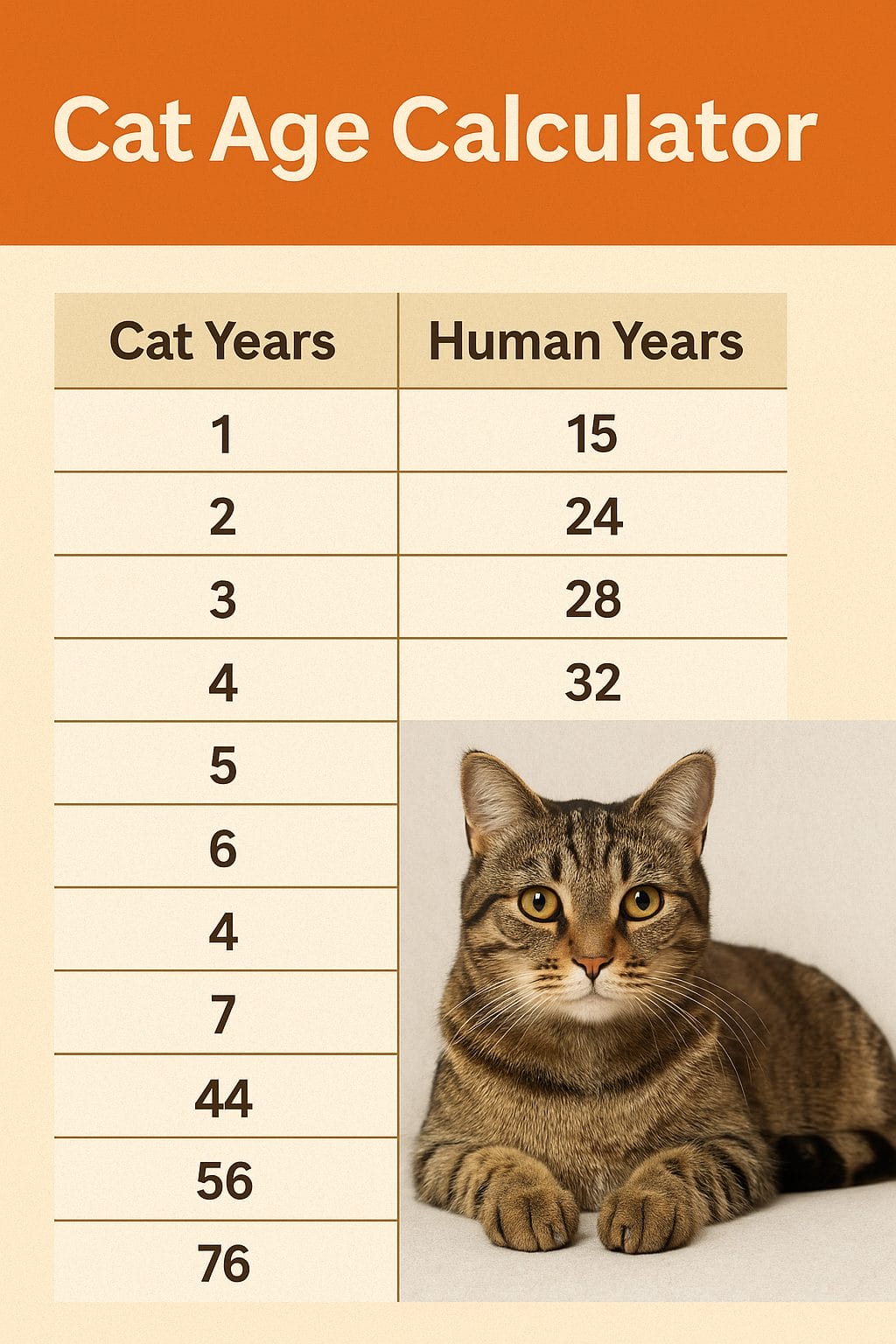
Cat Age Chart: Cat Years to Human Years
| Cat’s Age | Human Equivalent Age |
| 1 month | 1 year |
| 3 months | 4 years |
| 6 months | 10 years |
| 1 year | 15 years |
| 2 years | 24 years |
| 3 years | 28 years |
| 4 years | 32 years |
| 5 years | 36 years |
| 6 years | 40 years |
| 7 years | 44 years |
| 8 years | 48 years |
| 9 years | 52 years |
| 10 years | 56 years |
| 11 years | 60 years |
| 12 years | 64 years |
| 13 years | 68 years |
| 14 years | 72 years |
| 15 years | 76 years |
| 16 years | 80 years |
| 17 years | 84 years |
| 18 years | 88 years |
| 19 years | 92 years |
| 20 years | 96 years |
As you can see, the first two years are the most dramatic in terms of development, after which the aging process slows down to roughly 4 human years per cat year.
Cat Life Stages Explained
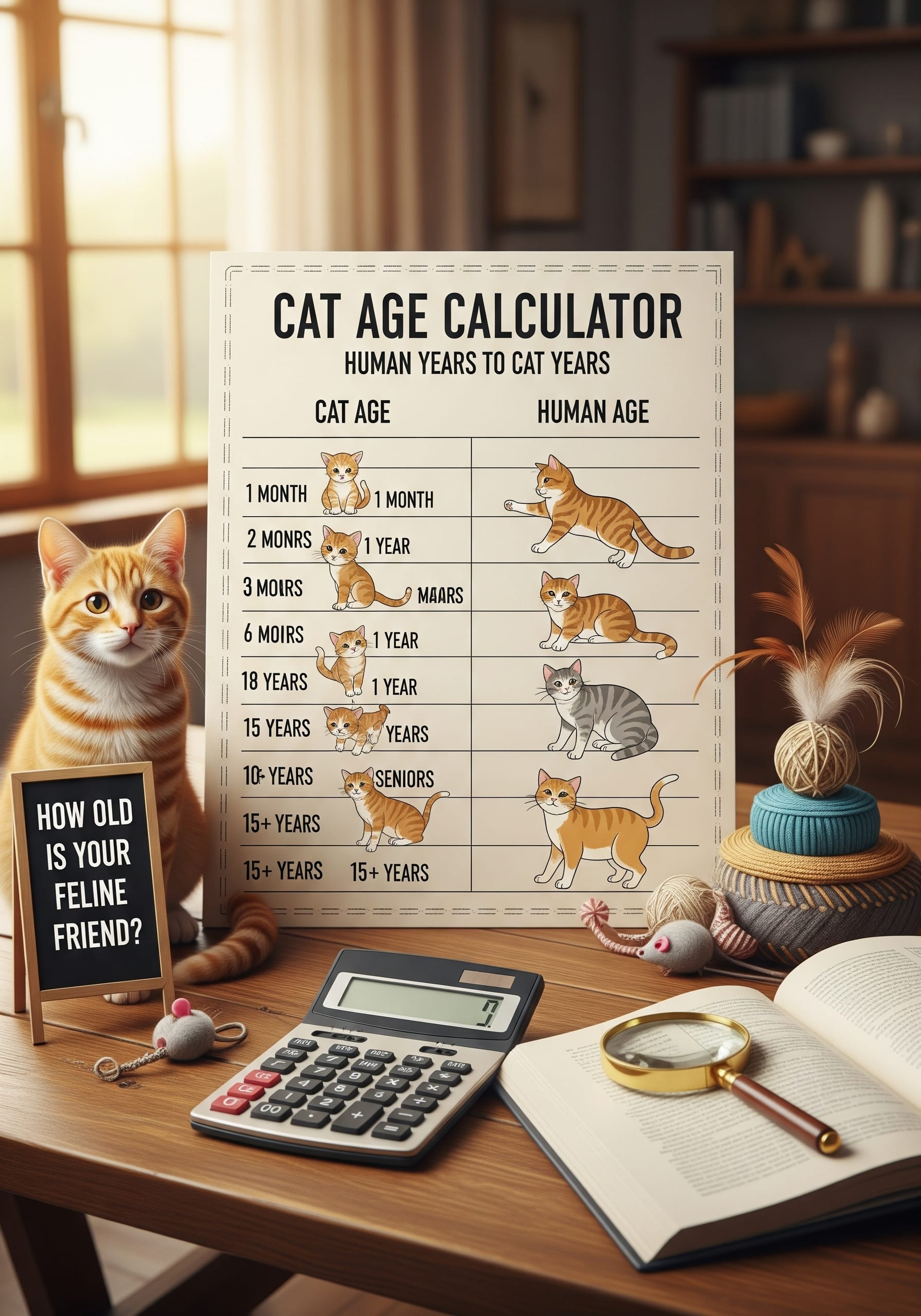
Just like humans, cats go through distinct life stages. Understanding these stages will help you anticipate their needs and behaviors more accurately.
1. Kitten (0–6 Months)
Human Equivalent: 0–10 years
This is the most playful and energetic stage. Kittens are learning the ropes of life, including social skills, grooming habits, and boundaries. Ensure they are vaccinated and spayed/neutered at the appropriate time.
2. Junior (6 Months–2 Years)
Human Equivalent: 10–24 years
Think of this as the teenage and young adult phase. Your cat is still growing physically and mentally. Training and behavioral shaping are most effective in this stage.
3. Prime (3–6 Years)
Human Equivalent: 28–40 years
This is the healthiest and most active phase. Cats are agile, playful, and at their peak physical condition. Preventive healthcare and routine checkups are essential.
4. Mature (7–10 Years)
Human Equivalent: 44–56 years
You may notice a slight decrease in activity. It’s a good time to start thinking about senior-friendly diets and to monitor for signs of dental disease or weight gain.
5. Senior (11–14 Years)
Human Equivalent: 60–72 years
Senior cats may sleep more, play less, and show subtle signs of aging like arthritis or decreased vision. Regular veterinary exams become more important now than ever.
6. Geriatric (15+ Years)
Human Equivalent: 76+ years
Cats in this stage often need special care for age-related conditions such as kidney disease, hyperthyroidism, or cognitive decline. A comfortable environment, regular vet visits, and lots of love go a long way.
Factors That Affect Cat Longevity
Not all cats age the same. Several factors influence how quickly or healthily a cat ages:
1. Breed
Some breeds live longer than others. For example, Siamese and Maine Coon cats are known for their long lifespans.
2. Indoor vs. Outdoor Lifestyle
Indoor cats tend to live 3–5 years longer than outdoor cats due to fewer risks (traffic, disease, predators).
3. Diet and Nutrition
High-quality, age-appropriate food can prevent obesity and other chronic conditions.
4. Veterinary Care
Routine wellness exams, vaccinations, and dental care can extend and improve your cat’s life.
5. Genetics and Heredity
Just like humans, some cats are simply genetically predisposed to live longer.
How to Care for Your Cat at Every Life Stage
| Life Stage | Tips for Care |
| Kitten | Socialize early, introduce basic training, schedule vaccinations |
| Junior | Spay/neuter, switch to adult cat food, encourage play |
| Prime | Annual checkups, weight monitoring, enrich environment |
| Mature | Monitor weight gain, consider joint supplements |
| Senior | Senior diet, semi-annual vet visits, look out for dental issues |
| Geriatric | Provide soft bedding, easy litter box access, monitor closely for illness |

Myths About Cat Aging Debunked
Myth 1: One Cat Year = Seven Human Years
Reality: This is a gross oversimplification. The aging process is more accelerated in the first few years.
Myth 2: Older Cats Can’t Learn New Tricks
Reality: Senior cats may take longer to learn, but they can still adapt and be trained with patience.
Myth 3: Indoor Cats Don’t Age as Fast
Reality: Indoor cats may live longer due to safety and health, but their aging process is biologically the same.
Let’s Sum Up On Cat’s Age in Human Years
Understanding your Cat’s Age in Human Years isn’t just fascinating; it’s essential for providing proper care.
Whether your cat is a mischievous kitten or a wise senior, understanding their place in life helps you respond with the right diet, medical care, and affection.
By appreciating your cat’s age, you build a deeper bond and ensure they enjoy a happy, healthy life with you. So the next time your cat curls up next to you, you’ll know just how old and how precious they really are.
Frequently Asked Questions
Veterinarians can estimate age based on teeth, coat condition, eyes, and overall health. It won’t be exact, but it can give a reliable ballpark.
Generally, yes. While small dog breeds may live long, many cats, especially indoor ones, live 15–20 years or more.
As of now, the oldest recorded cat lived to be 38 years old! That’s the equivalent of over 160 human years.
Proper nutrition, regular vet visits, mental stimulation, and love all contribute to your cat’s longevity.
Cats are considered seniors at 11 years old, which is about 60 in human years.

- How Long Do Dogs Live With Heart Disease? A Complete Guide for Pet Owners - April 9, 2026
- Best Grain-Free Carob Easter Eggs for Cats: Safe & Healthy Treats - April 2, 2026
- Pet-Friendly Easter Photo Shoot: Best Props & Outfits Guide - April 2, 2026
GIPHY App Key not set. Please check settings