

 Emily Walker
Hidden across South America is a cat so sneaky it could win hide-and-seek forever—the colocolo cat. It lives everywhere from icy mountain peaks to open grasslands, yet most people have never heard of it. That’s a crime, honestly.
This little wildcat is tough, adaptable, and beautiful, and it desperately needs more attention before it quietly disappears.
Understanding the Colocolo: A Taxonomic Puzzle
Now here’s where things get nerdy—but in a fun way. Scientists have been arguing about the colocolo for decades. Is it one species? Three? Five? Even experts couldn’t agree.
Early researchers just eyeballed museum specimens and made educated guesses. Later, DNA tests entered the chat and flipped the whole debate upside down.
In 2020, a major study basically said, “Surprise! You’re all kind of right,” and proposed splitting the Pampas cat group into five different species.
Meanwhile, another scientific group still says, “Nah, it’s one species with subspecies.” Confusing? Absolutely. Exciting? Totally.
What this really shows is that the colocolo is still full of secrets—and we’re only just starting to understand it. And honestly, any animal that can confuse scientists for 200 years deserves some serious respect.
- Read Also: Why Are Siamese Cats So Special? The Fascinating of Royal Cat
- Read Also: Dwarf Cat Breeds: Understanding These Unique Felines
Physical Characteristics: Masters of Disguise
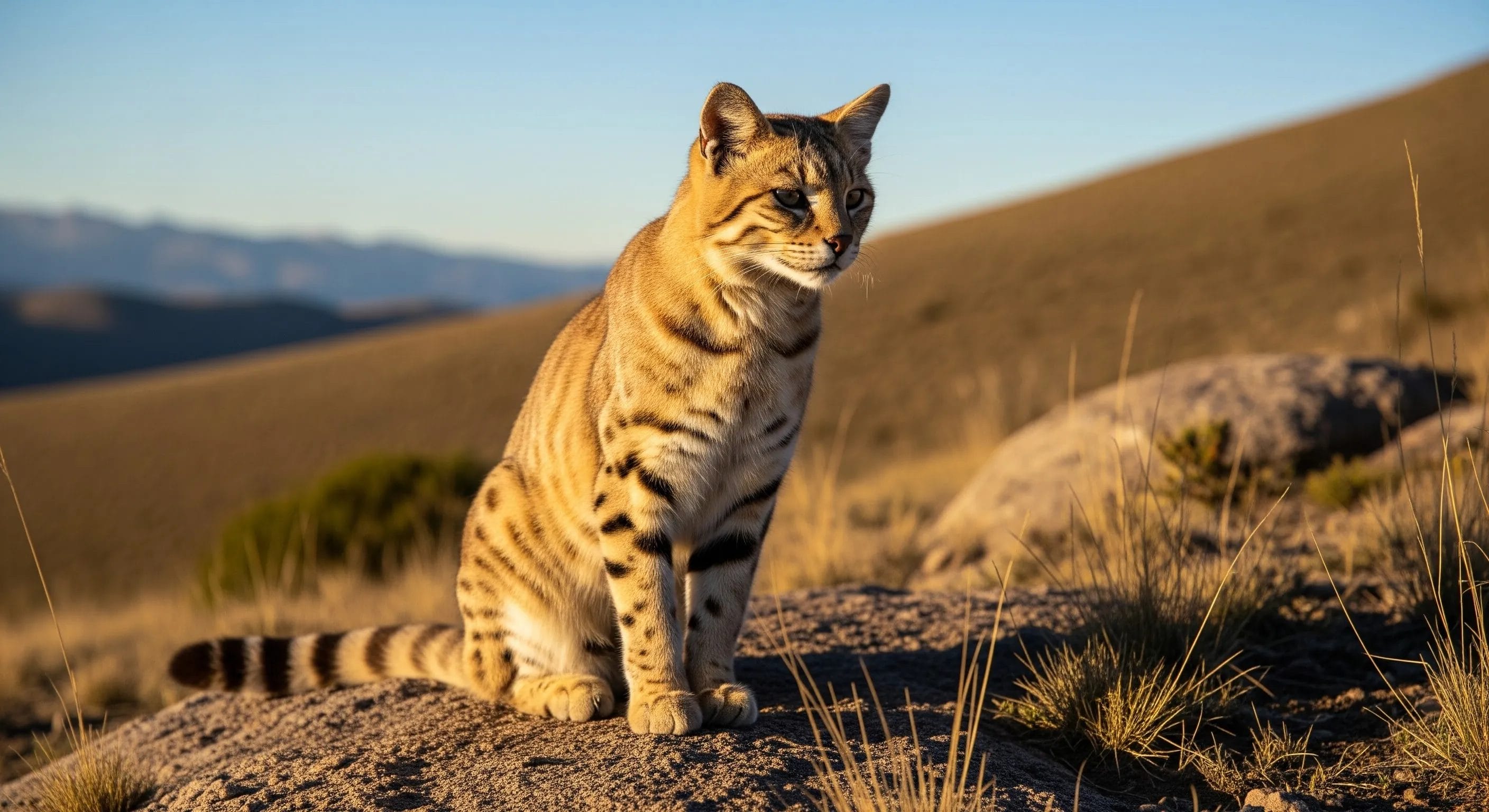
Imagine a housecat that went to the gym and then put on a really good camouflage jacket—that’s the colocolo. It’s not huge, just a bit bigger than your average pet cat, but its long, fluffy fur makes it look tougher than it is.
The coolest part? It has a built-in “don’t mess with me” mode: a strip of hair down its back that stands up like a mohawk when it feels threatened. Instant intimidation.
These cats are fashion chameleons. Their fur color and patterns change depending on where they live—gray and stripy in the Andes, yellow-brown in grassy plains, rusty and bold in parts of Brazil.
Scientists used to think they were different animals just because they looked so different. One giveaway, though? Two dark lines on each cheek, like permanent face paint. And that thick, ringed tail? Pure wildcat style.
Habitat and Distribution: Adaptable Survivors
If there were an award for “Most Likely to Survive Anywhere,” the colocolo would win.
These cats live all over South America—from sea level to mountain heights taller than most planes fly over. Grasslands, deserts, rocky hills, dry forests—no problem.
They even handle places as extreme as the Andes and the edges of the Atacama Desert.
That said, they’re not invincible. They avoid dense rainforests and don’t love heavily farmed areas.
Sometimes they show up near people, which is brave and risky at the same time. And when they share space with their close cousin, the Andean mountain cat, the colocolo politely stays lower on the mountain—like saying, “You take the penthouse, I’ll take the ground floor.”
Behavior and Ecology: Life in the Shadows
The colocolo is basically the ninja of South American cats. Scientists know it’s out there, but actually studying it? That’s the hard part. These cats live solo, stick close to the ground, and move on their own schedule—day, night, dawn, midnight snack time… whatever works.
In cold mountain areas, they’re mostly night owls. In warmer places like Brazil, some are full-on daytime cats. They adapt their routine like pros.
Food-wise, they’re not picky. Rodents, birds, lizards, big bugs—if it moves and fits in their mouth, it’s on the menu. And yes, in Patagonia they’ve even been caught stealing penguin eggs.
Absolute chaos. Near humans, though, this curiosity gets them into trouble when they raid chicken coops, which sadly leads to people killing them. That’s one of the biggest threats they face.
Colocolos don’t meow their feelings—they mark them. Pee, cheek rubs, claw marks on trees… it’s basically feline graffiti that says “this is my turf” or “hey, I’m single.” Males roam bigger areas than females, sometimes covering huge territories just to find food and mates.
Reproduction and Life Cycle
We still know frustratingly little about colocolo love lives. Most info comes from captivity, where females are pregnant for about three months and usually have one to three tiny kittens.
The babies are helpless at first, and mom does all the work—feeding, protecting, and eventually teaching them how to hunt.
They grow up slowly, reaching adulthood at around two years old. In zoos, some have lived over 16 years, which is impressive for such a secretive little cat. One warning, though: colocolos are not cuddly. Even in captivity, they’re known for being fierce, grumpy, and totally uninterested in becoming anyone’s pet—which honestly just makes them cooler.
Conservation Status and Threats
Here’s the part where things get serious. The colocolo cat is officially listed as Near Threatened, which is basically conservation-speak for “we should worry now, not later.”
Even though they live across a huge chunk of South America, there are very few of them—sometimes just one cat in an area the size of dozens of soccer fields. In some places, like parts of Argentina’s Pampas, they may already be gone.
The biggest problem? Humans changing the landscape. Grasslands get turned into farms, forests disappear, prey animals vanish, and suddenly the colocolo has nowhere to hunt or hide.
Add roads (cars + cats = bad combo), angry farmers protecting chickens, diseases from pets, and even old traditions that still hunt them—and you’ve got a tough situation.
The fur trade nearly wiped them out in the past, and today protection laws are patchy and inconsistent depending on the country.
Conservation Efforts and Community Engagement
The good news? People are fighting back—for the cat. Projects like the Colocolo Project in Chile are doing smart, practical stuff: camera traps to study the cats, poop analysis (yes, science is glamorous), and building chicken coops that cats can’t break into.
When farmers stop losing chickens, they stop killing cats. Simple, brilliant, effective.
Other groups help by vaccinating and sterilizing dogs and cats, teaching kids about wildlife, and even using murals and storybooks to make the colocolo a local hero instead of a villain.
Scientists across South America now work together, sharing data and ideas instead of working alone.
- Read Also: Flat-Faced Cat Breeds: A Guide to Brachycephalic Felines
- Read Also: 10 Stunning Cat Breeds with Big Ears That Will Steal Your Heart
The Path Forward
The colocolo’s biggest enemy right now is being ignored. We still don’t know enough about how many there are or how they really live, which makes protecting them harder.
But there’s hope—especially when communities get involved and protected areas give these cats safe places to survive.Here’s the wild twist: if scientists officially split the colocolo into multiple species, each one could suddenly be way more endangered. That makes protecting them even more urgent.

- Does Cat Litter Melt Ice? The Complete Guide to Winter Safety - January 30, 2026
- Happy Tail Dogs: Understanding This Common Canine Condition - January 29, 2026
- How Cold Can Outdoor Cats Handle? Feline Winter Safety - January 27, 2026
GIPHY App Key not set. Please check settings