

 Emily Walker
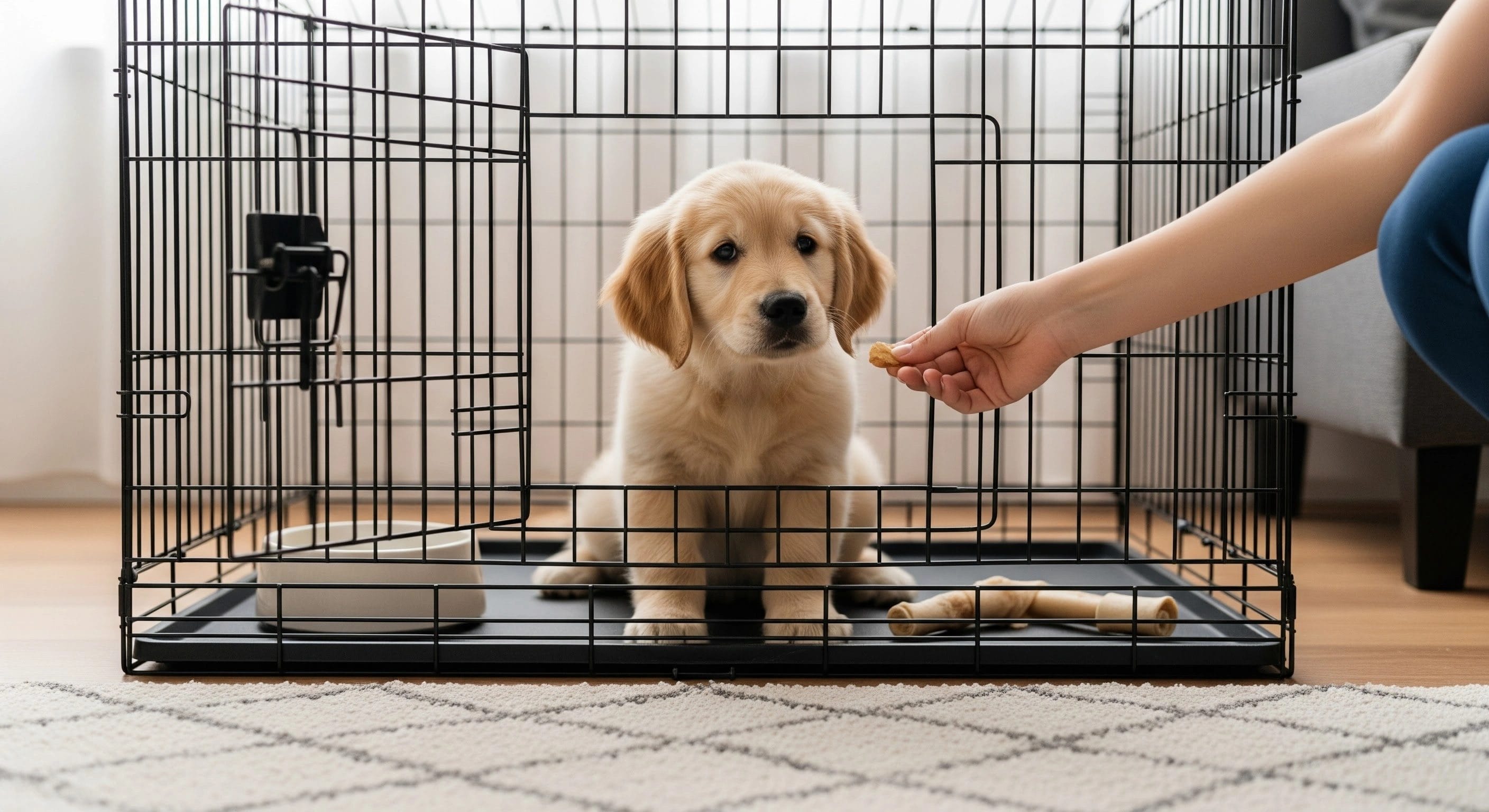
Crate training is one of those hot topics where people get loud—some swear it’s the secret to a calm, house-trained dog, others think it’s cruel. Here’s the real deal: done right, a crate can be a safe, cozy den that helps you and your dog. Done wrong, it’s a lonely cage.
Whether you’ve got a sleepy new puppy, a rescue with a messy past, or a full-grown dog testing your patience, learning the pros and cons matters.
The Advantages of Crate Training
1. Accelerates House Training
Crates speed up potty training because dogs don’t like to mess where they sleep. Think of it as giving your pup a tiny bedroom with rules — bathroom breaks become predictable and accidents drop fast.
- Establishes a routine
- Fewer indoor accidents
- Faster progress than training without a crate
2. Provides a Safe Space
A crate becomes your dog’s quiet hideout when the house is chaos — like when guests are loud or little siblings are wrestling. It satisfies their den instinct and keeps them safe when you can’t watch them.
3. Prevents Destructive Behavior
Left alone, bored pups chew stuff that costs money (and hurts you emotionally). A crate protects your home and your dog until they learn what’s okay to chew.
4. Facilitates Safe Travel
Dogs used to crates handle car rides, flights, and hotel stays way better. Crate-trained pups are calmer, follow airline rules, and don’t try to commandeer the driver’s lap.
- Less travel anxiety
- Easier airline compliance
- Safer in cars
5. Eases Veterinary Care and Emergency Situations
If your dog knows a crate, vet visits, boarding, or post-surgery rest are far less terrifying — and that makes emergencies easier to manage.
6. Creates Structure and Routine
Dogs love routine. Crate training builds predictable sleep, eat, and play patterns, which lowers stress and turns chaos into calm.
The Disadvantages of Crate Training
1. Risk of Overuse and Confinement
Here’s the biggest mistake: using a crate like a storage box instead of a safe space. Dogs aren’t meant to live in tiny rooms all day! If they spend too long inside, they can get anxious, bored, or even depressed. Think of it like sitting in your closet for eight hours — no thanks.
2. Initial Training Challenges
Crate training takes time and nerves of steel. Puppies will cry, bark, and test your patience at first. You’ll want to cave, but hang tight — giving in teaches them that whining works. The trick is balancing firmness with kindness (and earplugs don’t hurt).
3. Not Suitable for All Dogs
Some dogs just can’t handle crates — especially rescues with bad pasts or dogs with separation anxiety. For them, confinement feels like punishment, not comfort. If your pup panics, forcing it only makes things worse. Sometimes, freedom and baby gates work better.
4. Space and Cost Considerations
Big dogs need big crates — and those things aren’t cheap or subtle. They take up serious room in your house, and before you know it, your living room looks like a doggy jail zone. Add in beds, covers, and replacements as they grow, and it’s an investment.
5. Potential for Dependency
Some dogs love their crates a little too much. If they can’t relax anywhere else, you’ve got a problem — they’re supposed to be confident, not cave dwellers. Encourage naps on the couch or in a dog bed too, so they don’t forget how to be chill outside their “den.”
6. Can Mask Underlying Issues
Crates aren’t magic fixes. If your dog’s destroying stuff from stress, locking them up doesn’t solve the problem — it just hides it. Anxiety, boredom, or fear need training, enrichment, and sometimes pro help. The crate is just a tool, not therapy.
Best Practices for Successful Crate Training
Create Positive Associations
Never shove your dog into the crate — that’s a one-way ticket to “I hate this box” land. Instead, make it the coolest hangout spot ever. Toss in treats, feed meals inside, or sneak their favorite toy in there like a secret treasure. Before long, they’ll walk in like, “Hey, this is my place.”
Choose the Right Size
Pick the right size, seriously. You want the crate to fit your dog like those hoodies you lived in during college—cozy, not suffocating, but not so huge your dog throws a house party in there. If they’ve got enough space to pee in one corner and crash in the other, trust me, some little troublemakers will absolutely take advantage.
Establish a Routine
Get a routine going. Dogs are basically furry little clock-watchers—think of how you were before school, just running on autopilot: roll out of bed, scarf some breakfast, head outside, nap (if only). Same deal for pups. Feed them, let them sleep, and toss them in the crate at regular times, especially when you’re not around to supervise. The predictability? It’s like comfort food for their brains. Keeps them chill.
Provide Appropriate Exercise
No dog wants to sit in a crate full of pent-up energy. Make sure they get walks, playtime, or even a good sniff session outside first. A tired dog will curl up in their crate like, “Yeah, this is the life.”
Make it Comfortable
Add a soft blanket, a chew toy, maybe a shirt that smells like you. Some dogs love a cozy cover over their crate — like their own private fort. Think “Netflix and nap” vibes, not “cold metal cage.”
Never Use as Punishment
This one’s huge. The crate should never be a timeout zone for bad behavior. It’s their safe space, not doggy jail. If you punish them with it, you’ll break the trust you’ve worked so hard to build — and good luck getting them back in after that.
Making the Right Decision for Your Dog
Crate training isn’t automatically good or bad — it totally depends on you and your dog. Every pup is different. Some love their crate like it’s their personal chill zone; others see it and go, “Nope, not today.” The key is knowing your dog and being honest about your lifestyle.
Think about things like:
- Your dog’s age, breed, and energy level (A Husky isn’t gonna nap as easily as a senior Pug!)
- How long you’re actually home during the day — crates have time limits, not 9-to-5 workday ones
- Your space — a Great Dane crate in a studio apartment? Might feel like you’re living in their room
- Your dog’s personality and history — rescue pups with trauma may panic in confinement
- What other options you have — playpens, gated areas, dog sitters, or safe rooms
And don’t wing it alone if you’re unsure. A certified dog trainer or vet behaviorist can help you figure out what’s best. They’ll look at your dog’s vibe, your schedule, and your goals — and help you find a plan that actually works.
Conclusion: A Tool, Not a Solution
Crate training—look, it’s not some magical “good or bad” checkbox. It’s totally about how you roll with it. Used right, it’s like, hey, your dog’s got their own chill-out nook, it helps with potty stuff, and they just feel safe. Mess it up though? Like locking them in forever or treating the crate like doggy jail? Yeah, that’ll mess your pup up, no question.
Honestly, think of a crate like a seatbelt. Great tool, keeps things in check, but you wouldn’t wanna strap yourself in 24/7, right? It’s just one piece of the whole “good dog parent” puzzle. Walks, play, belly rubs—none of that disappears just ’cause you bought a crate.

- Does Cat Litter Melt Ice? The Complete Guide to Winter Safety - January 30, 2026
- Happy Tail Dogs: Understanding This Common Canine Condition - January 29, 2026
- How Cold Can Outdoor Cats Handle? Feline Winter Safety - January 27, 2026
GIPHY App Key not set. Please check settings