

 Emily Walker
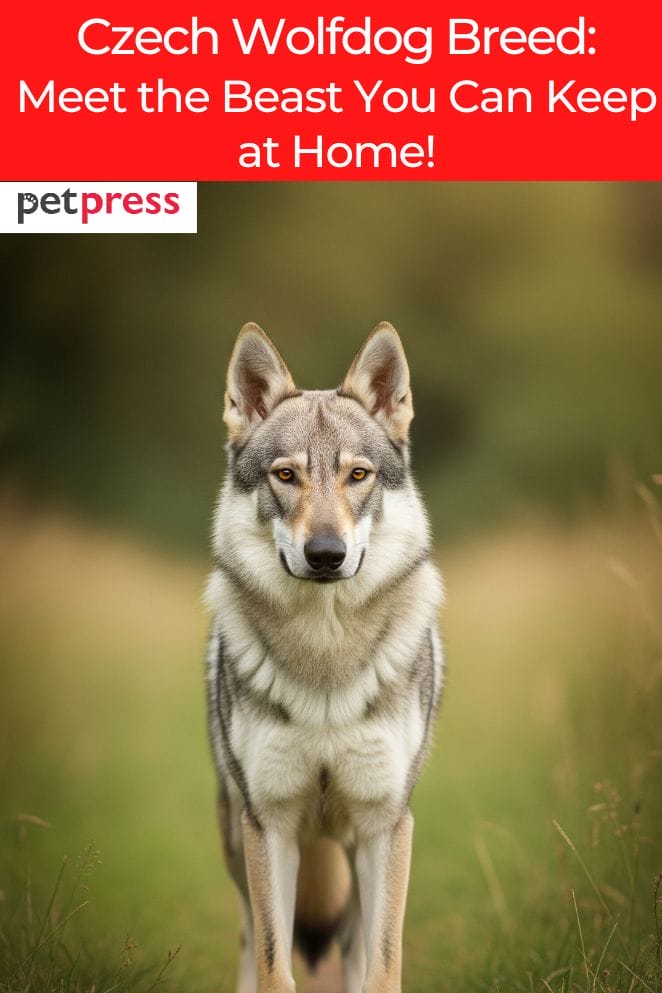
Imagine a dog that looks like it walked off the set of Game of Thrones, but thinks like a Navy SEAL.
That’s the Czech Wolfdog.
This breed isn’t fantasy—it’s the result of a 1950s military mashup between a German Shepherd and a Carpathian wolf.
What came out of that experiment?
A wild-looking, super-loyal, crazy-smart dog with major main-character energy.
But heads up—this isn’t your fetch-the-ball type.
Czech Wolfdogs are intense, independent, and need serious training and commitment.
In this guide, we’ll break down where they came from, what makes them tick, and why they’re not for the average dog owner.
Think you’re ready to handle a wolf in a dog’s world? Let’s find out.
The Unique Origins of the Czech Wolfdog
The Czech Wolfdog didn’t just happen.
It was built—like a four-legged secret agent—by a team of military minds who wanted more out of their working dogs. Tougher. Smarter. Wild enough to handle snowstorms and mountain trails, but loyal enough to follow orders.
So in 1955, the Czechoslovakian Army said: “Let’s cross a wolf with a German Shepherd and see what happens.”
The Czechoslovakian army project (1955)
It all started in Libějovice, at a border guard kennel run by the Czechoslovakian military.
Engineer Karel Hartl led the project. His mission? Create a dog that had:
- The stamina and instincts of the Carpathian wolf
- The trainability and loyalty of the German Shepherd
They chose a female wolf named Brita and a German Shepherd named Cézar.
In 1958, their pups were born—the first generation of wolfdogs. The team didn’t stop there.
They kept adding German Shepherd genes over time to make the pups more trainable while keeping that wild edge.
This wasn’t backyard breeding—it was calculated and focused, with every trait under the microscope.
Built for harsh conditions
These hybrids were meant to patrol the border. Snow, forest, mountains—no problem.
Where regular German Shepherds started to struggle, these wolfdogs kept going. They were built for long shifts, rough terrain, and high-stakes missions.
From soldiers to civilians
Once people outside the military saw them, the buzz started.
These dogs looked like wolves and acted like elite working dogs. Civilian breeders got interested. Over time, more structured breeding began.
By 1982, Czechoslovakia officially recognized the Czech Wolfdog as a national breed.
In 1999, the Fédération Cynologique Internationale (FCI) gave it international recognition.
That’s fast. Most breeds take centuries to get official status.
The Czech Wolfdog did it in a few decades, because it wasn’t shaped by nature. It was designed on purpose.
Distinctive Appearance: The Wolf in Dog’s Clothing
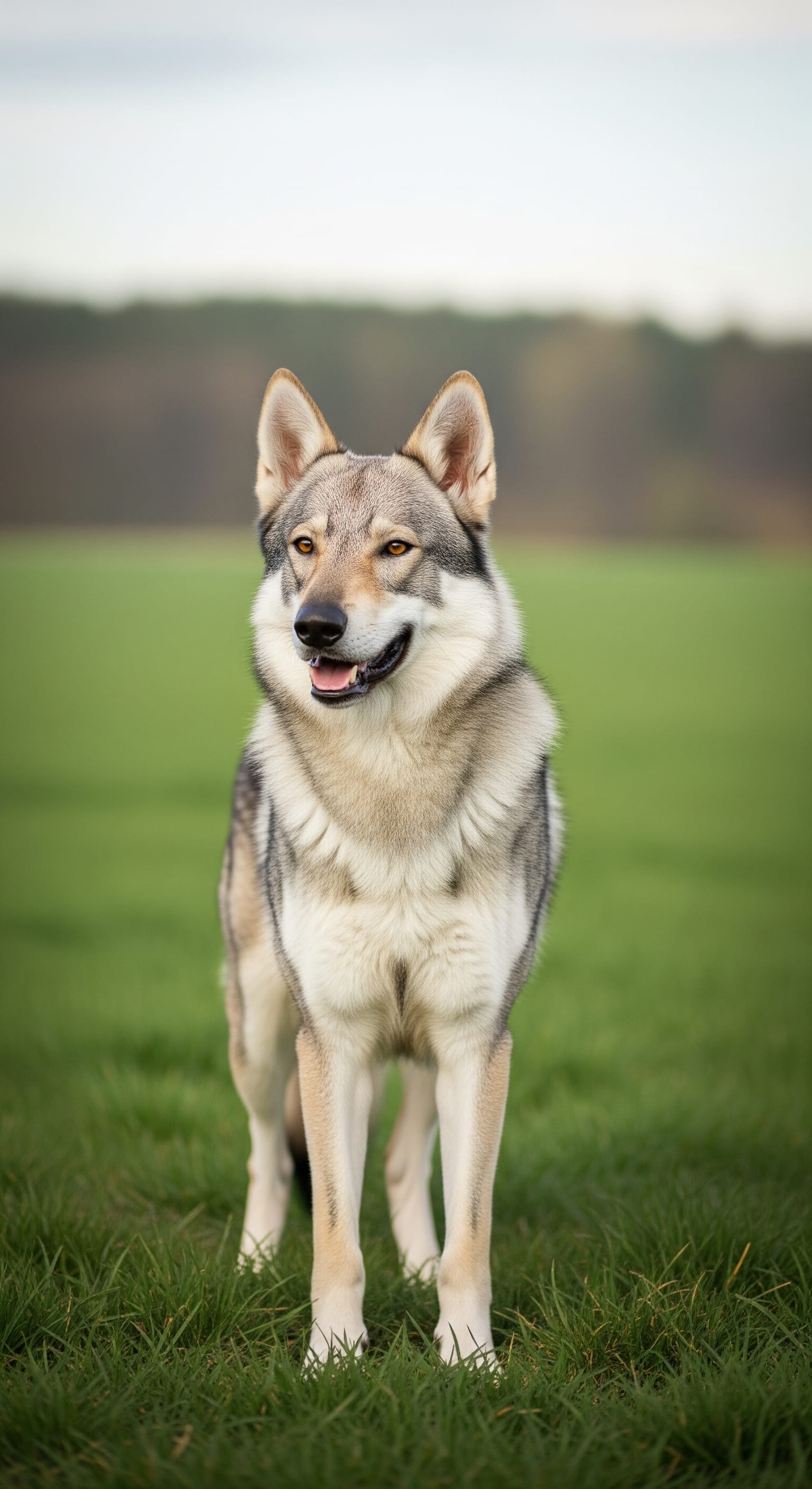
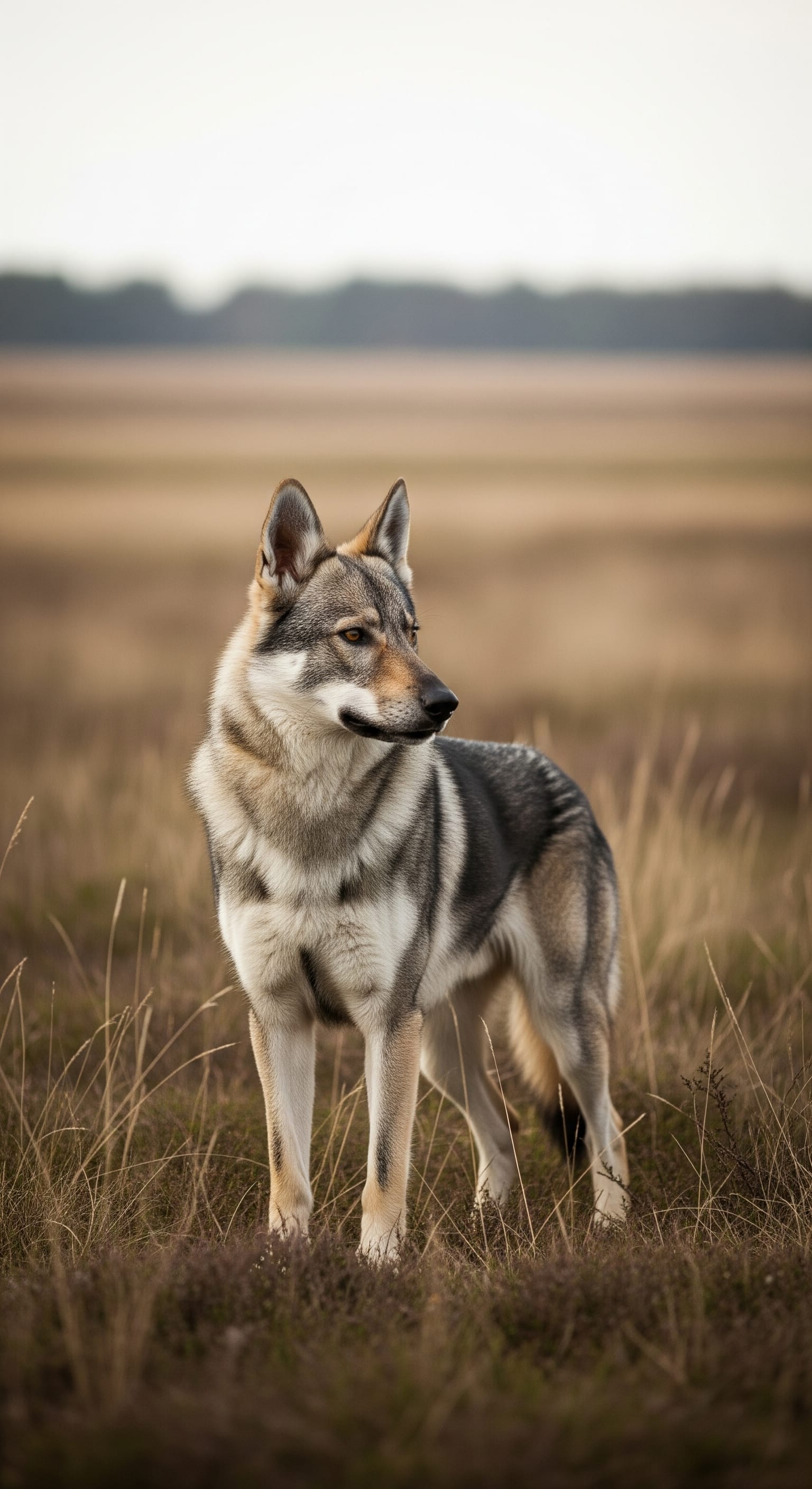
You can’t ignore it—this dog looks like it just walked out of a nature documentary.
The Czech Wolfdog was bred to look wild on purpose. That “is that a wolf?” vibe? Totally intentional.
Size and build
These dogs aren’t tiny. They’re tall, long, and made to move.
- Males usually stand at least 65 cm (about 25.5 inches) at the shoulder and weigh around 26 kg (57+ lbs).
- Females are a bit smaller—about 60 cm (23.5 inches) and 20 kg (44+ lbs).
They’ve got muscle without bulk. Think athlete, not bodybuilder.
Their legs are strong, their bodies are lean, and they move like they’re gliding—kind of like a dancer who also runs marathons.
Coat and coloration
What really gives them that wolf vibe is their coat.
- Color: The classic shade is wolf-grey, but it can shift from silver-grey to yellow-grey.
- Texture: The fur is thick, straight, and dense. It’s got a built-in undercoat for warmth, especially in winter.
- Seasonal style swap: In cold months, the coat fluffs up like they’re dressing for a snowstorm. Come summer? Major shed-fest.
You’ll also spot:
- A pale “mask” on the face (lighter fur around the muzzle and eyes)
- Lighter fur under the neck and chest
- Ears that stand up—short, pointy, and very aware
- A tail that hangs low but never looks limp
Facial features
That face? It says, “I know what’s going on.”
Czech Wolfdogs have:
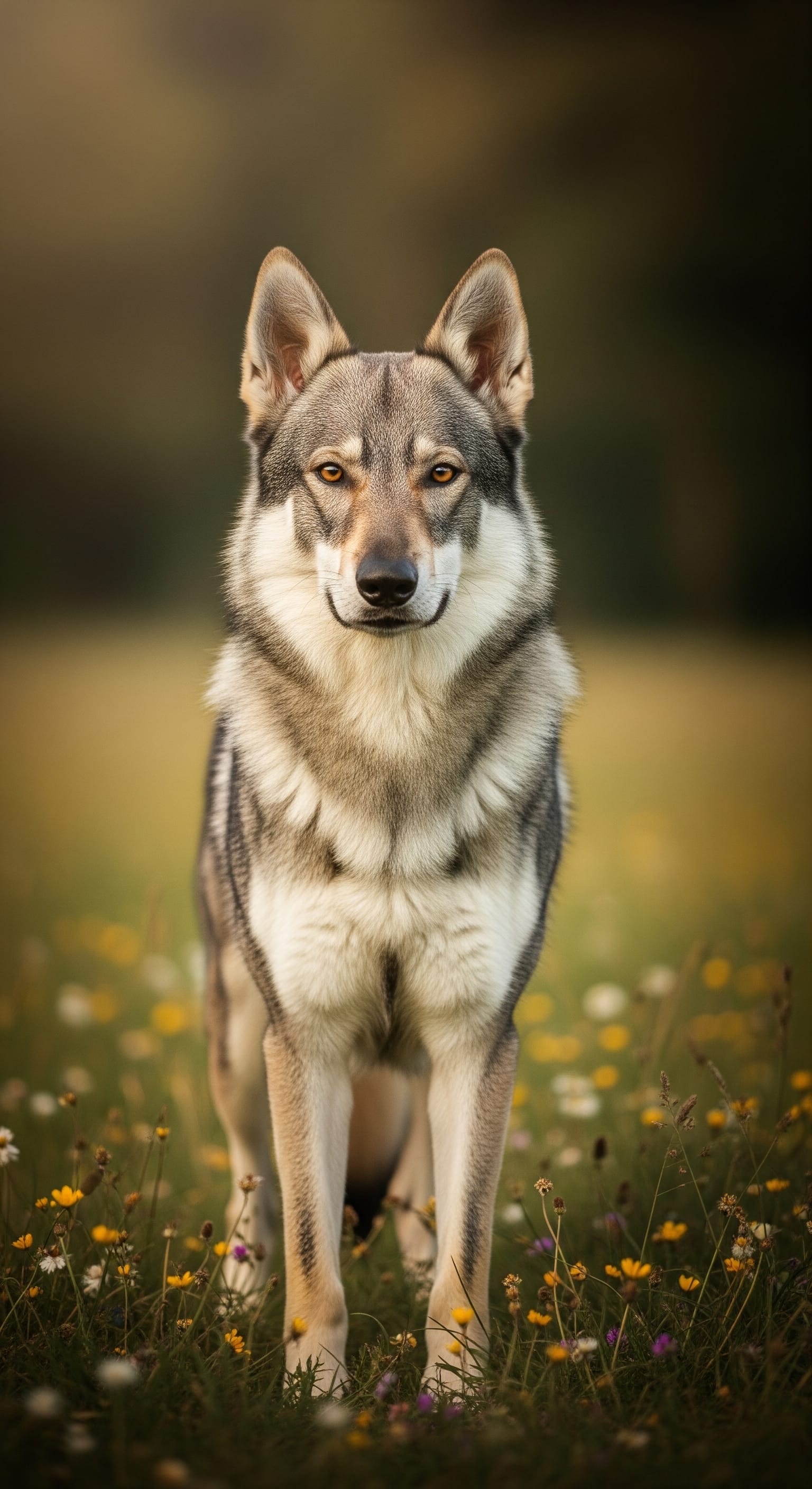
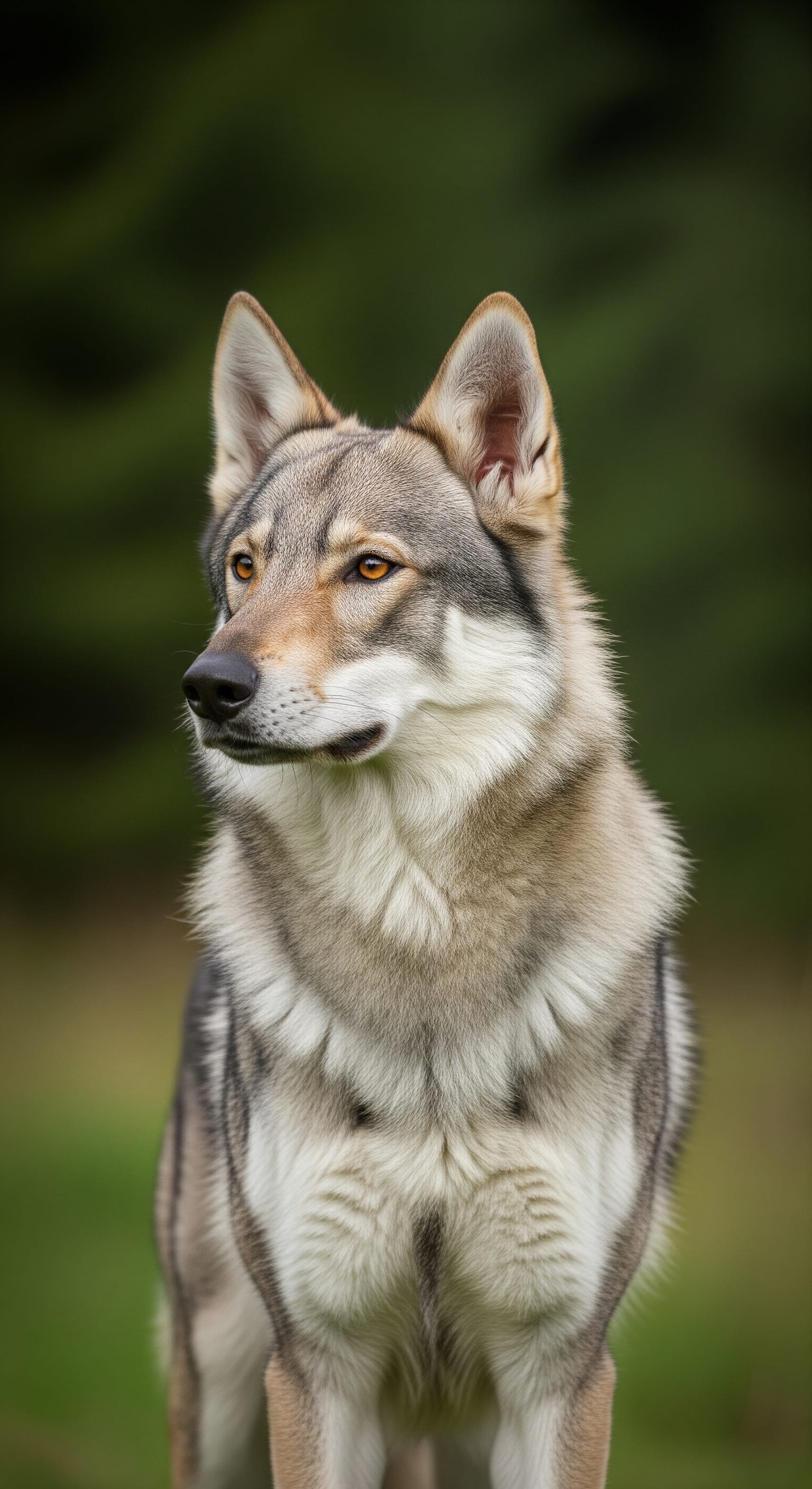
- Almond-shaped amber eyes that track everything
- A short, tight muzzle
- Triangular ears high on the head
They’ve got serious “don’t mess with me” energy.
But what makes them really cool is how expressive they are.
Unlike most dogs, their facial muscles can show a wide range of subtle reactions, like side-eyes, raised brows, and all the quiet wolf drama.
Temperament and Personality: A Complex Canine Companion
This breed isn’t just “different.” It plays by its own rules.
The Czech Wolfdog mixes the sharp brain of a German Shepherd with the instincts of a wild wolf.
That means they’re clever, intense, loyal—and not a great choice for first-time dog owners. Let’s break down what’s going on in that complicated head.
Super smart, super independent
They think before they act. Czech Wolfdogs don’t just follow commands—they size them up.
They’re like the kid in class who questions the teacher… every time.
- Fast learners: Yes. But they’re not push-button dogs.
- Independent: They often prefer solving problems their way.
- Training tips: Keep it fun. Use rewards. Skip the boring drills—they’ll check out. Think less “sit, stay” and more “solve this puzzle and win a prize.”
Also: They’re escape artists. Don’t be surprised if they figure out how to open a latch, squeeze through a gap, or hop a fence like it’s an Olympic sport.
Strong pack instincts and social needs
These dogs bond hard. If you’re in their circle, you’re family for life.
- Loyal to their pack: They stick close to their people and hate being left behind.
- Separation anxiety is real: Leave them alone too long, and you’ll come home to a chewed-up couch or a howling session that could wake the neighbors.
- Solution? Include them in daily life and start socialization early. Let them meet people, dogs, and weird new things like vacuum cleaners while they’re still pups.
Without socialization, they can get nervous around strangers and new situations.
Early exposure = confident adult.
Energy, endurance, and exercise needs
Forget fetch-in-the-yard energy. These dogs need to move—a lot.
- Walks aren’t enough: Think trail runs, agility courses, bike rides, or full-day hikes.
- Mental workouts too: Toss them a puzzle toy, scent-tracking game, or structured training challenge. If their brain gets bored, they’ll entertain themselves—and it won’t be cute.
A tired Czech Wolfdog is a good dog. A bored one? Say goodbye to your furniture
Vocalization and communication
These dogs are not big barkers. But they do communicate. A lot.
You’ll hear:
- Howl
- Whines
- Yips
- Growls (not always aggressive—sometimes they’re just “talking”)
They also read you really well. They watch your tone, your body, even your mood. It’s kind of spooky how tuned in they are.
Prey drive
Because of their wolf side, Czech Wolfdogs have a strong prey drive.
Cats, squirrels, tiny dogs—they might chase without thinking twice. Unless you’ve trained them hard and early, don’t trust them off-leash in open areas.
Specialized Care and Ownership Requirements
Let’s not sugarcoat it—owning a Czech Wolfdog is a full-time job.
This breed isn’t for first-timers, casual dog people, or anyone looking for a chill, low-effort companion.
They need structure, space, and a whole lot of energy.
Think of them like the Navy SEALs of the dog world—you don’t train them once and call it done.
1. Training and socialization
Czech Wolfdogs need early socialization. Like, from the day you bring them home.
Show them the world—people, dogs, loud sounds, slippery floors, weird hats—you name it.
It teaches them what’s normal and keeps them from becoming scared or snappy later.
Here’s what works:
- Use positive reinforcement. Treats, praise, and games work better than yelling. Harsh methods? You’ll just lose their trust.
- Be firm but fair. They won’t follow orders just because you said so. You have to earn their respect.
- Get professional help if you’re not experienced. And not just any dog trainer—someone who understands working breeds or wolfdogs specifically.
Training never really ends with this breed. They’ll test limits like a teenager trying to sneak out past curfew.
2. Exercise and mental stimulation
A fenced yard is cool, but don’t expect them to tire themselves out doing zoomies on the grass.
Czech Wolfdogs need serious physical and mental workouts.
Physical workouts they actually enjoy:
- Long-distance runs
- Bikejoring (yes, that’s pulling you on a bike—it’s a thing)
- Mountain hikes
- Dog sports like agility, canicross, or advanced obedience
Mental workouts to keep the brain busy:
- Puzzle toys
- Hide-and-seek with treats
- Learning new tricks often
- Scent tracking and problem-solving games
Skip the stimulation, and they’ll turn your house into a demolition site. Not kidding.
3. Secure containment
Czech Wolfdogs are escape artists.
They’ll jump, climb, dig, and Houdini their way out of whatever space you think is secure.
How to outsmart them:
- Build tall fences—we’re talking at least 6 feet, but even 8 feet isn’t overkill
- Bury wire or add dig-proof barriers at the base of fences
- Use escape-proof kennels when you’re not around to supervise
- Never leave them alone in the yard unsupervised for long
If you think they can’t escape, they probably already are.
4. Diet and health
These dogs burn calories like an athlete, so their diet matters. Feed them high-protein food made for large, active breeds.
Some owners go with a raw or BARF diet (yep, it’s really called that), which mimics a more natural, wolf-style menu.
But talk to your vet first so you don’t mess up their nutrition.
Health issues to watch for:
- Hip dysplasia
- Elbow dysplasia
- Degenerative myelopathy (a spinal cord disease)
Stick with breeders who test for these things. It matters.
5. Living environment
These dogs need space—and lots of it. They’re vocal, high-energy, and big.
Apartments usually don’t cut it.
Best home setups:
- Rural or semi-rural areas
- Large fenced property
- Active households where someone’s almost always around
If you live in a city or a tight space, you’d better be an ultra-marathoner with loads of free time and patient neighbors.
Conclusion: A Partnership Built on Understanding
The Czech Wolfdog isn’t your average pet. It’s half wild, crazy smart, and needs way more than walks and belly rubs.
You don’t just “own” one—you team up with it.
If you’re experienced, active, and ready to train, socialize, and keep up both mentally and physically, this breed can be your ride-or-die companion.
It’s not easy—but it’s worth it. You’ll get loyalty, brains, and a bond that feels more primal than pet-store cute.
Not for everyone. But for the right person? It’s the ultimate dog experience.

- Does Cat Litter Melt Ice? The Complete Guide to Winter Safety - January 30, 2026
- Happy Tail Dogs: Understanding This Common Canine Condition - January 29, 2026
- How Cold Can Outdoor Cats Handle? Feline Winter Safety - January 27, 2026
GIPHY App Key not set. Please check settings