

 Emily Walker
If you’re thinking about getting a Doberman, Great Dane, or German Shepherd, there’s one super important thing you have to know: their deep chest.
These dogs look amazing, but that long, narrow chest isn’t just for style—it can seriously affect their health.
I’ve seen owners learn this the hard way, and trust me, this is one of those “I wish someone told me sooner” things.
Understanding deep-chested dogs can literally save your dog’s life. Let’s break it down—quick, clear, and no boring science lecture.
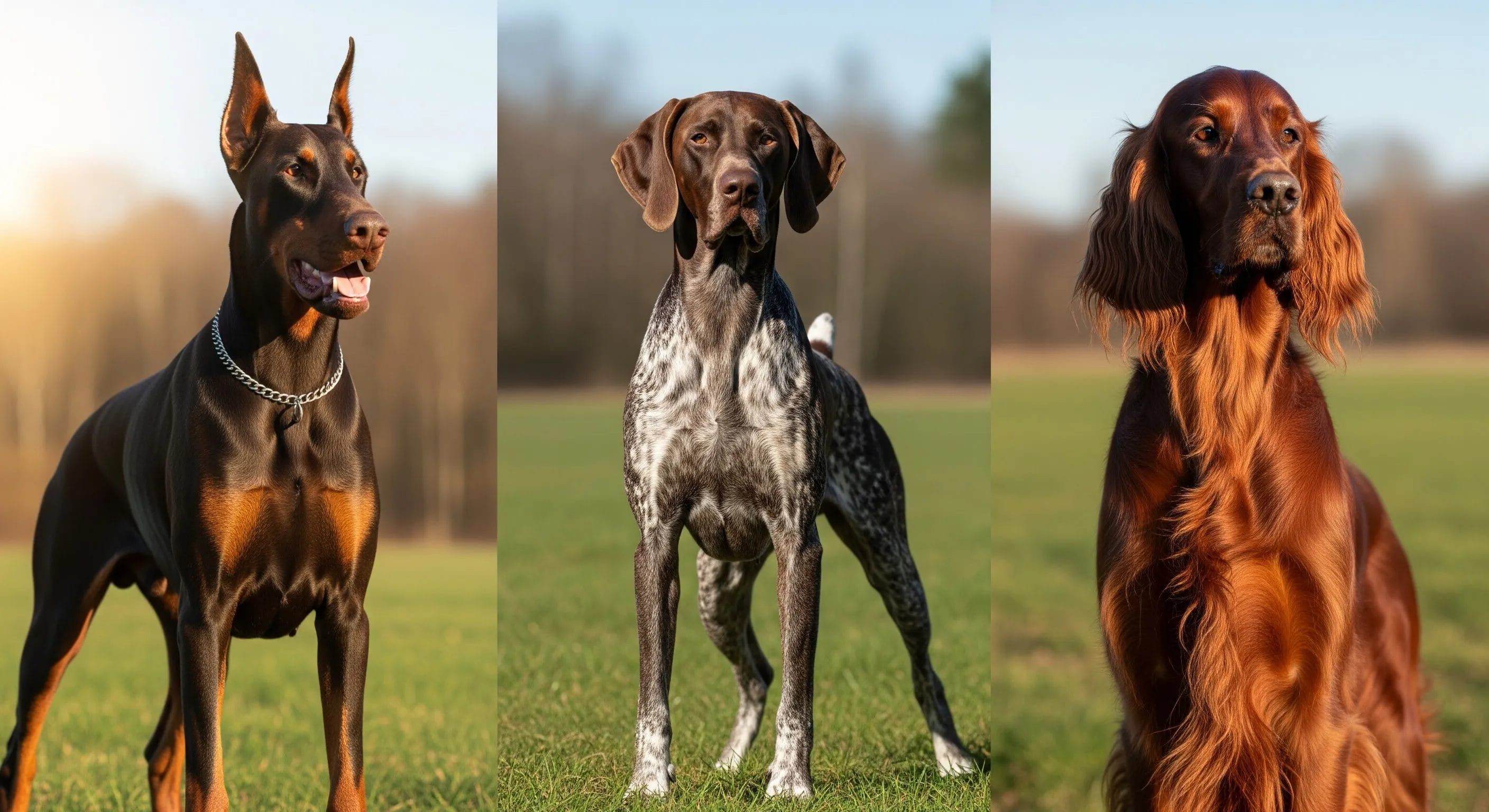
What Are Deep Chested Dog Breeds?
A deep-chested dog has a chest that goes down more than it goes wide. From the side, their chest drops way below their elbows—think tall and sleek, not round like a bulldog or long and low like a dachshund.
This design gives them awesome lung power, which is why they’re such great runners and working dogs.
But here’s the catch: that same chest shape makes them more likely to get a dangerous stomach condition called bloat (GDV). Cool body, hidden risk—kind of like a sports car with a sensitive engine.
Common characteristics of deep chested dogs include:
- Height-to-width chest ratio greater than 1.25:1
- Visible “tuck up” in the abdomen when viewed from the side
- Prominent breastbone (sternum)
- Narrower ribcage when viewed from the front
- Generally taller, leaner body structure
Popular Deep Chested Dog Breeds
Understanding which breeds fall into this category helps owners prepare for the specific care requirements these dogs need.
Large to Giant Deep Chested Breeds
Great Dane
If deep chests had a mascot, it would be the Great Dane. These gentle giants are often called the “Apollo of dogs,” and yeah—they know they’re impressive.
But here’s the scary part: their huge size plus that deep chest puts them at one of the highest risks for bloat.
I’ve met Dane owners who swear their dog was fine one minute and in trouble the next. With Danes, knowing the risk isn’t optional—it’s survival knowledge.
Doberman Pinscher
Dobermans look like superheroes, and honestly, they kind of are. Sleek, fast, loyal, and super smart, they were bred to protect—and that deep chest is part of what makes them so athletic.
But that same body shape means owners have to be extra careful about feeding and activity. Strong dogs still have weak spots.
German Shepherd
You’ve seen them everywhere—police work, movies, family homes. German Shepherds are endurance machines, and their deep chest helps them work for hours without slowing down.
Fun fact: show-line Shepherds often have deeper chests than working lines, which can slightly change their risk level. Same breed, different builds, different care needs.
Irish Setter
These dogs look like they belong in a slow-motion movie scene, ears flying, red coat glowing. Their deep chest helped them run all day in the field without getting tired.
Today, that same design makes them amazing family dogs—but also means owners need to be aware of bloat risks. Beauty and responsibility go hand in hand.
Weimaraner
Nicknamed the “Gray Ghost,” Weimaraners are pure energy wrapped in silver fur.
Their deep chest gives them insane stamina—great for running, hiking, and zooming around like they drank five energy drinks. But yep, that chest shape puts them on the watch list for GDV too.
Medium-Sized Deep Chested Breeds
Boxer
Boxers look like muscular goofballs—and they are—but don’t let the muscles fool you. Underneath all that power is a deep chest that puts them at risk for bloat.
They’ll happily bounce around like nothing can hurt them, which is why owners have to be the responsible ones.
Basset Hound
Short legs. Long ears. Sad eyes. Deep chest. Basset Hounds are proof that size doesn’t matter—body shape does.
Their chest is way deeper than you’d expect, and that makes them vulnerable despite being closer to the ground than your sneakers.
Standard Poodle
Forget the fancy haircut stereotypes. Standard Poodles are athletes—smart, fast, and ridiculously capable.
Their deep chest supports all that movement and athleticism, but it also means they belong in the “handle with care” group when it comes to feeding and exercise timing.
The Bloat Risk: Understanding GDV in Deep Chested Dogs
The biggest danger for deep-chested dogs is something called bloat, or GDV. I’ve seen dogs go from happily wagging their tails to fighting for their lives in a single afternoon. No exaggeration.
GDV happens when a dog’s stomach fills with gas and twists. Once it twists, blood can’t flow, gas can’t escape, and everything goes downhill fast.
Deep-chested dogs are 5 to 8 times more likely to get GDV, and studies show that about 1 in 3 large deep-chested dogs may experience it if nothing is done to prevent it. Yeah… that’s scary.
Why Deep Chested Dogs Are at Higher Risk
Their body shape is the problem. That tall, narrow chest gives the stomach extra room to swing around—kind of like a loose backpack in a locker. When it flips, it’s an emergency.
Critical warning signs of bloat include:
- Distended, hard abdomen
- Trying to vomit but nothing comes out
- Lots of drooling
- Pacing or acting panicked
- Fast, shallow breathing
- Pale gums
- Sudden weakness or collapse
If you ever see this, don’t wait. Not “let’s see if it gets better.”
This is a run-to-the-vet-now situation. GDV can be fatal within hours. If you love a deep-chested dog, knowing where the nearest 24-hour emergency vet is could literally save their life.
Prevention Strategies for Bloat
Good news—you can’t change your dog’s body shape, but you can stack the odds in their favor. Think of this like leveling up your dog’s safety stats.
These steps are backed by real science and real vets.
Feeding Modifications
First rule: no giant meals. Feed two or three smaller meals a day instead of one huge one. A stuffed stomach is a risky stomach.
Skip raised bowls. They used to be popular, but turns out they can actually increase bloat risk in deep-chested dogs. Floor bowls win.
If your dog eats like they’re in a speed-eating contest, slow them down. Puzzle feeders and slow bowls help stop them from swallowing tons of air.
Exercise and Activity Management
No zoomies around mealtime. Seriously. Wait at least an hour after exercise before feeding, and two hours after eating before hard play.
I know it’s hard to say no to those puppy eyes—but this rule saves lives.
Stress Reduction
Nervous dogs are more at risk. Feed your dog in a calm, quiet spot, away from chaos and competition. Less stress = safer stomach.
Surgical Prevention: Gastropexy
This is the big one. A gastropexy is a surgery that tacks the stomach in place so it can’t twist. Vets often do it during spay or neuter for high-risk breeds.
It cuts GDV risk by over 95%. That’s huge. The stomach can still get gassy, but the deadly twist? Gone.
It’s considered the gold standard for protecting deep-chested dogs—and honestly, it’s a game-changer.
Other Health Considerations for Deep Chested Breeds
Bloat is the big scary one, but it’s not the only thing to watch out for. Deep-chested dogs are built like athletes—and athletes need extra care to stay in the game.
Cardiac Health
That deep chest holds a big heart, literally. Some breeds, like Dobermans, are known for heart issues such as dilated cardiomyopathy.
This is why regular heart checkups matter. Catching problems early can add years to a dog’s life.
Joint and Orthopedic Issues
Big body + fast growth = joint trouble. Hip and elbow dysplasia are common in large, deep-chested breeds. Keeping your dog at a healthy weight is huge here—extra pounds are like making them carry a backpack all day.
Exercise Requirements
Most of these dogs were bred to work. They need daily exercise, and their deep chest gives them the lung power to go and go. Just remember the rule: no intense play right around meals. Strong dogs still need smart schedules.
Caring for Your Deep Chested Dog
Owning one of these dogs is awesome—but you’ve got to know what you’re signing up for.
Weight Management
Fit is the goal, not chunky. You should be able to feel your dog’s ribs without seeing them. Staying lean protects their heart, joints, and stomach.
Regular Veterinary Care
Vet visits aren’t optional. Yearly checkups (twice a year for older dogs) help catch problems early, especially heart and joint issues common to these breeds.
Training and Socialization
A trained Great Dane is a gentle giant. An untrained one? A walking disaster. These dogs are big and strong, so early training and socialization are non-negotiable.
Environmental Adaptations
Comfy matters. Supportive beds help protect joints and long legs. If your dog sleeps like a sprawled-out superhero, give them a place that actually supports their body.
Choosing a Deep Chested Breed
Before you bring one of these dogs home, pause and ask yourself a few real-talk questions:
- Can you afford them? Big dogs = big vet bills, and emergency bloat surgery can cost a lot.
- Do you have enough space? These aren’t tiny-apartment dogs—they need room to move.
- Can you keep up with exercise? These dogs are athletes, not couch decorations.
- Are you around enough? Many deep-chested breeds get super attached and hate being alone all day.
Conclusion: Informed Ownership Saves Lives
Deep-chested dogs are incredible—loyal, smart, and absolutely unforgettable. But their unique body shape means you can’t wing it as an owner. You have to know your stuff.
Understanding bloat, preventing it, and spotting the warning signs can literally save your dog’s life. Good feeding habits, smart exercise timing, regular vet visits, and even preventive surgery can make a massive difference.

- Does Cat Litter Melt Ice? The Complete Guide to Winter Safety - January 30, 2026
- Happy Tail Dogs: Understanding This Common Canine Condition - January 29, 2026
- How Cold Can Outdoor Cats Handle? Feline Winter Safety - January 27, 2026
GIPHY App Key not set. Please check settings