

 Emily Walker
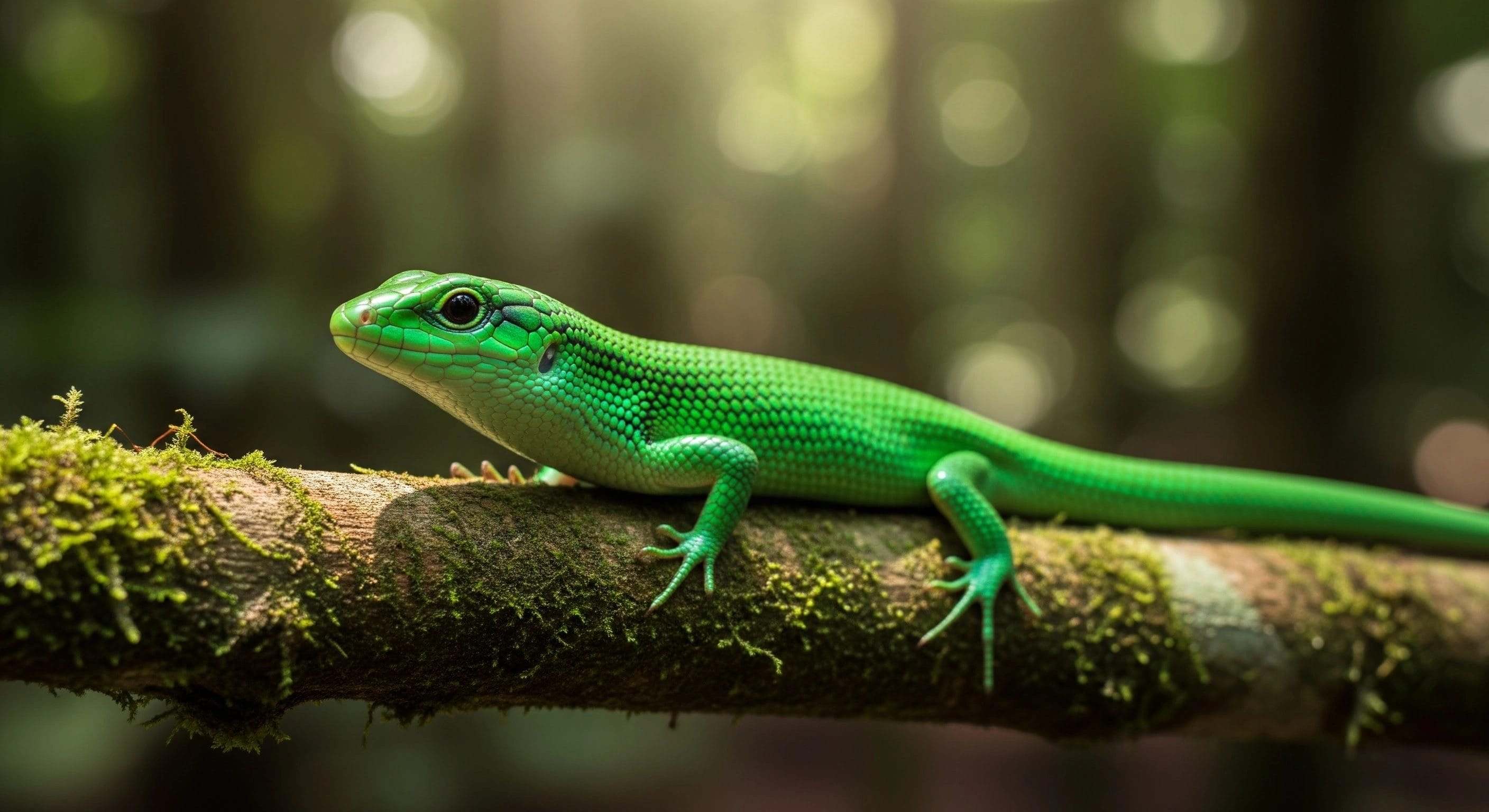
The emerald tree skink (Lamprolepis smaragdina) is one of the coolest, most eye-catching lizards you’ll ever see. Picture a tiny, green ninja with scales that shine like emeralds and the climbing skills of Spider-Man. These Southeast Asian charmers have totally won over reptile fans everywhere. If you’ve ever dreamed of having a living piece of jungle magic in your room, learning how they live and what they need is a must.
Understanding the Emerald Tree Skink’s Natural History
Origins and Natural Habitat
- Indonesia and the Philippines
- Papua New Guinea and the Solomon Islands
- Various Pacific island chains
- Coastal forests and rainforest environments
These skinks are full-time tree-dwellers — picture tiny green ninjas who live in the canopy. They love dense foliage, high humidity, and dappled sunlight. Their whole body (and attitude) is built for life off the ground: gripping, climbing, and hiding among leaves.
Physical Characteristics That Set Them Apart
Size and Build:
Adults run about 7–10 inches long, with the tail making up roughly two-thirds. Slim, long, and built to shimmy along branches.
Coloration Variations:
Most adults glow emerald with a metallic sheen; some show blue-green or golden hints depending on where they’re from. Babies usually start bronze or brown and slowly turn that famous green as they grow.
Specialized Adaptations:
They’ve got adhesive lamellae on their toes for insane climbing, and a long tapering tail for balance, social signals — and the classic lizard trick of dropping it if they’re really freaked out. Smart, flashy, and built for the trees.
- Read Also: What Threats Do Foxes Face? Challenges Confronting These Canids
- Read Also: Is a Hedgehog the Right Pet for You? Pros & Cons Explained
Creating the Perfect Captive Environment
Enclosure Requirements and Setup
Since emerald tree skinks are basically parkour champions, they need height more than floor space.
Enclosure Size:
Aim for at least 18 x 18 x 24 inches for one or two skinks. Bigger is always better — think of it as building them their own jungle gym.
Essential Features:
Give them:
- Tons of branches in different sizes
- Live or fake plants for hiding and boosting humidity
- Cork bark for climbing
- A secure screen top
- A few basking spots at different temps
Substrate Options:
They barely touch the ground, so don’t overthink it — coconut fiber, mulch, or even paper towels work. Just keep things slightly moist for good humidity.
Temperature and Lighting Parameters
These little green athletes need the right heat and light to stay healthy and glowing.
Temperature Requirements:
- Basking: 90–95°F
- Ambient: 75–85°F
- Night: 70–75°F
Lighting Needs:
They must have UVB (5.0–10.0) for 10–12 hours a day. Place the bulb about 6–12 inches from their basking spots, and swap it out every 6–12 months even if it still “looks fine.”
Humidity Control:
Keep humidity between 60–80% so they shed well and breathe easily. Mist daily, use live plants, and monitor with a hygrometer — don’t guess unless you want crispy-skinned skinks!
Nutrition and Feeding Guidelines
Emerald tree skinks are total bug lovers — think of them as the picky eaters who only want the crunchy stuff. In the wild, they might nibble fruit now and then, but their main menu is insects. In captivity, stick to:
Primary Food Sources:
- Crickets (make sure they’re not bigger than the space between your skink’s eyes)
- Dubia roaches — basically the power food of reptile diets
- Mealworms (like junk food… tasty but keep it limited)
- Waxworms (dessert only!)
- Black soldier fly larvae
- Small silkworms
Feeding Schedule:
Adults eat every other day. Juveniles? They’re growing like teenagers after a growth spurt, so feed them daily. Toss in enough bugs for a 10–15 minute feast — usually 4–6 insects. If your skink looks at you like, “That’s it?” don’t fall for it. They’re dramatic.
Supplementation:
This is super important — even more important than remembering to charge your phone. Without the right supplements, skinks can develop serious issues.
- Dust insects with calcium (no D3) at most meals
- Add calcium with D3 once or twice a week
- Throw in a reptile multivitamin once weekly
Some keepers say their emerald skinks will lick up a little pureed fruit or commercial gecko diet like it’s a smoothie. Totally optional, but a fun treat that also adds hydration.
Behavior and Social Dynamics
Temperament and Handling Considerations
Emerald tree skinks are basically the parkour athletes of the reptile world — fast, alert, and always ready to sprint if something freaks them out. They’re more “look but don’t touch” pets, and honestly, they prefer it that way. When you do need to handle one:
- Move slowly, like you’re trying not to wake a sleeping dragon
- Support their whole body, especially that long tail
- Keep sessions short (5–10 minutes max — trust me, they’re done by then)
- Handle them somewhere secure so they don’t suddenly decide to audition for The Great Escape
- Wash your hands before and after
Social Structure and Housing Multiple Skinks
These skinks can live in pairs or small groups if you give them enough space — think “shared apartment,” not “crowded dorm room.”
But here’s the golden rule:
- Never put two males together. They’ll treat each other like rival ninjas and start fighting.
- The best setup is one male with one or two females.
- Make sure the enclosure has multiple basking spots, hiding places, and feeding stations so no one has to fight for resources.
- Keep an eye out for bullying, food hogging, or stressed behavior.
Common Health Concerns and Veterinary Care
Recognizing Health Issues
Keeping your emerald tree skink healthy is kind of like keeping a plant alive — you’ve gotta pay attention before things go downhill fast. Watch for these red flags:
Metabolic Bone Disease (MBD):
This happens when they don’t get enough calcium or UVB. Think of it as their bones turning to rubber — not good. Signs include wobbly climbing, twisted limbs, low energy, or a soft jaw. Trust me, preventing MBD is way easier than fixing it.
Respiratory Infections:
If your skink sounds like it’s trying to whistle through a wet tissue, that’s bad. Wheezing, open-mouth breathing, or goo around the nose usually means temps or humidity are off.
Shedding Problems:
Sometimes they don’t shed completely — especially on toes and tail tips. If shed skin gets stuck, it can literally cut off circulation. Keeping humidity up is your best weapon here.
Parasites:
Wild-caught skinks especially can bring along “uninvited guests.” A yearly poop check at the vet helps catch things early.
Finding Qualified Veterinary Care
Before anything goes wrong, you need a reptile-savvy vet lined up — not a random cat-and-dog clinic that looks confused when you walk in with a neon-green tree lizard. The Association of Reptilian and Amphibian Veterinarians (ARAV) has a directory to help you find the real experts. Even if your skink seems fine, a yearly checkup is just smart pet parenting.
- Read Also: Turtles and Tortoises Make Great Pets: The Quiet Companions
- Read Also: How to Create the Perfect Habitat for Your Exotic Pet?
Conclusion: Is an Emerald Tree Skink Right for You?
The emerald tree skink is basically the living definition of “look but don’t touch” beauty — stunning colors, incredible climbing skills, and personality for days. But before you bring one home, you’ve gotta be sure you can meet their pretty specific needs: tall enclosure, tons of branches, perfect temps, strong UVB, and rainforest-level humidity. These aren’t “set it and forget it” pets.
They’re best for keepers who enjoy watching more than handling — think of them like the wildlife documentary star of your room. They won’t cuddle, but watching them leap, glide, and climb like tiny green superheroes is honestly just as rewarding.

- Does Cat Litter Melt Ice? The Complete Guide to Winter Safety - January 30, 2026
- Happy Tail Dogs: Understanding This Common Canine Condition - January 29, 2026
- How Cold Can Outdoor Cats Handle? Feline Winter Safety - January 27, 2026
GIPHY App Key not set. Please check settings