

 Emily Walker
When winter hits hard, a lot of people assume cats are fine because they’ve got fur. Big mistake.
I’ve seen tough-looking cats shivering like phones on silent mode because it was way colder than their bodies could handle.
If your cat goes outside—even “just for a bit”—cold weather can turn dangerous fast.
Understanding Your Cat’s Natural Cold Tolerance
Cats are tough, but they’re not superheroes. Most cats are okay down to about 45°F (7°C). Below that? They start getting uncomfortable.
Once it hits 32°F (0°C), things get serious—think hypothermia and frostbite. And at 15°F (-9°C)? That’s life-threatening, even for outdoor or barn cats.
Vets (like the experts at the American Veterinary Medical Association) are very clear: no cat should be outside in freezing temps without real shelter and care.
The idea that cats are “built for winter” has caused way too many injuries. Fur helps—but it’s not magic.
Key Factors That Determine Cold Tolerance
Here’s the truth I wish every teenager (and adult) knew: not all cats handle cold the same. I’ve met cats built like fluffy snow tanks—and others who start freezing the second the window cracks open.
Coat Type and Thickness
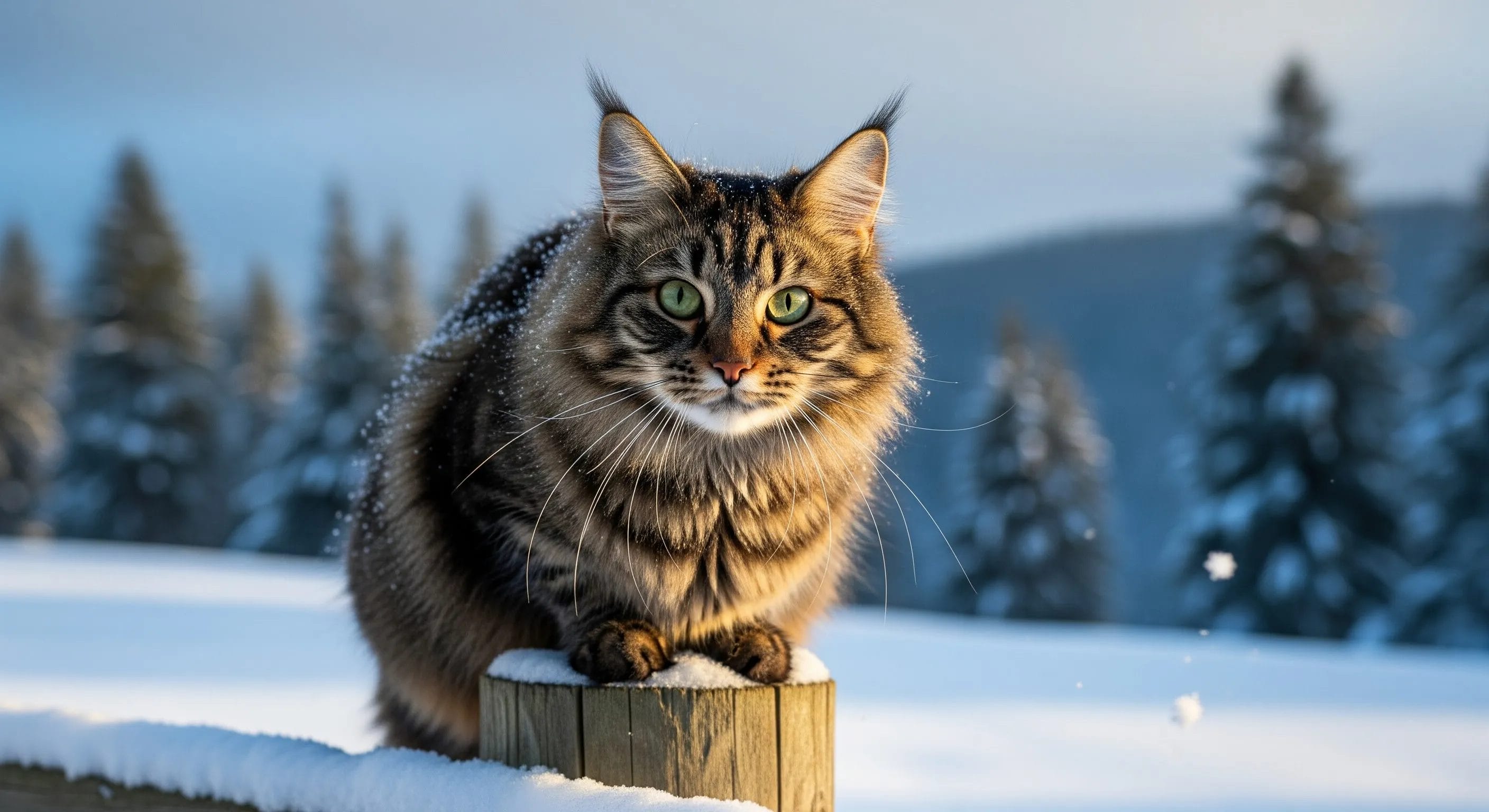
Fur is a cat’s winter jacket. Big, fluffy cats like Maine Coons or Norwegian Forest Cats? They’ve got the deluxe, double-layer coat.
Short-haired cats like Siamese feel the cold fast. Hairless cats? That’s basically a walking popsicle—never let them face cold without protection.
Age and Overall Health
Kittens and old cats struggle the most. Babies can’t regulate heat well, and seniors already hurt when it’s cold.
Sick cats—like those with heart or kidney issues—lose heat faster too. Winter hits them harder than you’d think.
Body Condition and Weight
A little healthy body fat helps keep cats warm. Too skinny? They freeze faster. Too chunky? They might not move well enough to find shelter. Balance matters.
Acclimatization
Cats slowly used to cooler weather do better than indoor cats suddenly thrown outside. No warm-up = no winter superpowers.
Recognizing the Warning Signs of Cold Stress
This part matters—a lot. I’ve seen cats act “fine” one minute and crash the next. Cats don’t complain loudly when they’re cold, so you have to play detective.
Watch for these critical warning signs:
- Shivering like a broken washing machine
- Acting super tired or “meh”
- Desperately hunting for warm spots
- Curling up into a tiny cinnamon roll
- Ears, paws, or tail feeling icy
- Trouble walking or stiff movements
- Crying or meowing more than usual
If a cat’s body temp drops too low, that’s hypothermia, and it gets scary fast—shivering turns into stiffness, slow breathing, then collapse.
Vets say below 95°F (35°C) is an emergency. No waiting. No “let’s see.”
Frostbite: A Silent Winter Danger
Frostbite is sneaky. It attacks ears, paws, and tails first. Early on, skin looks pale and feels hard. Later? Swelling, pain, and in bad cases, black tissue that has to be removed. Yeah—serious stuff.
Creating Safe Outdoor Shelter for Cold Weather
If you’re helping outdoor or feral cats, this isn’t “extra credit”—this is survival. I once saw a cardboard box save a cat’s life… and another one fail because it was set up wrong. Details matter.
Essential Shelter Characteristics
Think small but cozy, like a cat-sized sleeping bag. Big enough to turn around, small enough to trap heat.
The door should be tiny—about 5–6 inches—to keep warmth in and danger out. Face it away from wind, lift it off the ground, and give it a slanted roof so snow doesn’t turn it into an ice cave.
Insulation and Bedding
Insulation is the secret weapon. Foam boards = yes. Straw = YES. Blankets? Big no. They get wet, freeze, and suck warmth right out of a cat. Straw stays dry and warm—replace it during winter.
Strategic Placement
Hide shelters from wind and aim them toward the sun. South-facing spots get free warmth. Multiple shelters = backup plans. Cats love options.
Maintaining Nutrition and Hydration in Winter
Cold burns calories fast—cats can need up to 40% more food in winter. Think high-protein, high-fat fuel.
Dry food stays unfrozen; wet food is great if you’re there to serve it. And water? Super important. Frozen water = dehydrated cat. Heated bowls are a game changer.
Best Practices for Indoor-Outdoor Cats
If your cat goes outside in winter, you’re basically their weather app and their safety manager.
When it’s freezing, stormy, or crazy windy—keep them inside, especially overnight. I tell people this all the time: cold nights are when most accidents happen.
Make indoors feel awesome—warm bed, food, treats, good vibes—so your cat doesn’t act like you’re ruining their life when you close the door.
If they do go out, keep it short: 10–15 minutes max in freezing temps, and always keep an eye on them.
When they come back in, check their paws. Ice balls between toes hurt, road salt burns, and antifreeze is straight-up toxic. A quick warm wipe can save a lot of pain.
Special Considerations for Feral and Community Cats
Feral cats are tough—but winter is brutal, and many don’t make it their first year. That’s where people step in and become heroes without capes.
Community caretakers provide shelters, food, and water that literally keep cats alive.
Groups like Alley Cat Allies have great shelter guides, and Trap-Neuter-Return (TNR) makes a huge difference—fixed cats are healthier and handle cold better.
Colder places need more help. The harsher the winter, the more support those cats need. Small actions add up to big survival wins.
When to Bring Cats Indoors
Let’s be super clear—this is non-negotiable. When it drops below 20°F (-6°C), all cats belong inside. I don’t care how tough or fluffy they look.
That cold is dangerous. Honestly, once it’s near freezing (32°F / 0°C), bringing cats in is just the smart move—especially if they’re kittens, seniors, sick, short-haired, or not used to being outdoors.
And don’t forget wind chill. A day that looks fine can feel brutal. I’ve seen cats shiver on a 35°F day because the wind turned it into an invisible freezer.
Conclusion: Prioritizing Feline Winter Safety
This isn’t about testing how cold a cat can survive—it’s about keeping them safe. No cat is happy or thriving in freezing weather without solid shelter, food, and water.
Here’s the golden rule I live by: if you’re cold, your cat is colder.
You don’t need to be a vet or a superhero to help. Bringing a cat inside, setting up shelter, or just paying attention can literally save a life. Winter is harsh—but your choices can make it survivable.

- Does Cat Litter Melt Ice? The Complete Guide to Winter Safety - January 30, 2026
- Happy Tail Dogs: Understanding This Common Canine Condition - January 29, 2026
- How Cold Can Outdoor Cats Handle? Feline Winter Safety - January 27, 2026
GIPHY App Key not set. Please check settings