

 Lauryn Dell
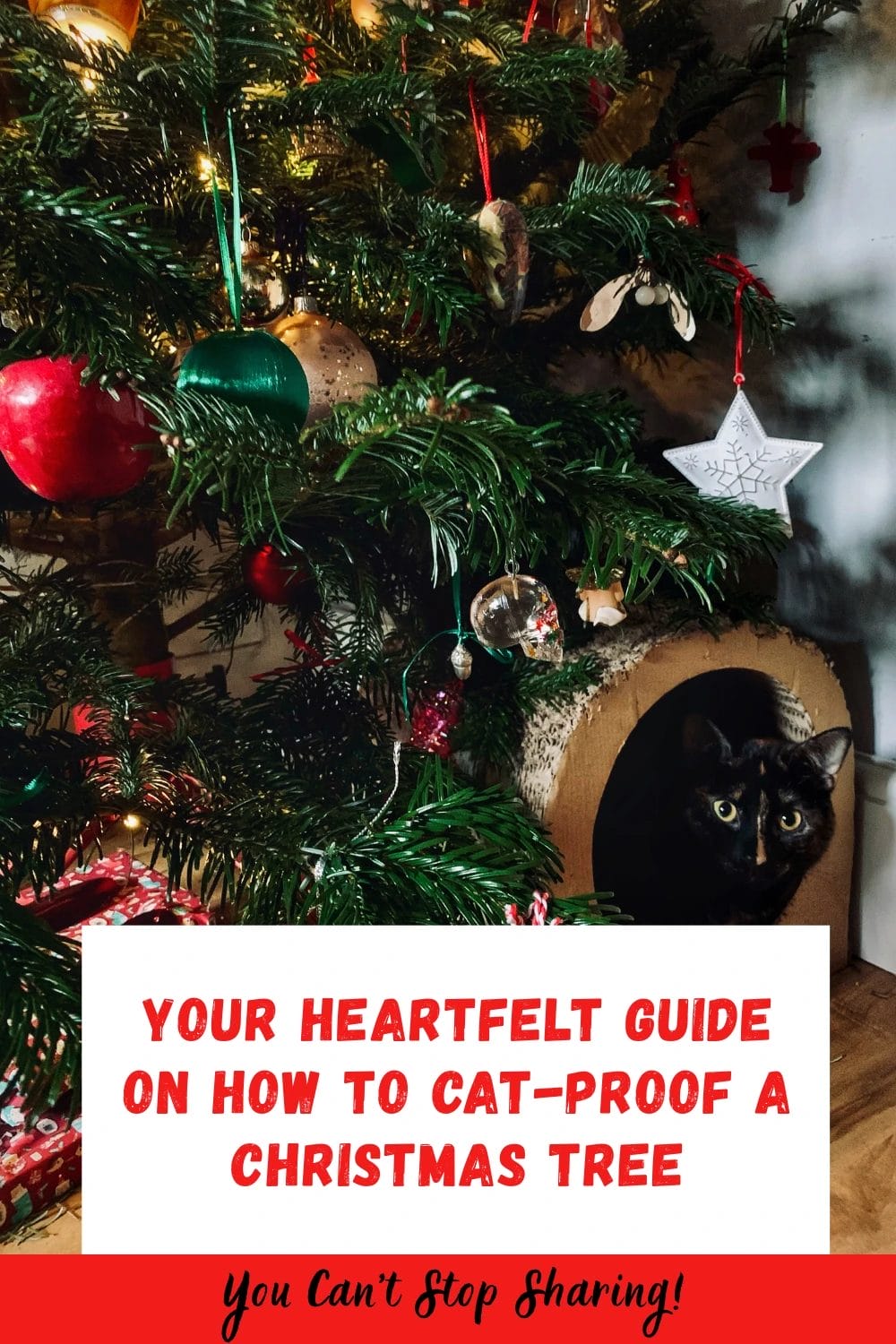
The holiday season is a sacred time. It’s when we seek warmth, reflect on our journey, and light up our homes as a beacon of hope and resilience.
For many of us walking a path of self-healing, decorating our space isn’t just a task; it’s a mindful act of creating a sanctuary.
The centerpiece of this comfort, of course, is the Christmas tree—a symbol of enduring life and twinkling magic.
But then, there’s your beloved, mischievous feline. That beautiful, curious creature sees your perfectly adorned tree not as a symbol of peace, but as a towering, glittery jungle gym, complete with hanging prey.
The resulting stress—the crash, the shattered ornaments, the fear of injury—can shatter the fragile peace you’ve worked so hard to cultivate.
This year, let’s choose joy over anxiety. Let’s approach this common holiday hurdle with patience, intention, and a loving strategy, transforming potential chaos into harmonious coexistence.
This compassionate guide on how to cat-proof a Christmas tree is designed specifically for you.
We’re not just going to talk about practical barriers; we’re going to explore this challenge through the lens of mindful preparedness, understanding your cat’s instincts, and creating a safe, joyous environment for both of you.
Over the next sections, we will delve into preparation strategies, creative deterrence methods, the best and worst choices for ornaments, and what to do when your healing journey meets a holiday meltdown.
You will walk away with a clear, actionable plan that allows you to fully immerse yourself in the holiday spirit, free from the constant worry of an impending feline disaster.
Grounded Preparation: Setting the Stage for Success
When we embark on a self-healing journey, we learn that good preparation is the key to minimizing future emotional turbulence. The same intentionality applies to holiday decorating, especially when a cat is involved. Your success starts long before you pull the lights out of the storage box.
Choosing Your Tree Wisely: A Foundation of Stability
The first step in how to cat-proof a Christmas tree guide is making a mindful selection about the tree itself. Think stability, not grandeur.
- Size Matters for Safety: A smaller, wider tree is inherently safer than a tall, slender one. A catastrophic topple from a 5-foot tree is far less damaging (to the tree, the house, and the cat) than one from a 9-foot giant. Choose a tree you can easily secure.
- Opt for Artificial (If Possible): While real trees smell wonderful, the pine needles are toxic if ingested, and the stagnant water in the stand can harbor bacteria that is dangerous for your cat. An artificial tree eliminates these health risks, simplifying your cat-proofing task.
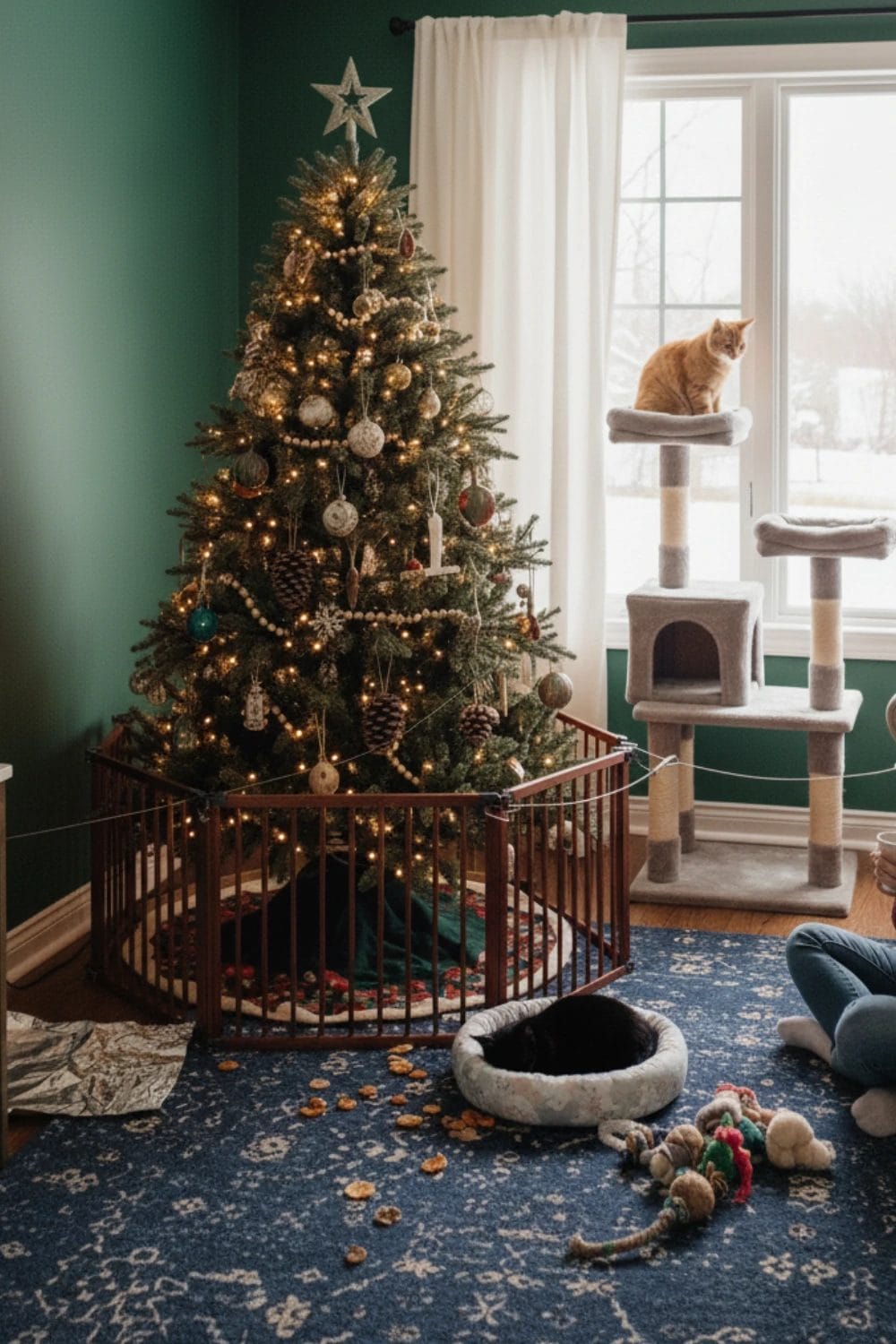
- The Power of the Trunk (Or Lack Thereof): Consider a tabletop tree or even a half-tree (a tree that is flat on one side and designed to be pushed against a wall). Even better, many people find success with a “Tree in a Playpen” method, placing the entire tree stand inside a decorative, sturdy metal exercise pen (a puppy pen) to block access to the lower branches and trunk—the prime launching pad.

The Strategic Placement of Your Holiday Anchor
Where you place the tree is almost as important as the tree itself. This is about minimizing temptation and removing easy launching points.
- Mind the Launchpads: Look around your intended spot. Is there a nearby bookshelf, cat tower, mantlepiece, or table that your cat can use as a high-altitude jump-off point? If so, move the tree or move the furniture. Eliminate opportunities for aerial assaults.
- Corner Sanctuary: Position the tree securely into a corner, and ideally, anchor it to the wall. Yes, you can literally tether your tree. Use clear fishing line and a wall anchor (a small, secure hook) to discreetly stabilize the trunk to two points on the wall. This simple act drastically reduces the risk of a full-scale topple, which is the most dangerous scenario.
Instinctive Deterrence: Understanding the Feline Mind
Part of your self-healing journey is learning to manage your emotional reactions. When it comes to your cat, the trick is to manage their instinctive reactions by making the tree a profoundly unappealing object.
The Sensory Shield: Scents and Textures Cats Hate
Cats communicate heavily through scent and texture. We can leverage this to create a natural, harmless boundary.
The Citrus Solution
Cats famously dislike citrus smells. This is a non-toxic, easy deterrence method central to any comprehensive how to cat-proof a Christmas tree guide.
- The Peel Barrier: Scatter fresh orange, lemon, or lime peels around the base of the tree. The scent is powerful and typically fades within a day, so you will need to replace them regularly.
- Essential Oil Sprays (Use with Caution): Mix water with a few drops of Orange, Lemon, or Rosemary essential oil (never use oils near a cat like Tea Tree, Eucalyptus, or Pine, as they are toxic). Lightly spritz the lower branches. Crucially: Never spray the cat directly, and ensure the cat cannot ingest the oil. The goal is a light, repellent scent on the tree, not a risk to their health.
The Tactical Texture Trap
Cats prefer smooth, easy walking surfaces. Making the area around the tree uncomfortable is a quiet, yet effective, deterrent.
- The Foil Floor: Lay down sheets of crinkled aluminum foil at the base of the tree. Cats hate the crinkling sound and the feel of the foil under their paws.
- The Mat Maneuver: Use a simple, plastic desk mat or a specialized scat mat (a mat with small, harmless spikes) under the tree skirt. The uncomfortable texture is a strong message: “Stay Away.”
Adornments and Illumination: Choosing with Intention
Our ornaments often carry precious memories, which makes their breakage even more painful. This is where we practice non-attachment and prioritize safety.
Ornament Selection: Glass vs. Grace
When you are exploring how to cat-proof a Christmas tree guide, you must rethink your decoration strategy entirely.
- Ban the Breakables: This year, put away your precious, heirloom glass ornaments. Focus on durable, lightweight, and non-toxic materials: wood, felt, shatterproof plastic, or paper.
- Anchor the Accessories: Any ornament you do hang must be secured with closed metal hooks (S-hooks are too easy for a cat to swipe) or even firmly tied to the branch with twine. A loose ornament is a tempting toy.
- The High-Hanging Rule: Hang no ornaments on the bottom third of the tree. This area is the cat’s strike zone. Place decorations only on branches too high for them to reach from the floor. Use only non-toxic, durable items (like simple pine cones) on the lower branches, if anything at all.
Lights and Wires: Minimizing Electrical Hazards
Wires are a massive temptation for chewing and a serious hazard. We must manage them carefully.
- Secure the Cord: Secure all electrical cords to the wall or floor using tape or cord covers. Keep the length of the cord running from the outlet to the tree as short as possible.
- Unplug When Unattended: A simple yet powerful rule: when you leave the house or go to bed, unplug the tree. This eliminates the risk of electrocution from chewed wires and reduces the risk of fire.
Training and Redirection: A Positive Approach
In our healing journeys, we learn the power of redirection—steering our minds away from destructive thought patterns and toward positive ones. We can apply this same gentle, positive training to our cats.
The Positive Reinforcement Loop
Training your cat to ignore the tree isn’t about punishment; it’s about providing superior, positive alternatives.
- Elevate the Competition: A cat often sees the tree as a prime climbing spot or a high vantage point. To counter this, make their existing cat tree or tower the most attractive spot in the room. Place it near a sunny window, put fresh catnip on it, or offer special treats only when they are relaxing there. The cat’s designated spot should be superior to the forbidden tree.
- The Distraction Arsenal: When you see your cat approaching the Christmas tree with mischief in their eyes, immediately interrupt and redirect them with a favorite toy, a laser pointer, or a fresh meal. The goal is to break the focus before the action starts.
The Spray Bottle Myth (Use Sparingly)
While a spray bottle of water can be an effective deterrent in the moment, it can also erode the trust and bond you share with your cat, which is counterproductive to a peaceful sanctuary. Use it as an absolute last resort, and always pair it with an immediate redirection to a positive activity. The goal is not to punish, but to interrupt the unwanted behavior.
Understanding the “Why”: Curiosity and Energy
A destructive cat is often a bored cat. A cornerstone of this how to cat-proof a Christmas tree guide is addressing the root cause of the behavior: excess energy and curiosity.
- Increased Playtime: Dedicate at least two sessions of focused, high-energy play with your cat every day, especially in the evening when they are most active. Use toys that mimic prey (wand toys, feathers) to satisfy their hunting instincts. A tired cat is less likely to scale a decorated evergreen.
- Food Puzzles: Use food puzzles or slow feeders for meals. These activities engage their minds and make them work for their food, tiring them out mentally and providing a healthier outlet for their curiosity than batting at lights.
When the Tinsel Hits the Fan
No matter how thoroughly you follow a guide on how to cat-proof a Christmas tree, accidents happen. When your well-laid plans go awry, how you react is a measure of your own healing and resilience.
Responding with Calmness and Self-Compassion
The moment a cat crashes your tree, the adrenaline spikes, and the urge to react with anger is strong. This is your moment to practice the self-regulation you’ve been cultivating.
- Safety First, Always: Immediately check your cat for injuries. If the tree has toppled, ensure no lights, broken ornaments, or sharp pieces are entangled in their fur or paws.
- Pause and Breathe: Take a deep breath. Say to yourself, “This is not a reflection of my worth or my ability to create peace.” The tree is just an object. Your cat is just acting on instinct. Clean up the immediate hazard, and step away if you need a moment before you start the full repair.
- Reinforce the Barriers: A major incident is a sign that your current cat-proofing measures are insufficient. It is a moment to assess, not despair. Was the tree not secured enough? Was there a new launchpad? Strengthen your defenses immediately. This might be the time to consider a temporary, decorative gate or a full-time “tree pen” barrier.

The Ultimate Cat-Proofing Checklist
To make this how to cat-proof a Christmas tree guide as actionable as possible, use this list to ensure you’ve covered all bases before you plug in the lights.
- Tree Choice: Is it stable, or is it a smaller, artificial option?
- Placement & Anchoring: Is it tucked into a corner and secured to the wall with fishing line?
- Base Deterrence: Are citrus peels, foil, or a scat mat securing the perimeter to prevent climbing?
- Ornament Choice: Are the ornaments shatterproof, lightweight, and secured with closed hooks?
- Height Rule: Are the bottom third of the branches completely bare of tempting items?
- Wires Secured: Are all cords taped down or covered, and is the tree unplugged when you are asleep or away?
- Redirection Ready: Is your cat tower more attractive, and are you ready with a distraction toy for any immediate mischief?
Conclusion: A Season of Presence, Not Perfection
The journey of healing teaches us that true peace comes from acceptance and preparation, not from eliminating all challenges.
This guide on how to cat-proof a Christmas tree isn’t about having a perfect, untouched holiday display; it’s about creating a safe, low-stress environment where you can truly be present for the season.
It’s about being mindful of your pet’s needs while honoring your own need for beauty and tradition.
By approaching this task with patience and understanding, you are reinforcing your own resilience. You are teaching yourself that you can face chaos with calm, and you can create sanctuary even when working alongside a mischievous, furry heartthrob.
You are capable of crafting a beautiful, safe, and peaceful holiday season. Now that you have this actionable, step-by-step guide, which cat-proofing step will you implement first to secure your holiday sanctuary today?

- How Long Do Dogs Live With Heart Disease? A Complete Guide for Pet Owners - April 9, 2026
- Best Grain-Free Carob Easter Eggs for Cats: Safe & Healthy Treats - April 2, 2026
- Pet-Friendly Easter Photo Shoot: Best Props & Outfits Guide - April 2, 2026
GIPHY App Key not set. Please check settings