

 Lauryn Dell
Owning a Bengal cat is less like having a pet and more like living with a tiny, high-energy leopard. Their wild ancestry makes them naturally inquisitive, athletic, and—most importantly—fearless explorers.
If you are a plant lover, this cat type presents a distinctive obstacle. While a standard tabby might sniff a leaf and walk away, a Bengal is likely to climb the planter, bat the foliage, and take a calculated nibble just to see what happens.
Creating a lush home environment requires careful planning to ensure your indoor plants for curious Bengal cats are beautiful but, above all, non-toxic.
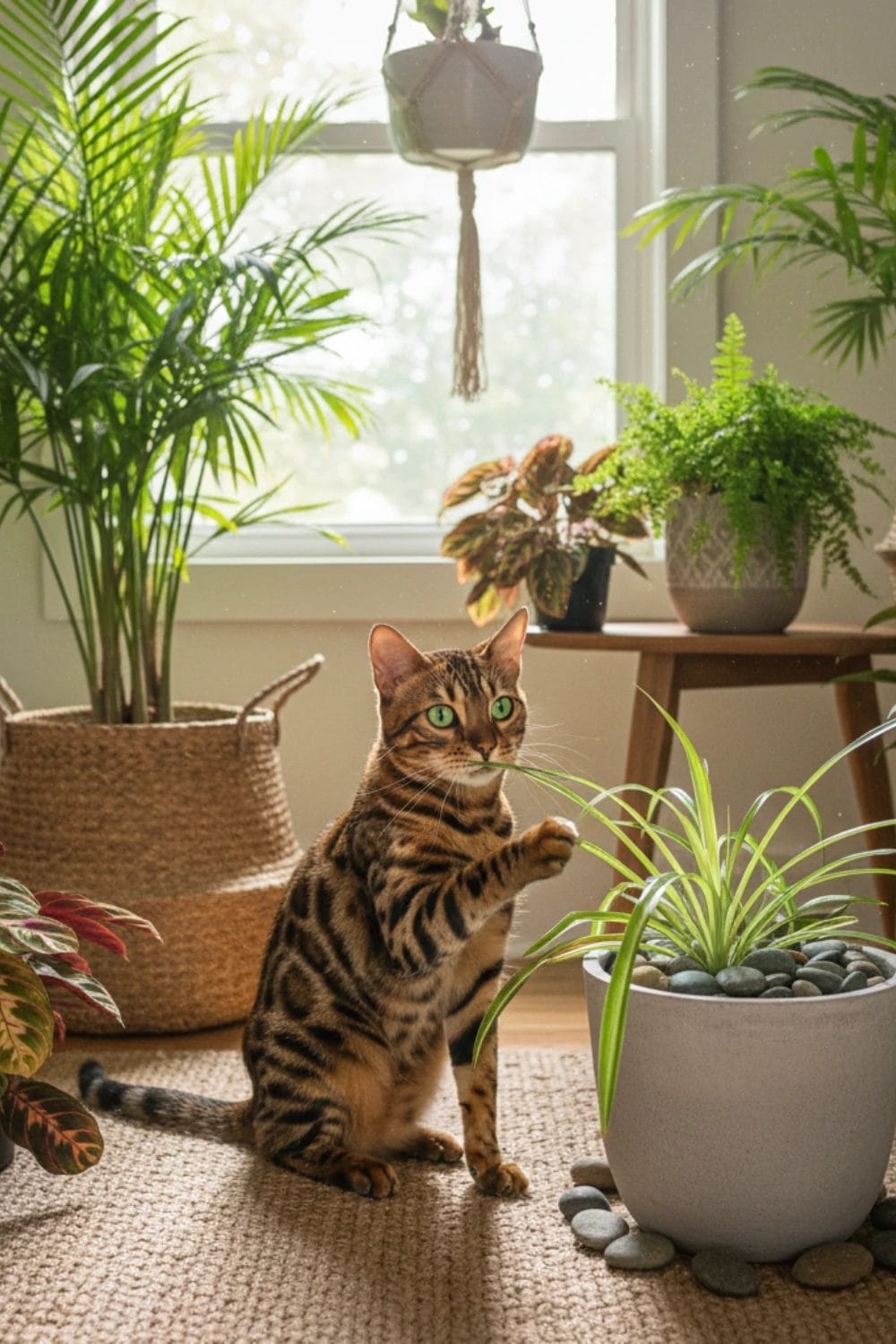
The Bengal Challenge: Why Safety Comes First
Bengal cats are renowned for their high intelligence and tactile nature. They don’t just look at things; they interact with them.
In 2026, as “biophilic design” becomes a staple in modern homes, the intersection of exotic pet ownership and indoor gardening has never been more popular.
However, many common houseplants—like Lilies, Monsteras, and Pothos—contain calcium oxalate crystals or other toxins that can cause anything from mild drooling to kidney failure.
When choosing indoor plants for curious Bengal cats, you aren’t just looking for “non-toxic” labels; you are looking for sturdy, “Bengal-proof” greenery that can survive the occasional pounce.
Top 7 Safe Indoor Plants for Curious Bengal Cats
1. The Resilient Parlor Palm (Chamaedorea elegans)
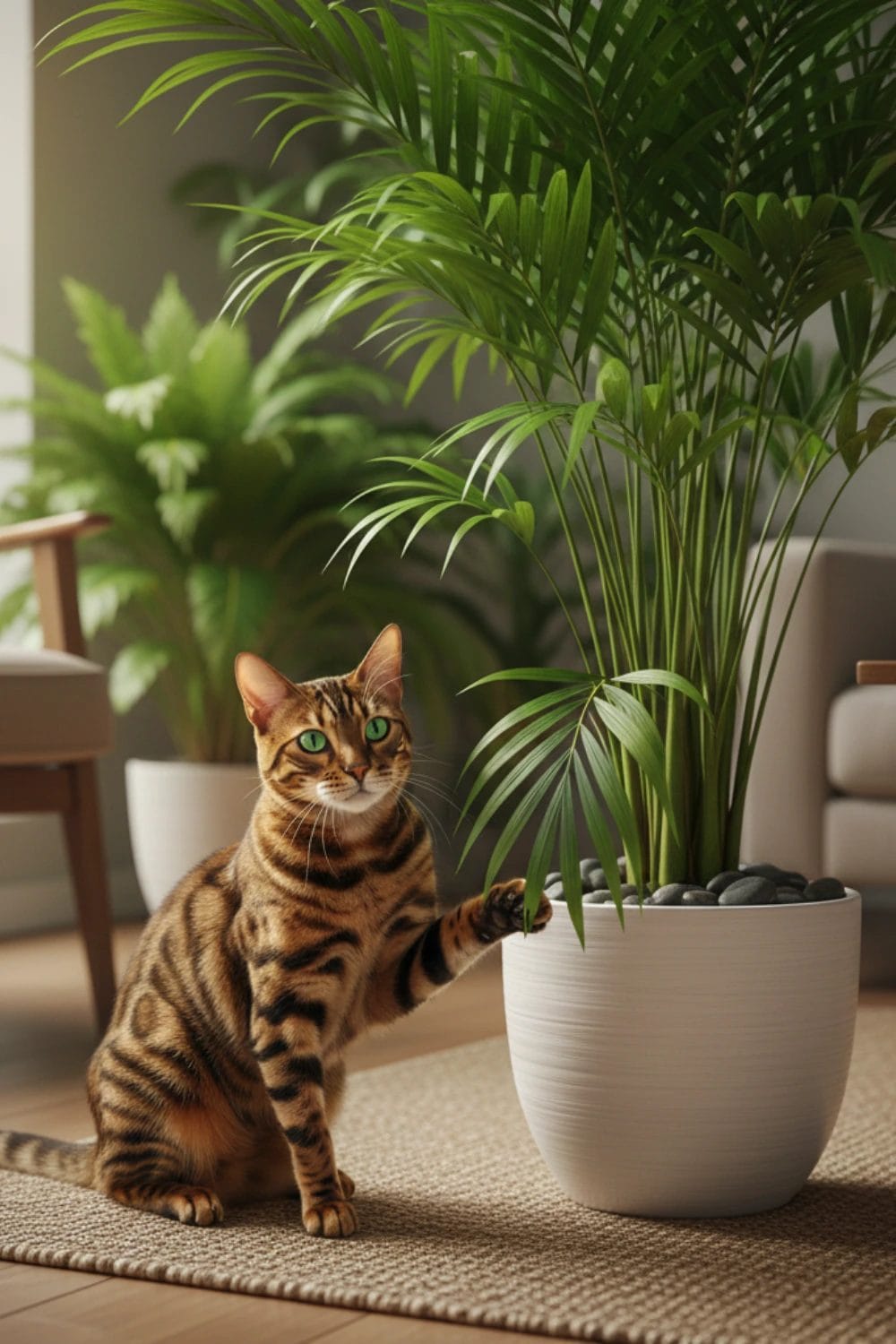
If you want that tropical look without the danger of a Sago Palm (which is deadly), the Parlor Palm is your best friend. It’s a slow-growing, hardy plant that can handle the lower light levels of a living room.
- Bengal Factor: The feathery fronds are incredibly tempting for cats to bat at. Fortunately, it’s completely safe if they manage to snag a leaf.
2. Spider Plants (Chlorophytum comosum)
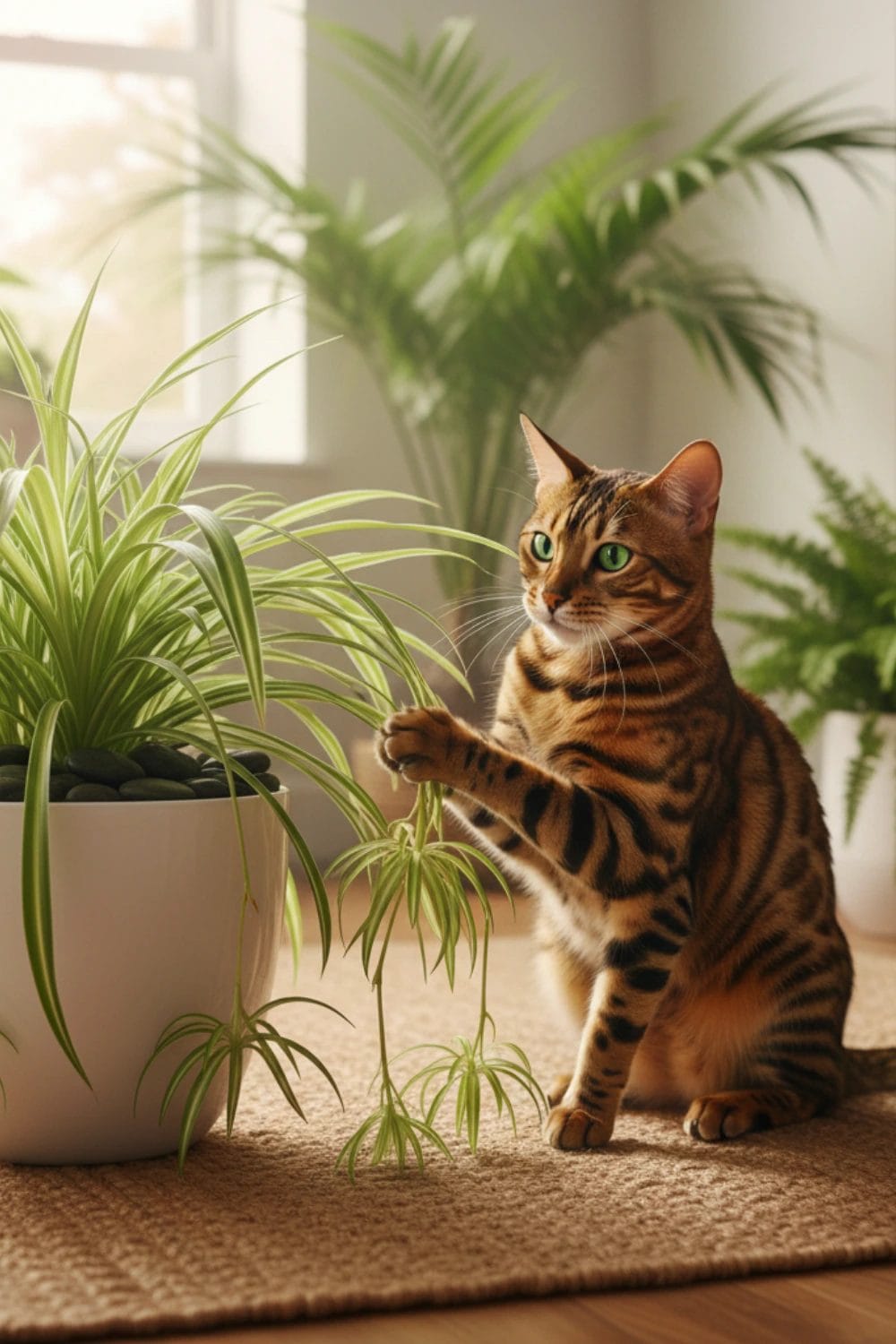
The Spider Plant is a classic for a reason. It’s easy to grow and produces “babies” that dangle down—perfect for a Bengal’s hunting instincts.
- Pro Tip: While safe, Spider Plants have a mild hallucinogenic effect on some cats. Don’t be surprised if your Bengal seems a little too obsessed with this one! It remains one of the best indoor plants for curious Bengal cats because of its durability.
3. Boston Ferns (Nephrolepis exaltata)
Unlike the toxic “Asparagus Fern,” the Boston Fern is ASPCA-approved for felines. Its shaggy, voluminous texture makes it a perfect “jungle” hiding spot for a stalking Bengal.
- Care Note: These love humidity. If you place one in a bathroom with a window, your Bengal will enjoy the “jungle steam” almost as much as the plant does.
4. Calathea (The Prayer Plant)
Calatheas are famous for their stunning, painted-on leaf patterns. They are the “fashionistas” of the plant world.
- Safety First: They are non-toxic and move their leaves up and down based on light levels (nyctinasty). This subtle movement might fascinate your cat, making it one of the most engaging indoor plants for curious Bengal cats.
5. Blue Echeveria and Haworthia (Safe Succulents)
Many succulents, like Jade or Aloe Vera, are actually toxic to cats. However, Echeveria and Haworthia are safe alternatives. They are structurally sound and less likely to be shredded than leafy plants.
6. Areca Palm
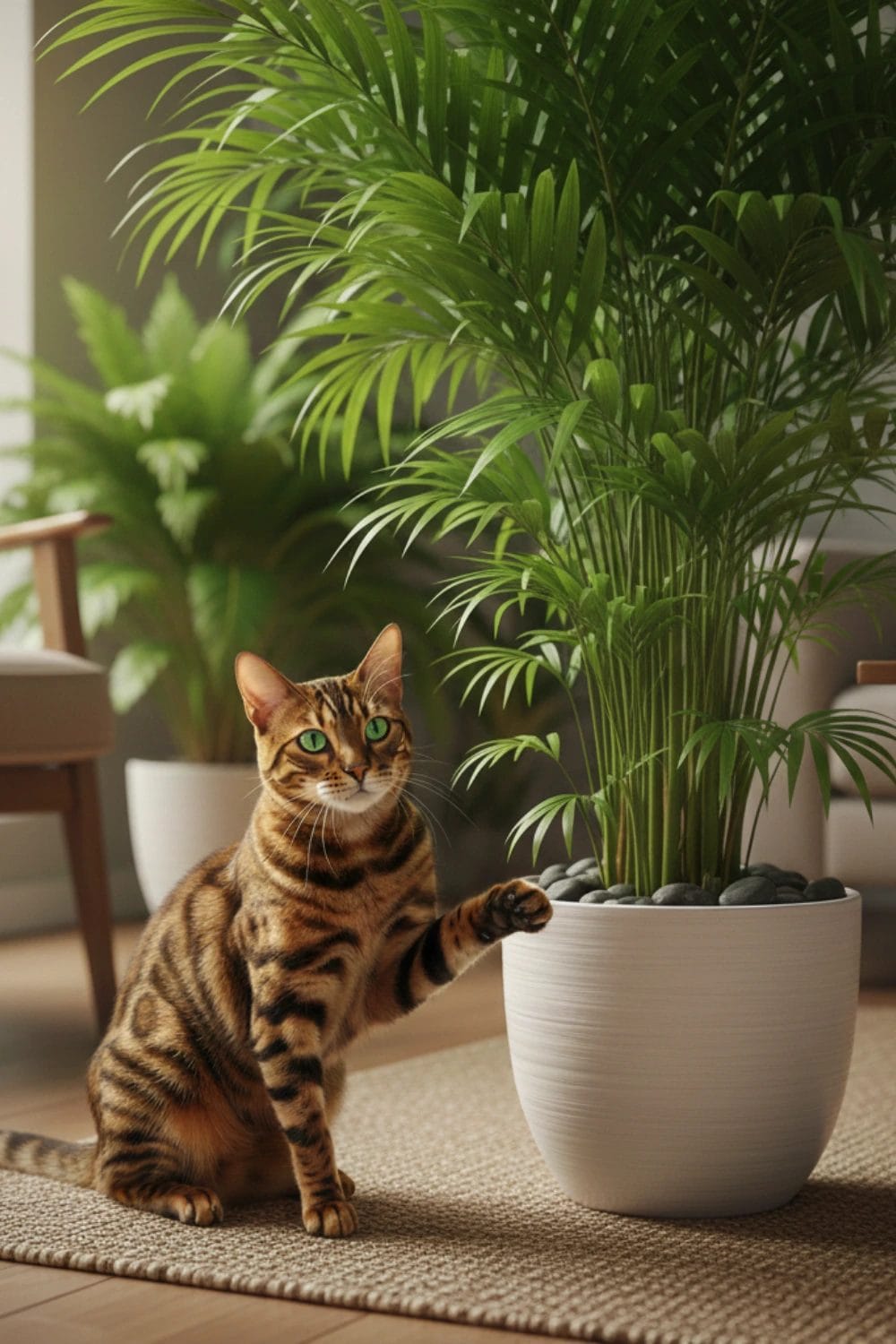
If you have a large corner to fill, the Areca Palm provides a massive burst of green. It’s non-toxic and acts as a natural air purifier. Because it’s a bit sturdier, it can withstand the occasional “zoomie” collision.
7. Bamboo Palm
Similar to the Areca, the Bamboo Palm is a safe bet for larger spaces. It offers a dense thicket of stalks that can help satisfy a Bengal’s urge to hide and ambush.
Strategic Placement: Bengal-Proofing Your Garden
Finding indoor plants for curious Bengal cats is only half the battle. The other half is ensuring the plants survive the cat!
- Weighted Bases: Bengals are heavy and strong. Use heavy ceramic or stone pots rather than light plastic ones to prevent “midnight tip-overs.”
- Ceiling Hooks: Since Bengals are world-class jumpers, “high shelves” aren’t always safe. Using hanging planters from the ceiling is often the only way to keep delicate foliage out of reach.
- Sacrificial Greenery: Grow a tray of organic wheatgrass (cat grass) or catnip. If you give your Bengal their own “approved” garden to chew on, they are much more likely to leave your expensive Calathea alone.
Technical Comparison: 2026 Houseplant Safety
| Plant Name | Toxicity Level | Light Needs | Bengal Interaction Level |
| Spider Plant | Non-Toxic | Indirect | High (Dangling pups) |
| Boston Fern | Non-Toxic | Medium/High | Medium (Hiding spot) |
| Parlor Palm | Non-Toxic | Low/Medium | High (Leaf swatting) |
| Haworthia | Non-Toxic | Bright | Low (Texture only) |
| Calathea | Non-Toxic | Medium | Medium (Movement) |
Why Bengals Are Different From Other Cats
Most cats are content with a window perch. Bengals, however, have a high “prey drive” and curiosity level. This means they are more likely to dig in the dirt.
- Surface Covering: To prevent your Bengal from turning your living room into a mud pit, cover the soil of your indoor plants for curious Bengal cats with large river stones. This prevents digging while allowing water to reach the roots.
Conclusion
Living with a Bengal doesn’t mean you have to live in a concrete desert. By selecting the right indoor plants for curious Bengal cats, you can build a vibrant, biophilic home that satisfies your aesthetic needs and your cat’s wild instincts.
Stick to the ASPCA-approved list, invest in sturdy planters, and always provide a safe “cat grass” alternative. With a little bit of planning, your home can be a safe jungle for your favorite miniature leopard.
Is your home truly Bengal-ready? Browse our latest guides on Bengal-proof furniture and interactive toys to keep your leopard busy!
Frequently Asked Questions
No. While the Boston Fern is safe, others like the Asparagus Fern are actually toxic and can cause skin irritation or stomach upset. Always check the specific species before buying.
If you suspect your cat has ingested a toxic plant, contact your veterinarian or a pet poison helpline immediately. Signs of toxicity include vomiting, excessive drooling, and lethargy.
The best method for indoor plants for curious Bengal cats is to cover the soil with large rocks or a dedicated “scat mat”. This discourages digging without harming the cat or the plant.
Absolutely! Growing catnip is a great way to distract your Bengal from your other decorative plants. Just be prepared for them to get a little extra “wild” after a snack.
Spider Plants contain compounds that are mildly hallucinogenic to cats (similar to catnip). While safe, the “high” it provides makes it a prime target for curious Bengals.
Related Articles:
- Safe Houseplants for Cats: Greenery That Won’t Harm Your Cat
- Unleashing the Green: 5 Cat Grass Benefits for Cats

- Mushroom Complex Supplements for Dogs with Cancer: A Guide - March 25, 2026
- 15 Meaningful Dog Memorial Tattoo Ideas & Costs - March 20, 2026
- Best Horse Hoof Supplement Reviews for Beginners (2026) - March 19, 2026
GIPHY App Key not set. Please check settings