

 Lauryn Dell
Coming home to chewed-up door frames, a neighbor’s complaint about howling, or a “guilty-looking” puppy pacing the hallway is a heartbreaking reality for many pet parents.
In 2026, as we spend more time transitioning between remote and office work, our furry companions are feeling the brunt of the change. Separation anxiety isn’t just a behavior problem; it’s an emotional crisis for your dog.
While there is no “magic pill” for canine stress, one simple tool has emerged as a game-changer in the behavioral world: the lick mat. By tapping into a dog’s natural biology, lick mats for dog separation anxiety provide a therapeutic outlet that can bridge the gap between “goodbye” and “hello again.”
1. The Science of the Lick: Why It Calms the Canine Brain
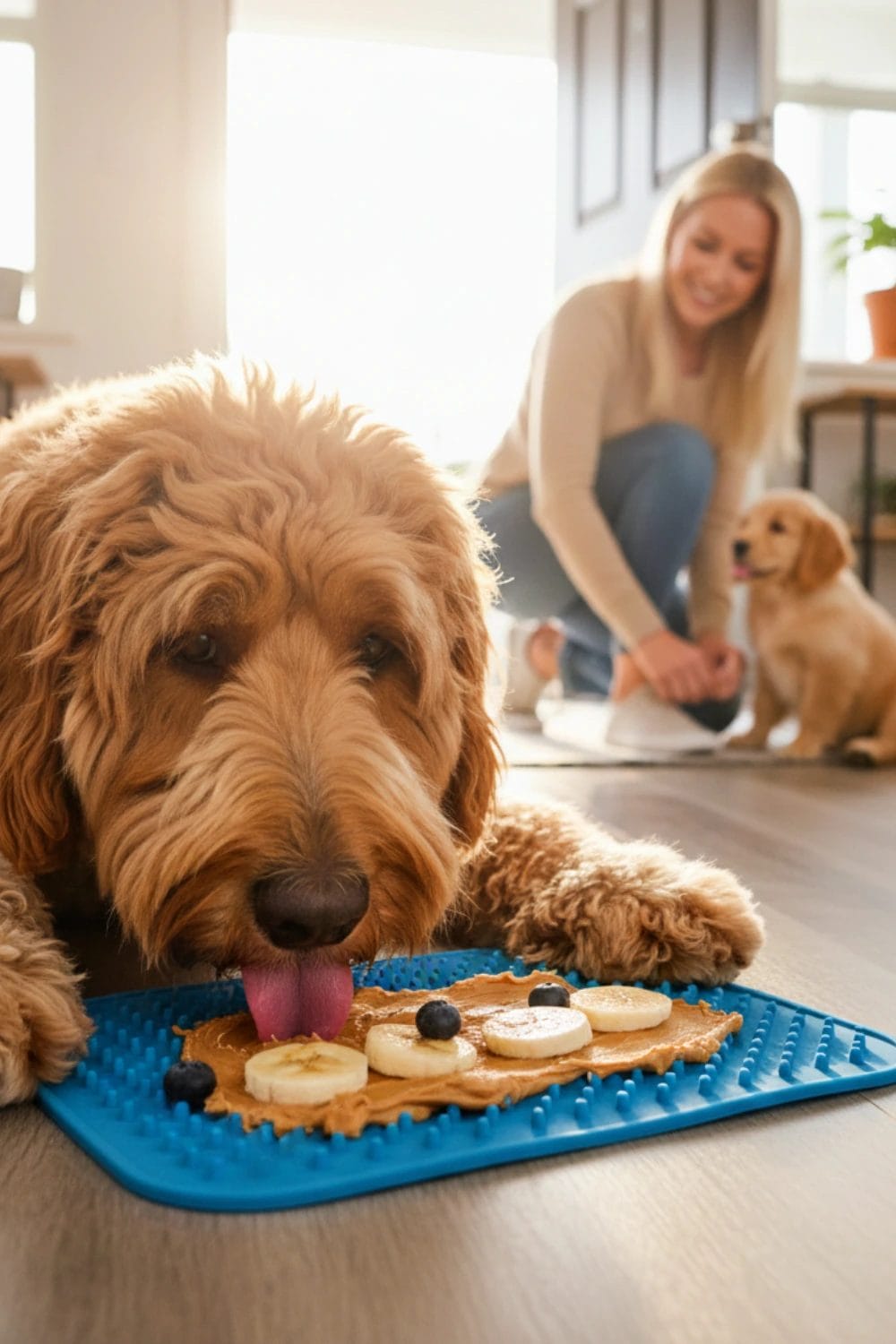
To understand why lick mats for dog separation anxiety are so effective, we have to look at what happens inside a dog’s brain when they lick. Licking isn’t just for cleaning or affection; it is a primal self-soothing mechanism.
The Endorphin Connection
When a dog licks a textured surface repetitively, their brain releases endorphins—the body’s natural “feel-good” chemicals. This process actively lowers cortisol (the stress hormone) and boosts serotonin. For an anxious dog, this creates a “snuggle for the brain,” helping them move from a state of panic to one of focused relaxation.
Mental Displacement
Separation anxiety usually peaks within the first 20 minutes after a handler leaves. By providing a high-value lick mat at the moment of departure, you give the dog a “job.” This displacement activity occupies their cognitive space, making the act of you leaving secondary to the challenge of getting peanut butter out of a silicone groove.
2. How to Successfully Use Lick Mats for Dog Separation Anxiety
Using a lick mat isn’t as simple as dropping it on the floor and walking out the door. Success lies in “warming up” and “association.”
The “Safe Association” Phase
Never introduce a lick mat for the first time as you are leaving. If you do, the dog may learn that “Mat = Owner Leaving”, which can actually trigger more anxiety. Instead, give the mat during happy times—while you’re watching TV or prepping dinner. This ensures the mat is viewed as a high-value treat, not a goodbye signal.
Strategic Timing for Departures
Once the positive association is built, start giving the mat 5 minutes before you put on your shoes or grab your keys. This breaks the “pre-departure cue” cycle. By the time you actually walk out, the dog is already deep into their licking session, utilizing lick mats for dog separation anxiety as a shield against the initial spike of panic.
3. Top “Anxiety-Busting” Lick Mat Recipes
What you put on the mat matters just as much as the mat itself. For anxious dogs, you want long-lasting, high-reward textures.
The “Deep Freeze” Technique
The best way to extend the life of a lick mat is to freeze it. A frozen mat can turn a 5-minute snack into a 20-minute mental workout.
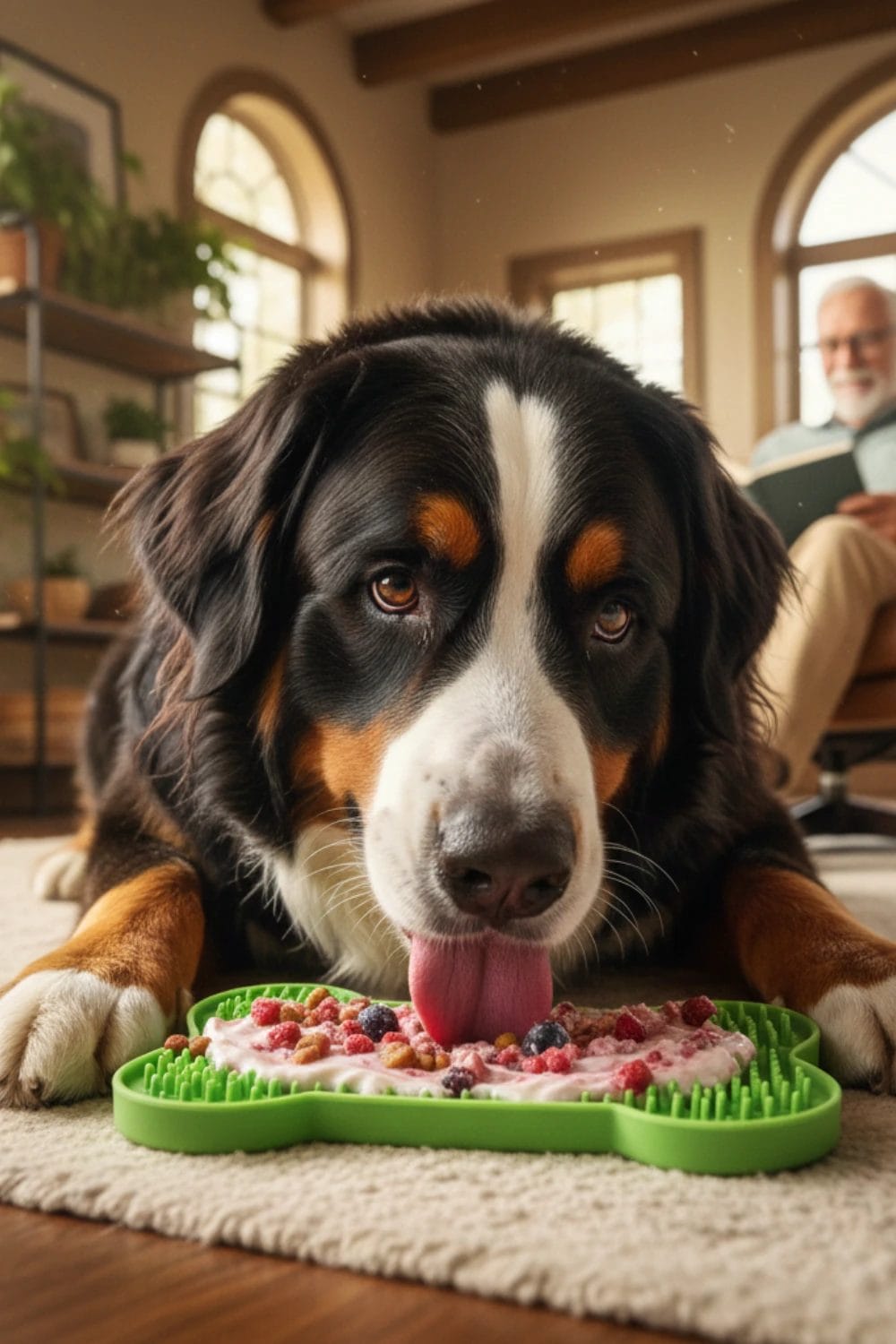
- The Classic Soother: Plain, unsweetened Greek yogurt (probiotics help with “anxious tummy”) mixed with a teaspoon of honey.
- The Protein Punch: Canned sardines or salmon mashed into the ridges. The Omega-3s are great for brain health.
- The Calming Pumpkin: Pure canned pumpkin (not pie filling!) mixed with a dash of Ceylon cinnamon.
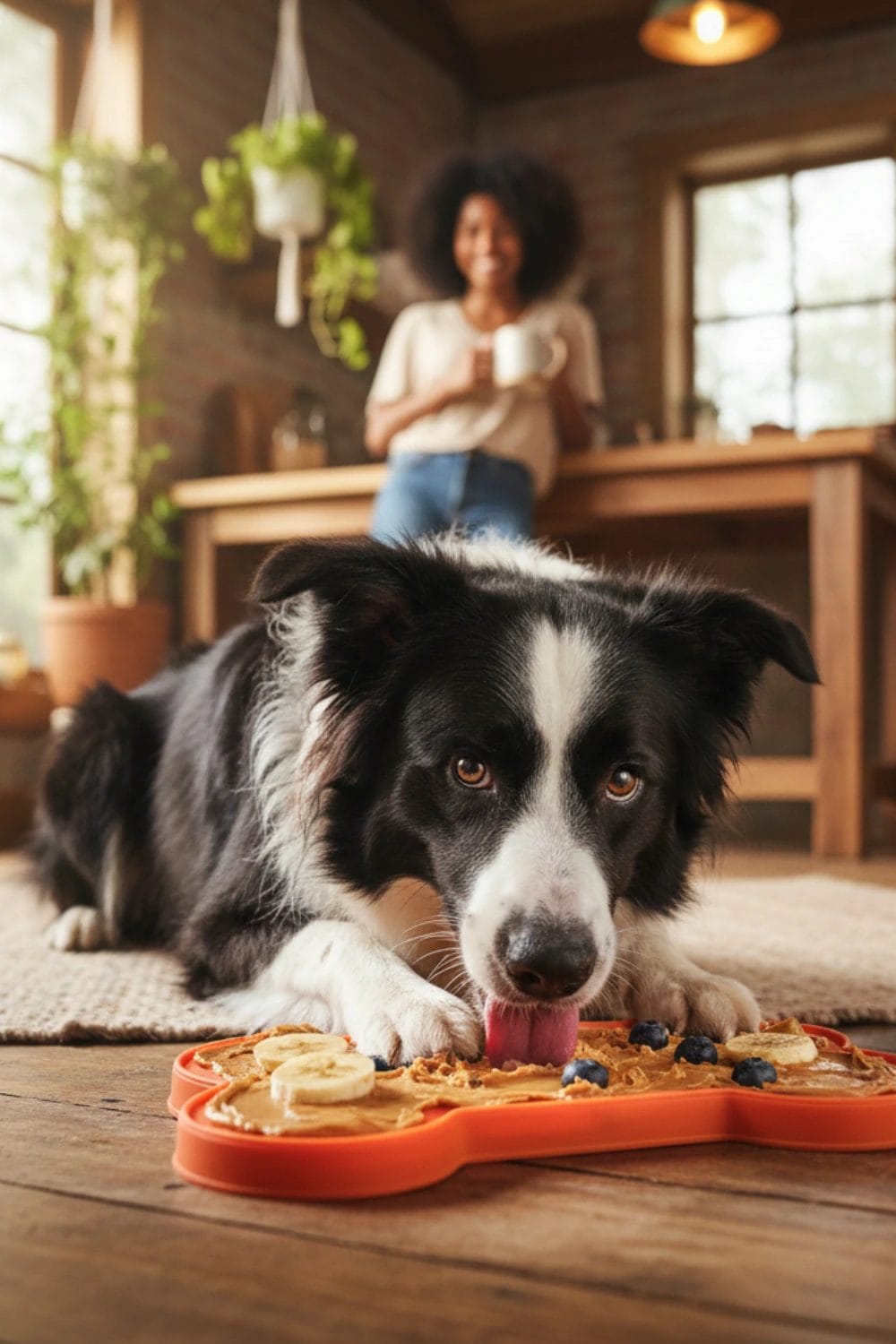
- The PB & B: Xylitol-free peanut butter mashed with a ripe banana.
4. Safety and Limitations: What Every Owner Should Know
While lick mats for dog separation anxiety are a powerful tool, they are not a substitute for professional training or, in severe cases, medication.
The “Chewer” Risk
Some dogs, when frustrated or finished with the food, may try to chew the silicone mat. Always supervise your dog’s first few sessions. In 2026, “Tuff” versions made of hard nylon or natural rubber are available for heavy chewers. If your dog is destructive, consider a “weighted” base that suctions to the floor to prevent them from picking the mat up.
When a Mat Isn’t Enough
If your dog is self-harming, breaking out of crates, or howling for hours, a lick mat is only one part of a larger puzzle. According to a 2025 survey by SATELLAI, 61% of pet owners cite separation anxiety as their #1 concern, often requiring a combination of desensitization training and environmental enrichment.
5. 2026 Trends: Smart Lick Mats and Tech Integration
The pet industry has evolved. We are now seeing “Smart Lick Mats” that connect to your phone. These mats can detect when your dog has finished and send a notification to your smartwatch or even trigger a calming pheromone diffuser in the room. Integrating these with lick mats for dog separation anxiety allows owners to monitor stress levels in real time.
Conclusion: Small Steps to a Calmer Pup
A lick mat won’t cure separation anxiety overnight, but it is one of the most humane and biologically appropriate tools we have. By encouraging the natural release of calming hormones, lick mats for dog separation anxiety help transform your departure from a moment of terror into a moment of tasty, focused work.
Give your dog the gift of peace. Start your enrichment journey today and watch the difference a little licking can make.
Want more enrichment ideas? [Sign up for our “Calm Canine” Newsletter for weekly recipes and training hacks!]
Frequently Asked Questions
Only after you have supervised them multiple times and are 100% sure they won’t chew or swallow the mat. For “power chewers,” use a durable rubber version or a “LickiMat Keeper”.
Most are dishwasher safe, but for stuck-on peanut butter, a quick soak in warm soapy water followed by a scrub with a soft-bristled brush works best.
Yes, but you must check the label for Xylitol (also listed as Birch Sugar). Xylitol is highly toxic to dogs even in small amounts.
It depends on the topping! Use low-calorie options like pumpkin or unsweetened applesauce if your dog is on a diet, and always subtract the treat calories from their daily meal portion.
This means their anxiety level is too high (“over threshold”). Try a higher-value treat (like stinky wet food), and start the mat 15 minutes before you leave while you are still in the room to build their confidence.

- 15 Meaningful Dog Memorial Tattoo Ideas & Costs - March 20, 2026
- Best Horse Hoof Supplement Reviews for Beginners (2026) - March 19, 2026
- Pet Rat Hammock Setup Guide: Best Layouts & Prices - March 19, 2026
GIPHY App Key not set. Please check settings