

 Lauryn Dell
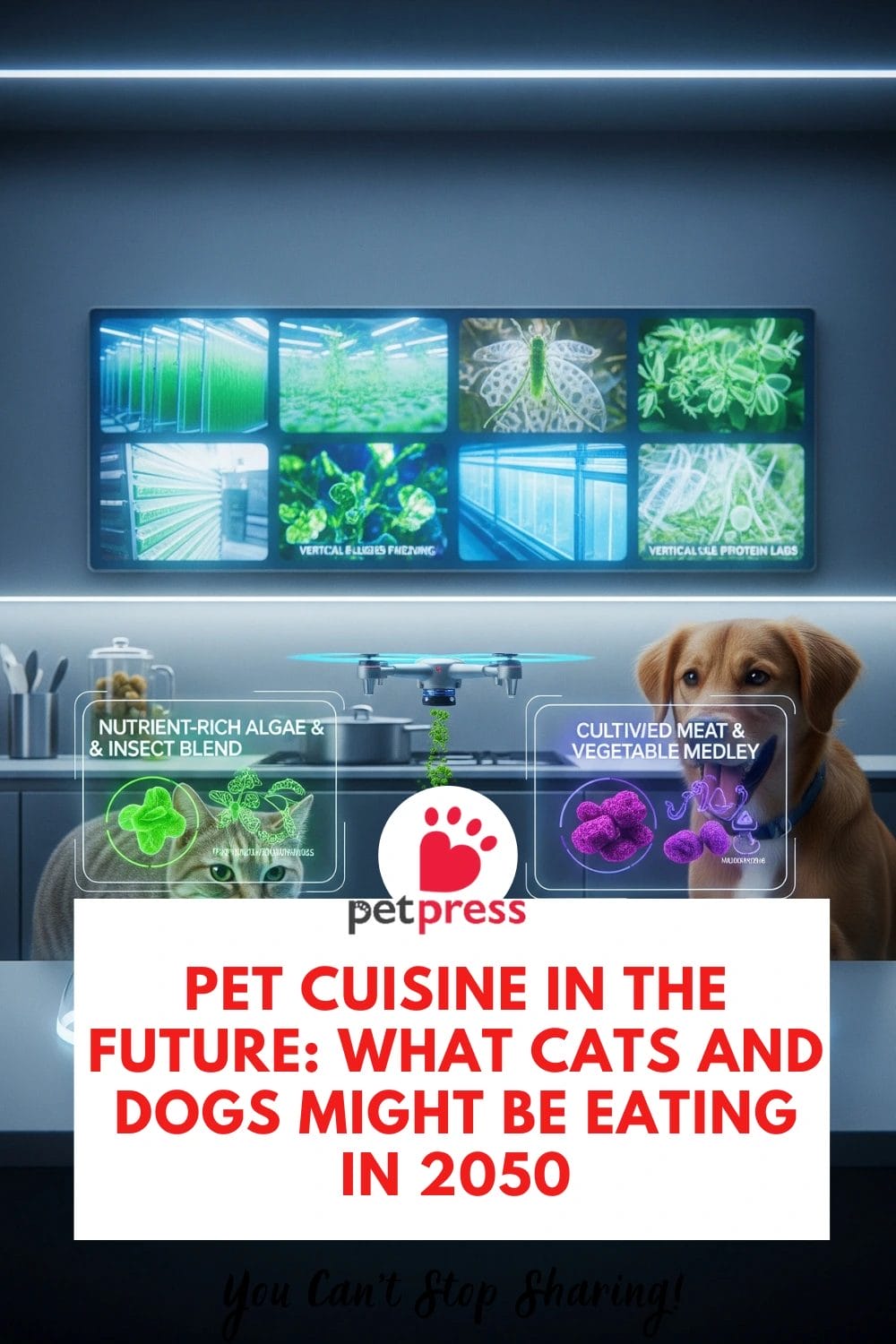
Pet food has come a long way from basic kibble and canned meals. Over the past few decades, the pet food industry has shifted towards healthier, more sustainable, and personalized nutrition.
As we look towards 2050, the way cats and dogs eat will likely be dramatically different. With rising concerns about climate change, sustainability, and human-grade nutrition, pet cuisine will transform into a high-tech, health-focused industry.
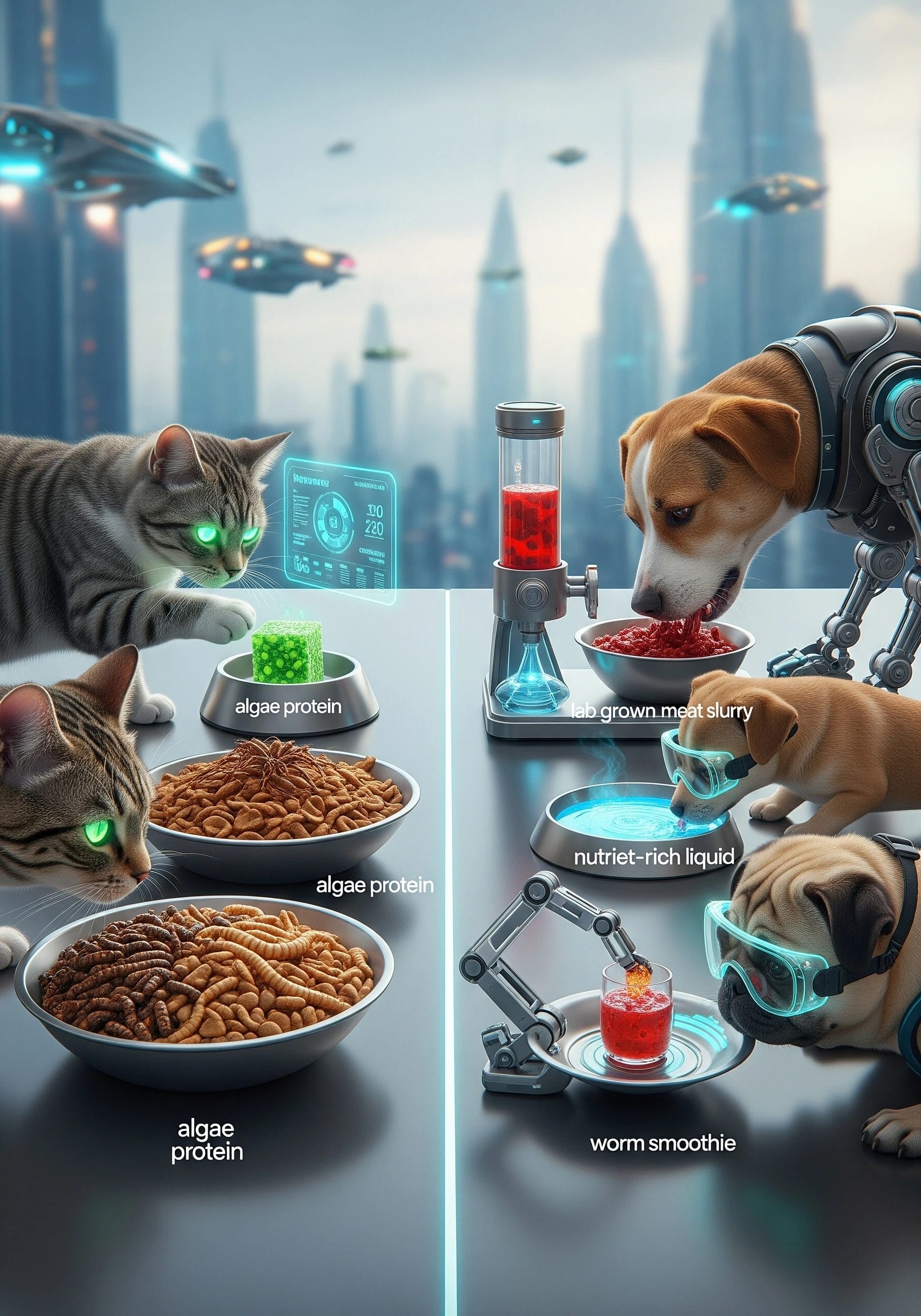
In this blog, we’ll explore the possible innovations in pet food by 2050, including lab-grown meat, plant-based proteins, insect-based diets, AI-driven meal plans, and even DNA-tailored nutrition.
The Growing Demand for Sustainable Pet Food
By 2050, the global population is expected to exceed 9.7 billion people, leading to increased demand for sustainable food sources. Pets, especially cats and dogs, will be part of this challenge, as they currently consume 20% of the world’s meat and fish. The future of pet cuisine will prioritize sustainability without compromising nutrition.
Pet food companies will likely reduce reliance on traditional livestock farming, which contributes heavily to greenhouse gas emissions. Instead, we’ll see greater adoption of sustainable protein sources like:
- Insects: High in protein, low in environmental impact, and already making their way into modern pet food.
- Algae and seaweed: Rich in omega-3 fatty acids and vitamins, providing plant-based nutrition.
- Plant proteins: Such as lentils, peas, and chickpeas, which are already gaining popularity in grain-free diets.
By 2050, these alternatives could dominate pet cuisine, ensuring pets receive optimal nutrition while reducing the ecological footprint.
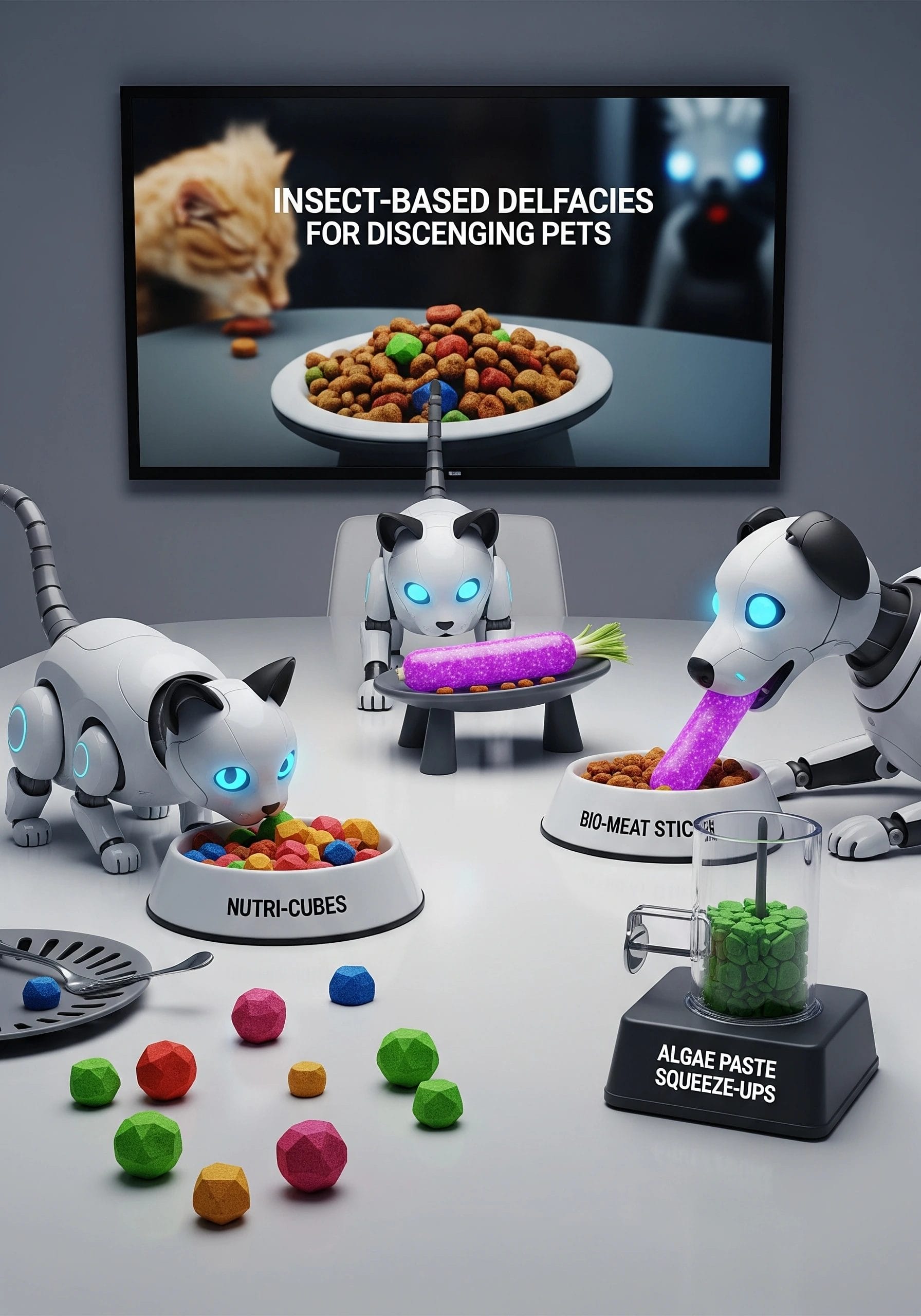
Lab-Grown Meat: The Next Revolution in Pet Food
One of the most exciting innovations in food technology is cultured or lab-grown meat. Instead of raising and slaughtering animals, scientists grow real meat from animal cells in a lab.
For pets, this could be revolutionary:
- Ethical and cruelty-free: Eliminates the need for factory farming.
- Nutritionally controlled: Lab-grown meat can be engineered to provide the perfect nutrient balance for cats and dogs.
- Safer consumption: Reduced risk of contamination, diseases, and allergens.
By 2050, pet owners might buy lab-grown chicken, beef, or fish-based kibble and wet food that mimics natural meat while being far more sustainable.
Personalized Pet Nutrition Powered by AI and DNA Testing
Just as humans are seeing a rise in personalized nutrition, pets will too. By 2050, feeding your pet may involve a detailed DNA analysis and AI-driven recommendations.
Future pet cuisine may include:
- DNA-based diet plans: Meals tailored to breed-specific genetic needs, allergies, or predispositions.
- Wearable pet tech: Collars and sensors that track metabolism, activity, and overall health to adjust calorie intake in real time.
- AI-driven meal services: Subscription models that deliver fresh, perfectly balanced food directly to your door based on your pet’s health updates.
This kind of precision nutrition will ensure longer lifespans, improved health, and prevention of diseases related to poor diets.
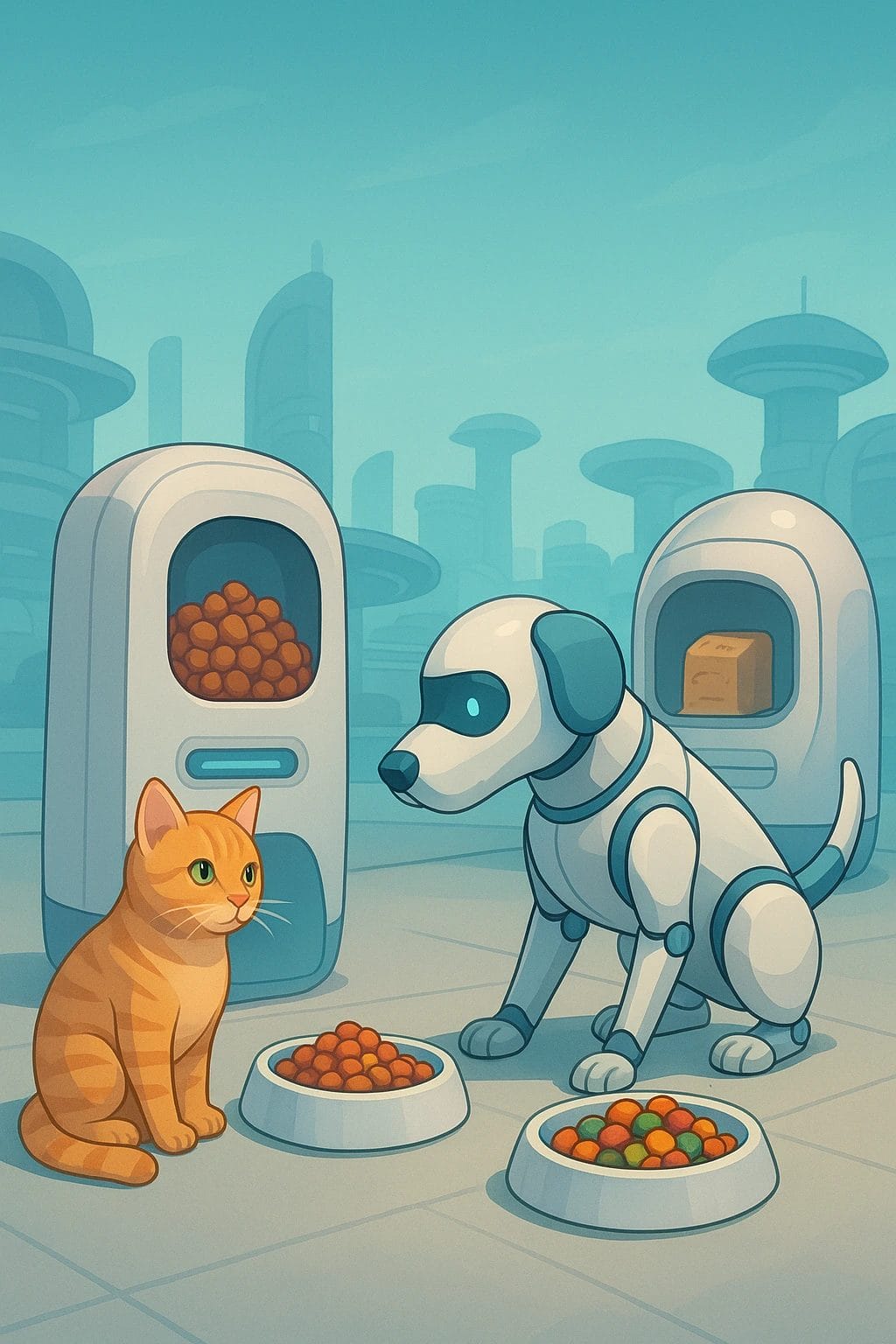
Insect-Based Proteins: A High-Protein, Low-Impact Option
By 2050, insects could be a mainstream ingredient in pet food. Insects such as crickets, black soldier fly larvae, and mealworms are already being studied and used in some forward-thinking pet food brands.
Benefits of insect protein for pets include:
- High digestibility: Insects are rich in protein, essential amino acids, and micronutrients.
- Eco-friendly production: Requires minimal land, water, and feed compared to livestock.
- Allergen-friendly: May help pets with sensitivities to traditional meat proteins.
This may sound futuristic now, but by 2050, insect protein could be as normal as chicken or fish in today’s pet food aisle.
Functional Foods for Pets: Beyond Basic Nutrition
The future of pet cuisine won’t just focus on basic nutrition; it will likely move towards functional foods designed to improve health and longevity.
Examples of functional pet foods in 2050 could include:
- Gut-health probiotics: Enhanced foods containing microbiome-supporting ingredients.
- Joint and mobility support: Advanced formulas with bioengineered compounds to prevent arthritis.
- Cognitive health boosters: Brain-supporting nutrients like DHA and novel compounds to prevent cognitive decline in aging pets.
- Immune-boosting ingredients: Superfoods like spirulina, turmeric, and adaptogens tailored for pets.
This wellness-driven approach to pet nutrition will mirror trends in human health food, ensuring pets live longer, healthier lives.
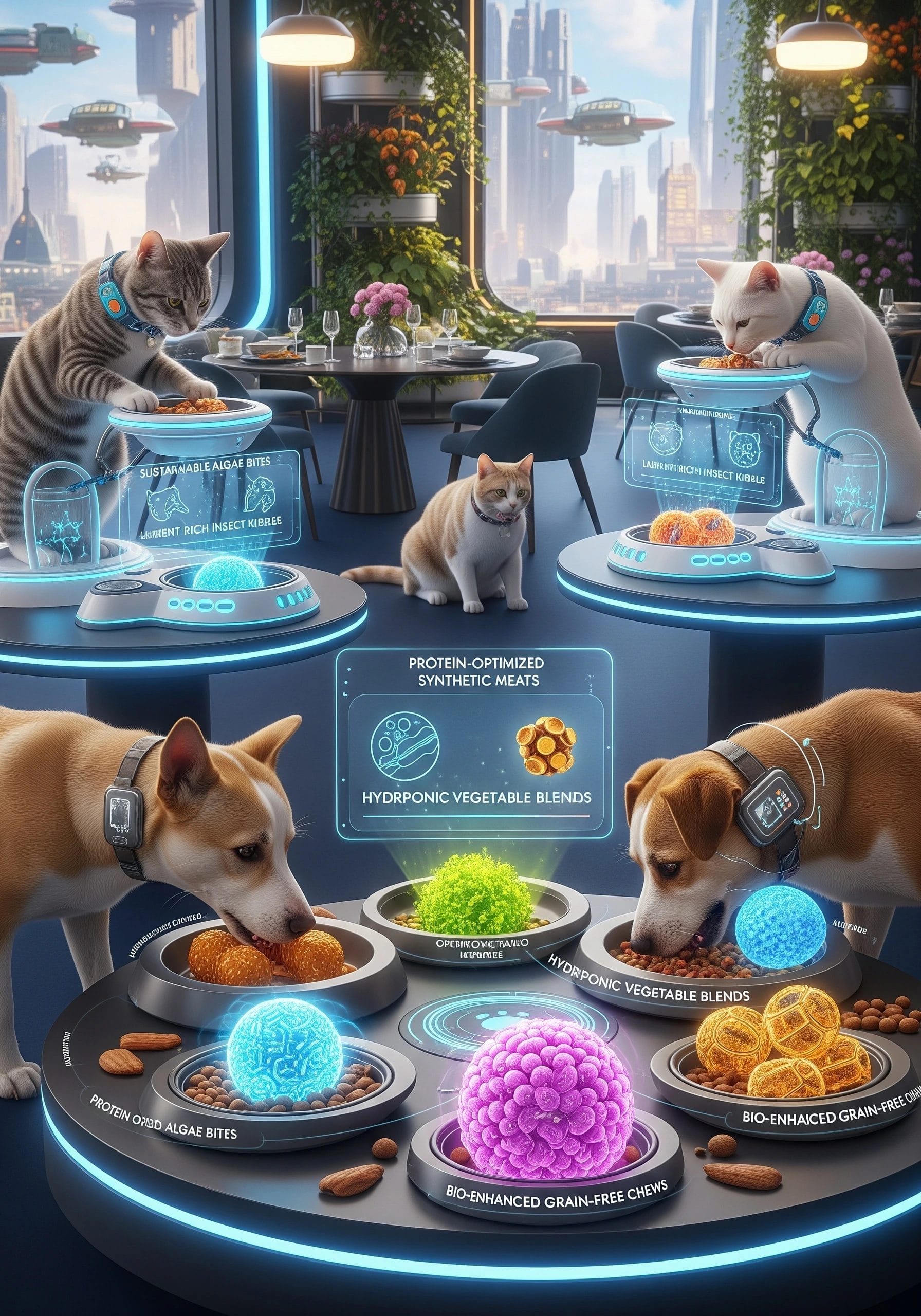
Smart Pet Feeders and Automated Nutrition
Technology will play a major role in how pets are fed in the future. By 2050, feeding might be less about scooping kibble from a bag and more about smart devices that prepare meals automatically.
Features of future smart pet feeding systems might include:
- Automated portion control: Preventing obesity by delivering exact amounts of food.
- AI integration: Adjusting meals based on weight changes, activity levels, or medical conditions.
- On-demand nutrition mixing: Smart feeders combining wet and dry ingredients or supplements at feeding time.
- Remote monitoring: Pet owners will control feeding schedules and nutrition from their smartphones.
This integration of AI and smart tech will provide pets with consistent nutrition while giving owners peace of mind.
Ethical and Cultural Shifts in Pet Cuisine
By 2050, how we think about feeding pets may also shift culturally. With more people adopting plant-based diets and becoming conscious of environmental sustainability, they may expect the same values to extend to their pets.
- Ethical sourcing: Demand for cruelty-free, responsibly sourced ingredients.
- Transparency: Clear labeling on sustainability and nutritional benefits.
- Human-grade standards: Foods meeting the same quality standards as human meals.
These ethical shifts will influence which brands succeed and what kinds of diets pets consume.
Conclusion: A Healthier, Sustainable Future for Pet Food
By 2050, pet cuisine will likely look nothing like it does today. From lab-grown meats to insect proteins, AI-driven personalized nutrition, and functional foods, cats and dogs will enjoy diets that are not only healthier but also more sustainable and ethical.
As technology progresses, the distinction between human and pet nutrition will become increasingly blurred, with pets reaping the benefits of the same scientific advancements.
The future of pet food promises longer lifespans, improved quality of life, and a significantly reduced environmental footprint.
Frequently Asked Questions Related To Pet Cuisine in the Future
Yes, kibble may still exist, but it will be enhanced with sustainable proteins, lab-grown meat, and functional nutrients to improve health outcomes.
Dogs, being omnivores, may adapt well to plant-based diets with proper supplementation. Cats, however, are obligate carnivores and require certain nutrients from animal sources, though lab-grown or synthetic options may fulfill these needs by 2050.
Yes. Insects provide highly digestible protein and essential nutrients, and research supports their safety as a pet food ingredient.
AI will allow for real-time adjustments to diets based on health data, ensuring pets get the exact nutrition they need throughout their lives.
At first, innovative options like lab-grown meat may cost more. However, as technology scales, costs will likely decrease, making advanced pet cuisine accessible to more owners.

- How to Celebrate a Dog’s First Birthday on a Budget: 2026 Guide - February 18, 2026
- Best Shampoo for Sensitive Skin Dog Grooming: 2026 Guide - February 12, 2026
- 40+ Aesthetic Names for White Dogs (2026 Unique & Rare List) - February 6, 2026
GIPHY App Key not set. Please check settings