

 Lauryn Dell
How to read your dog’s Body language is one of the most important skills you can develop as a dog owner. Dogs primarily communicate through body postures, facial expressions, and vocalisations. Learning to interpret these signals will help you build a stronger bond, prevent behavioural problems, and keep your dog safe and comfortable.
In this guide, you will learn:
- Why reading body language is critical
- Key signals dogs use to communicate
- Signs of stress, fear, and aggression
- Calming signals you should recognize
- How to practice observing your dog effectively
Why Understanding Dog Body Language Matters?
Dogs cannot communicate their needs and feelings with words, but their bodies reveal what they are thinking and feeling.
Misreading or ignoring these signals can lead to fear, aggression, or anxiety-related behaviors. By learning to interpret your dog’s signals accurately, you can:
- Prevent misunderstandings and conflicts
- Recognize early signs of stress or discomfort
- Help your dog feel safe and heard
- Build trust and strengthen your bond
- Train your dog more effectively
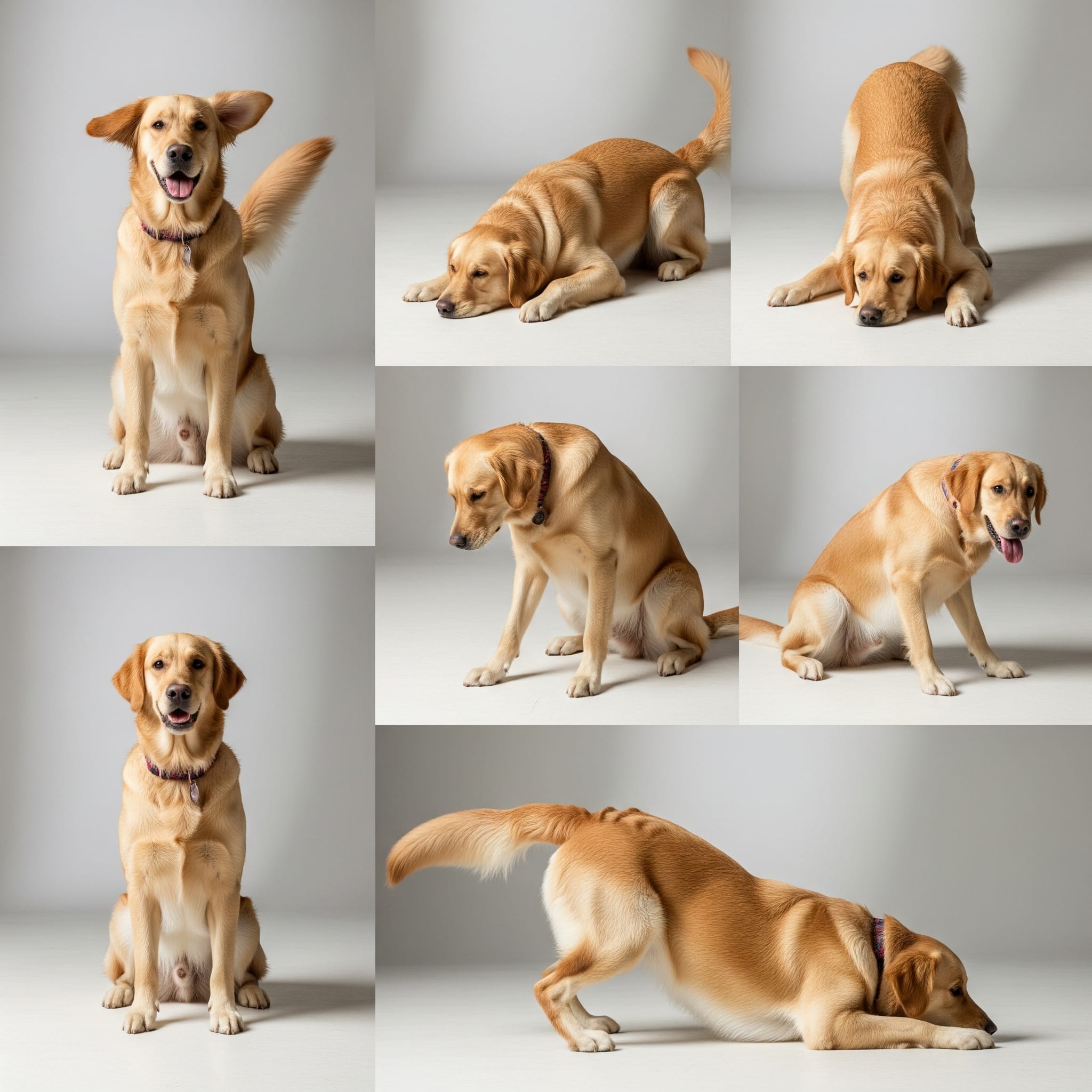
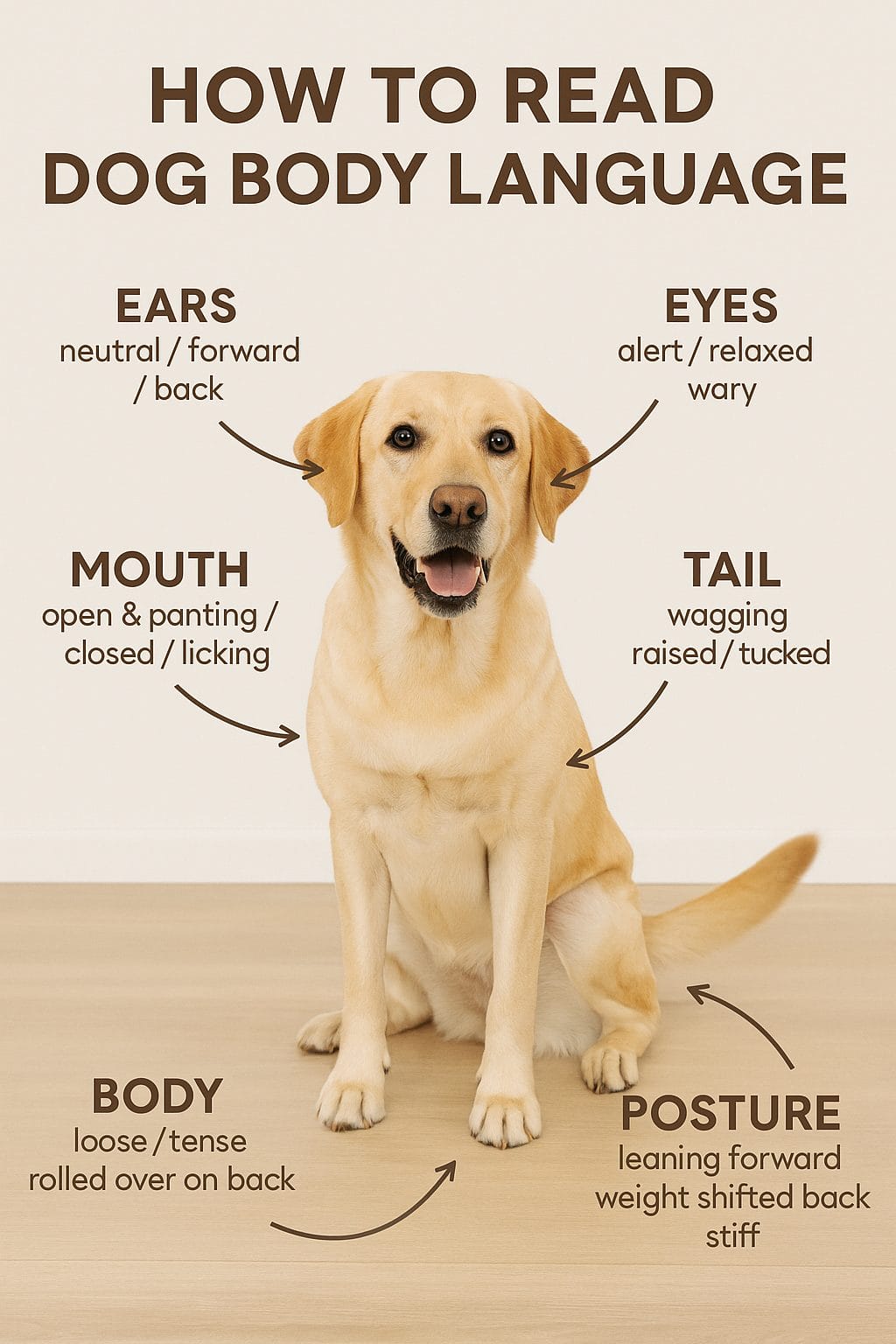
What are the Key Components of Dog Body Language?
Dog body language involves multiple components, including:
- Tail position and movement
- Ear position
- Mouth and facial tension
- Eye contact and eye shape
- Body posture
- Vocalizations (barks, growls, whines)
Let’s break down what each component typically indicates.
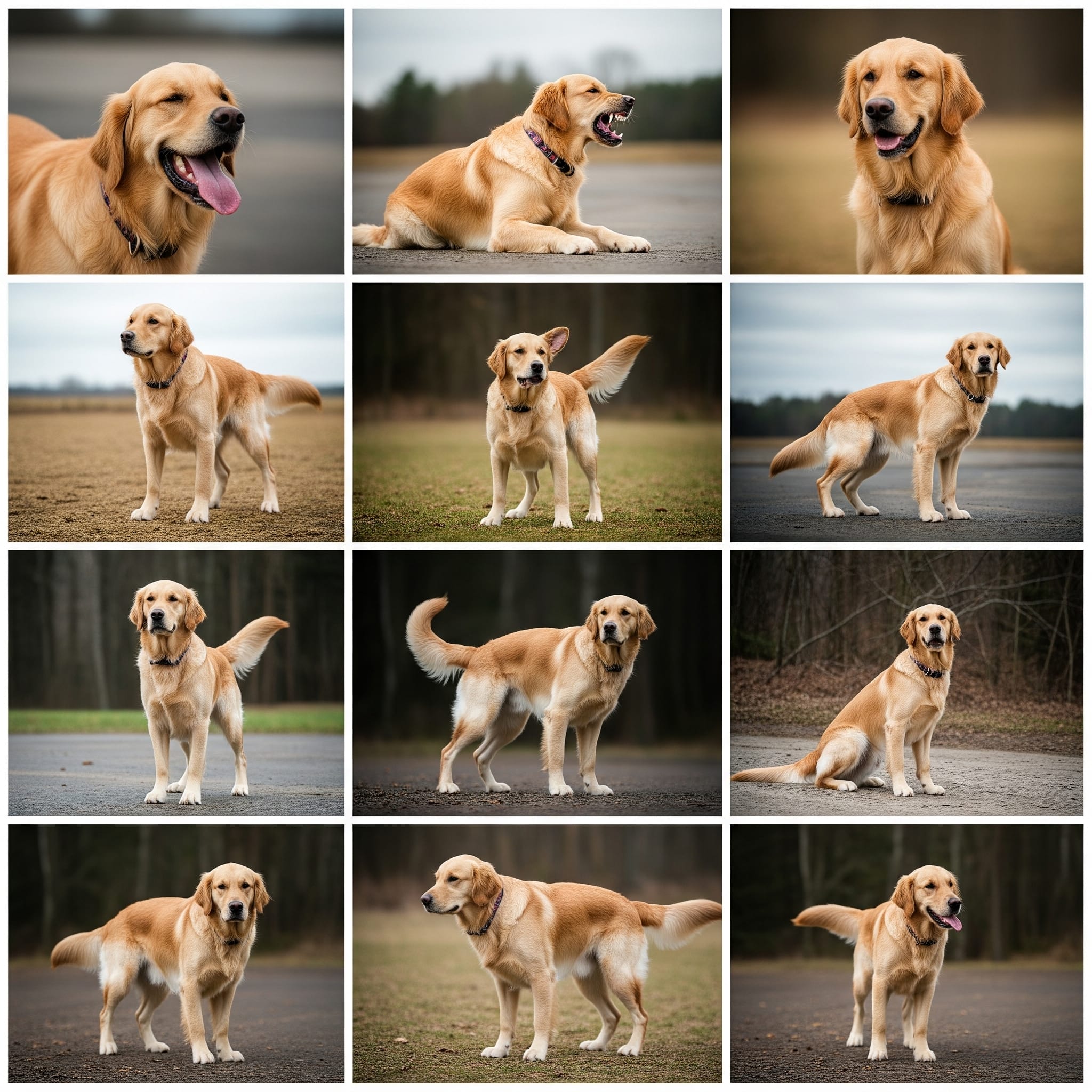
Tail Position and Movement
- Wagging Tail: Not always a sign of happiness. Look at the speed and height. A loose, wide wag usually signals friendliness, while a high, stiff wag can indicate arousal or tension.
- Tail Tucked: Indicates fear, submission, or stress.
- Tail Held High and Stiff: Indicates alertness or potential aggression.
- Slow Wag with Tail at Mid-Level: Indicates insecurity or cautiousness.
Ear Position
- Forward and Upright Ears: Alert, interested, or excited.
- Ears Back or Flattened: Fearful, submissive, or stressed.
- Neutral Ears: Relaxed and comfortable.
Breed differences matter, so understand your dog’s natural ear posture to identify changes.
Mouth and Facial Tension
- Relaxed Mouth, Slightly Open: Content and relaxed.
- Panting: Can indicate heat or stress, depending on the context.
- Closed, Tight Mouth: Potential stress, tension, or focus.
- Lip Licking or Yawning: Calming signals or signs of stress.
- Showing Teeth or Growling: Warning signs of discomfort, fear, or aggression.
Eye Contact and Eye Shape
- Soft Eyes: Relaxed, blinking, with no intense stare.
- Hard Stare: Potential challenge, tension, or aggression.
- Whale Eye (seeing the whites of the eyes): Fear, stress, or feeling threatened.
- Squinting or Avoiding Eye Contact: Discomfort, submission, or stress.
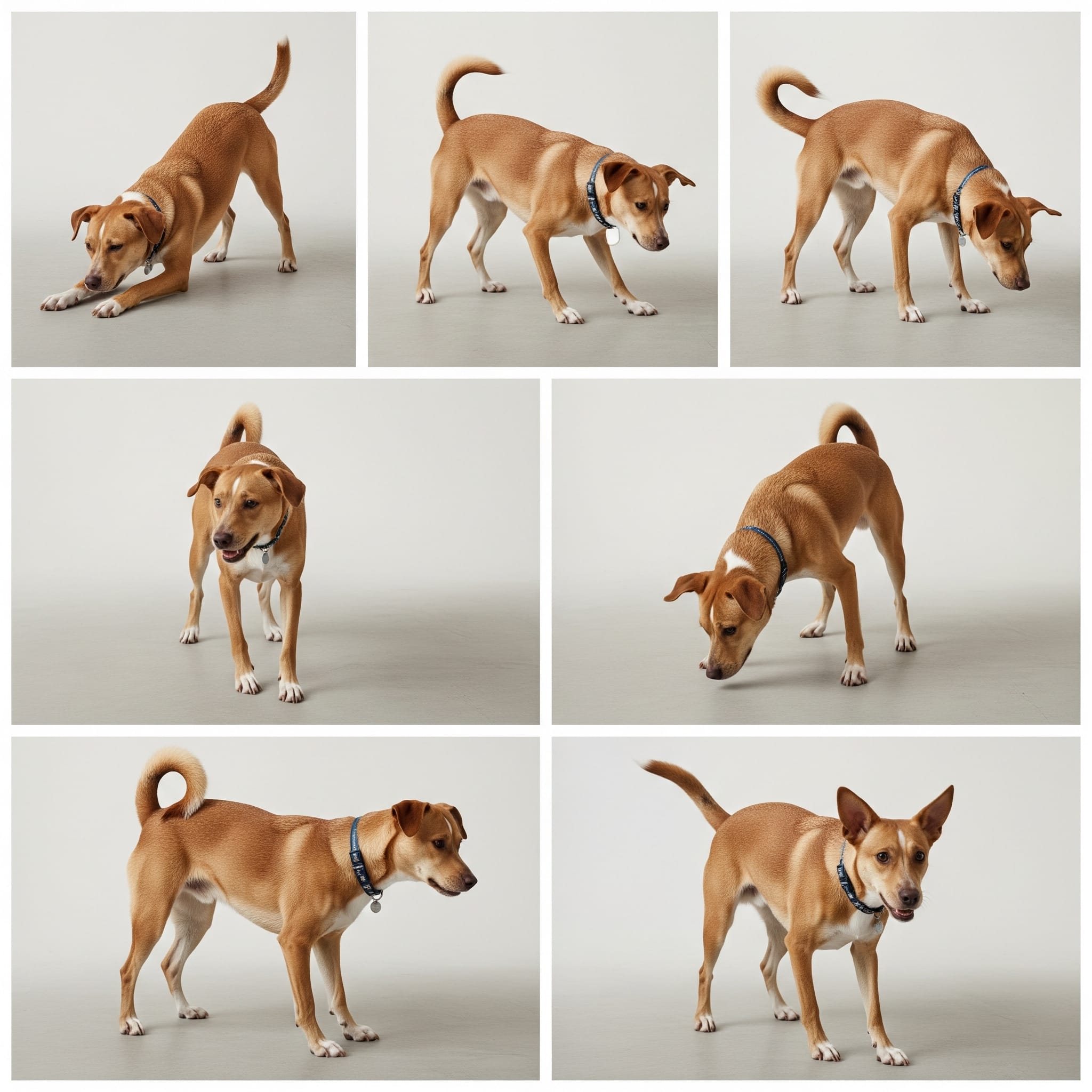
Body Posture
- Loose and Wiggle Body: Playful and relaxed.
- Stiff Body, Leaning Forward: Alert or potentially aggressive.
- Cowering or Lowered Body: Fearful or submissive.
- Play Bow (front down, rear up): Invitation to play.
Recognizing Calming Signals
Calming signals are subtle gestures dogs use to diffuse tension and communicate they are not a threat. Common calming signals include:
- Lip licking
- Yawning
- Sniffing the ground
- Turning the head or body away
- Blinking slowly
- Sitting or lying down
- Moving slowly
When your dog uses these signals, they are trying to manage their stress or communicate peace. Acknowledging these signals can help your dog feel safe.
Signs of Stress and Anxiety in Dogs
Learning to identify stress signals can prevent fear-related issues and aggression. Common stress indicators include:
- Panting when not hot
- Pacing
- Excessive yawning
- Lip licking
- Shaking off as if wet
- Avoiding eye contact
- Hiding or seeking isolation
- Ears pinned back
- Whale eye
If you notice these signs frequently, assess your dog’s environment and routines to identify potential stressors and help your dog feel safer.
Signs of Aggression in Dogs
Aggression often has warning signs before escalation. Watch for:
- Stiffening of the body
- Hard, direct stare
- Growling or snarling
- Lips curling back
- Raised hackles
- Lunging forward
- Tail held high and rigid
Never punish growling; it is a warning that your dog is uncomfortable. Address the underlying issue or seek professional help if aggression is consistent.
How to Practice Reading Your Dog’s Body Language?
- Observe in Different Contexts: Watch your dog when relaxed, playing, or meeting new people to notice how their body language changes.
- Watch the Whole Body: Avoid focusing on just one feature; for example, a wagging tail with a stiff body may indicate tension.
- Record Videos: Filming your dog can help you slow down and analyze their body language frame by frame.
- Respect Your Dog’s Signals: If your dog shows signs of discomfort, do not force them into situations that increase stress.
- Educate Family Members: Ensure everyone in your household understands your dog’s signals to prevent misunderstandings.
Final Thoughts On Read Your Dog’s Body Language
Learning to read your dog’s body language like a pro takes observation and patience, but the rewards are invaluable. You will be able to prevent conflicts, respond to your dog’s needs effectively, and deepen your relationship built on trust and understanding.
Remember, your dog is constantly communicating with you. By paying attention to their subtle signals, you will become a more mindful, confident, and compassionate dog owner.
Frequently Asked Questions
A wagging tail does not always mean a dog is happy. If your dog is growling while wagging, it may be conflicted or overstimulated. Check the tail’s position and body stiffness to assess whether your dog feels threatened.
This is called “whale eye” and indicates stress, fear, or discomfort. It often occurs when a dog feels threatened but does not want to escalate to aggression.
Signs of anxiety include excessive panting, pacing, yawning, lip licking, trembling, and seeking isolation. If you notice these frequently, consult a vet or trainer to identify the cause.
No, growling is a warning that your dog is uncomfortable. Punishing growling can suppress this warning and lead to sudden biting without warning in the future. Instead, address why your dog is growling and remove the stressor if possible.
Yes, watching videos of dogs displaying different emotions can help you recognize body language signals. Record and review your dog’s behavior to better understand their signals in various situations.

- Mushroom Complex Supplements for Dogs with Cancer: A Guide - March 25, 2026
- 15 Meaningful Dog Memorial Tattoo Ideas & Costs - March 20, 2026
- Best Horse Hoof Supplement Reviews for Beginners (2026) - March 19, 2026
GIPHY App Key not set. Please check settings