

 Emily Walker
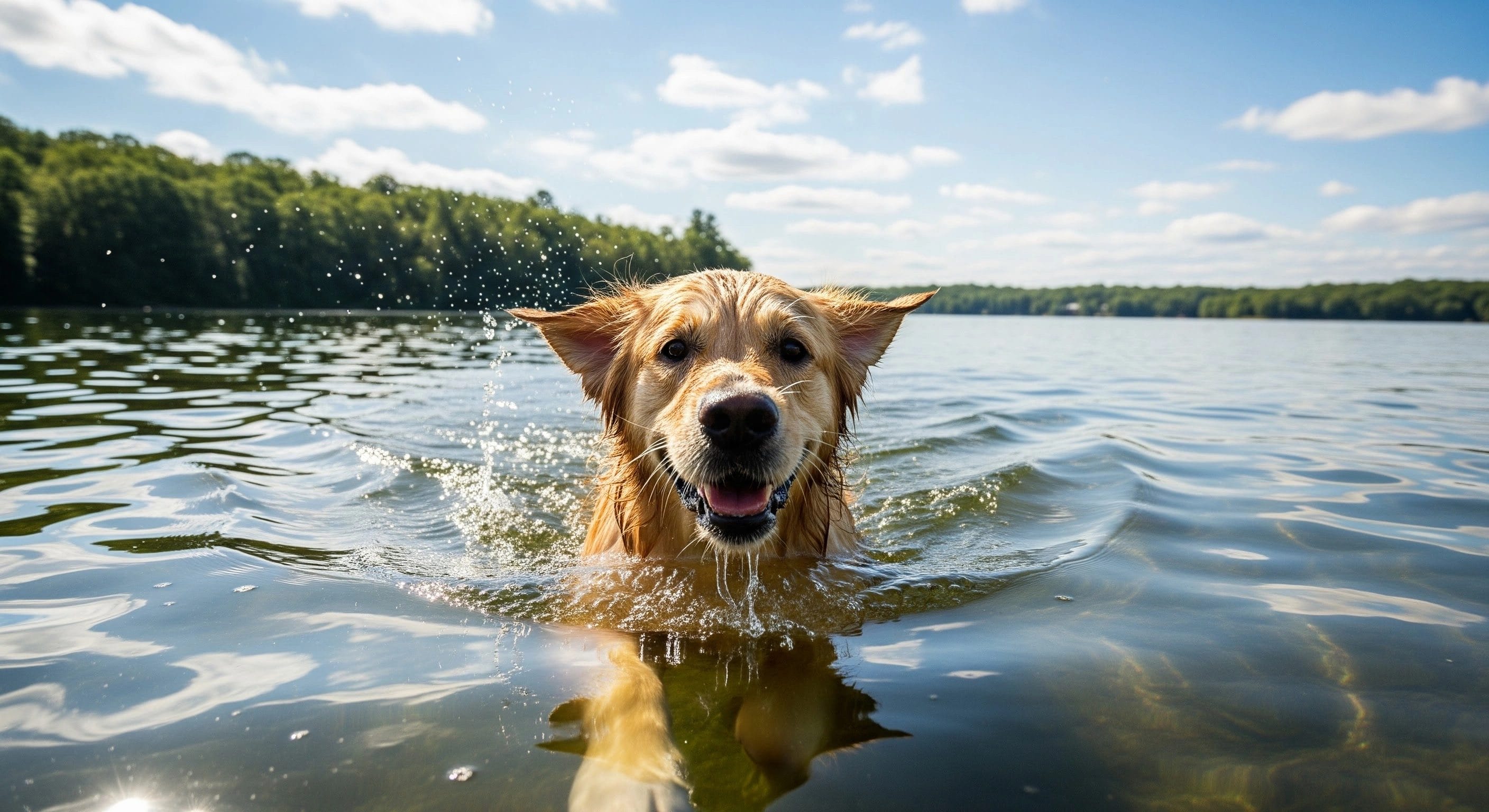
If you’ve ever seen a dog cannonball into a lake or glide through the waves like a furry Olympian, you know—some pups are born for the water.
But what makes certain breeds such awesome swimmers? And which ones are the real MVPs of splash season?
In this guide, we’re diving into the best swimming dog breeds, what gives them their water-loving superpowers, and how you can safely help any dog learn to swim—no floaties required.
Understanding What Makes a Dog Breed an Excellent Swimmer
Before we start naming the Michael Phelps of the dog world, let’s talk about why some pups are just built for the water.
Not every dog is a natural-born swimmer—some sink faster than a dropped tennis ball—so a mix of physical features and personality traits makes all the difference.
Physical Attributes of Strong Swimming Dogs
- Webbed feet: Think of these like built-in flippers. Breeds with webbed paws can paddle faster and more smoothly—kind of like how you’d swim better with fins on.
- Water-resistant coats: Dogs with double or oily coats basically have nature’s version of a wetsuit. They stay warm, dry off quicker, and don’t get weighed down when they take a dip.
- Powerful chest and shoulders: Swimming takes muscle, and dogs with strong upper bodies can slice through water like total pros.
- Body structure: Long bodies and sturdy legs = smooth swimming. Short, chunky builds (looking at you, bulldogs) usually struggle to stay afloat.
- Natural buoyancy: Some dogs just float better thanks to how their fat and bones are distributed—yep, even in the dog world, body composition matters.
But it’s not just about looks—personality counts too.
Breeds that were originally bred for water jobs (like retrieving ducks or hauling fishing nets) usually love swimming.
They’re confident, fearless, and basically say, “Water? Say less.”
The Top Swimming Dog Breeds
1. Labrador Retriever
Labrador Retriever is always among the top protective swimming breeds of dogs worldwide.
Since they were originally bred in Newfoundland, Canada, to assist fishermen in pulling in nets and picking up fish that fell off fishing lines, Labs are truly bred to work in water.
Why Labs Excel in Water:
Labs have a water-resistant double coat that keeps them warm, webbed toes that act like built-in paddles, and that famous “otter tail” that steers like crazy.
They’re athletic, goofy, and hyped to jump into any puddle — basically the swim team captain of the dog world.
2. Portuguese Water Dog
True to their name, Portuguese Water Dogs used to be bred to perform water work along Portugal’s coastline.
Intelligent, medium-sized dogs, they assisted fishermen in herding fish towards nets, fetched lost tackle, and even carried messages from boat to boat.
Distinctive Features:
They’ve got webbed feet, a waterproof curly-or-wavy coat, and stamina for days.
They can dive and actually enjoy underwater work. Plus their hypoallergenic coat makes them perfect if someone in the fam sneezes around pets.
3. Newfoundland
The Newfoundland is basically the gentle giant lifeguard of dogs.
These huge pups (yes, up to around 150 pounds) were bred to pull fishermen and do water rescues in cold, rough seas — and they still do rescue-style work in some places.
Remarkable Capabilities:
Massive muscles, partially webbed feet, and a super-thick double coat mean Newfies can swim long distances without burning out.
They move in a chill, energy-saving way and have an instinct to help — calm, steady, and heroic.
4. Chesapeake Bay Retriever
Born on the rough, icy waters of Chesapeake Bay in Maryland, the “Chessie” was made to retrieve waterfowl in conditions that would freeze other dogs’ toes off.
They’re built for grit and long swims.
Special Adaptations:
An oily, wavy coat that keeps cold water out, powerful hindquarters, webbed feet, and a stubborn drive to keep going.
These dogs will bust through nasty weather (and sometimes thin ice) to get the job done.
5. Irish Water Spaniel
The Irish Water Spaniel looks wild with its curly, liver-colored coat and that weird-but-useful “rat tail.”
They’re one of the OG water spaniels and were bred to retrieve game from Ireland’s muddy, wet fields and rivers.
Notable Traits:
Water-repellent double coat, webbed feet, playful energy, and bigger size than most spaniels — which gives them extra power when paddling.
Smart and trainable, they make great working dogs and splash buddies.
6. Standard Poodle
Yes, the poodle. The fancy haircut is for show, but Standard Poodles were originally working water retrievers — their name even hints at “splashing dog.”
Don’t sleep on their swim skills.
Swimming Advantages:
Curly, water-resistant coat, webbed feet, and a lean, athletic build.
The classic poodle clip wasn’t for looks only — it kept joints warm while cutting drag in the water.
They’re clever and eager learners, so they pick up water work fast.
7. English Setter
English Setters are elegant gun dogs that can handle a variety of terrain — water included.
They’re not just runway models; they’ve got stamina and a chill confidence around water.
Water Capabilities:
Feathered coat that gives some water protection, slight webbing between the toes, and a steady athletic frame. They’re reliable swimmers who enjoy getting wet, even if they don’t live to retrieve like a retriever.
8. German Shorthaired Pointer
GSPs are the Swiss Army knives of hunting dogs — fast, versatile, and totally down for water.
Bred to work both on land and in water, they’re athletic machines.
Aquatic Strengths:
Short, water-shedding coat, webbed feet, and powerful legs make them efficient swimmers.
They’ve got high energy and an outdoorsy vibe, so swimming is basically their favorite hobby — no chill, just splash.
Breeds That Struggle with Swimming
Okay, so we’ve talked about the canine Michael Phelps types — now let’s be real about the ones who just aren’t built for it.
Some dogs were made for land life, not lake life, and that’s totally fine.
Brachycephalic (flat-faced) breeds like Bulldogs, Pugs, and Frenchies? Yeah… they try hard, but their short snouts make it tough to breathe while paddling.
Add a heavy, barrel-shaped body and tiny legs, and you’ve basically got a sinking potato.
Cute? Absolutely. Buoyant? Not so much.
Then you’ve got the short-and-long crew — Dachshunds and Corgis.
Their little legs do try to doggy paddle, but nature didn’t exactly hand them the best swim gear.
Same goes for breeds with dense, heavy frames like Basset Hounds — their body weight just works against them in the water.
Teaching Your Dog to Swim Safely
Even if your dog’s got the genes of a gold medal swimmer, they still need a proper intro to the water.
Think of it like driver’s ed — just because you can drive doesn’t mean you should jump straight onto the highway. Here’s how to get your pup swimming safely and confidently:
- Start Young and Gradual: Begin in shallow, calm water where they can still touch the ground. Let them explore at their own pace.
- Use Positive Reinforcement: Every step counts — sniffing the water, dipping a paw, or taking that first paddle. Hype them up with treats, praise, and toys.
- Invest in a Dog Life Jacket: It’s like training wheels — gives them confidence, keeps them safe, and helps you chill knowing they’ll float if they get tired.
- Supervise Always: Never assume “they’ll be fine.” Even great swimmers can panic, get caught in currents, or just tire out. Stay close, eyes on them the whole time.
- Rinse After Swimming: Chlorine, salt, and lake gunk can mess with their skin and coat. A quick rinse keeps them comfy and smelling less like “wet dog.”
- Know the Signs of Trouble: If your dog’s paddling straight up and down, looks panicked, or isn’t moving forward — that’s your cue to step in fast.
Health Benefits of Swimming for Dogs
Swimming is basically the cheat code for canine fitness — low drama, big gains.
Picture this: a senior lab easing through the water like it just hit the reset button on sore hips. Here’s why water time is pure gold for pups:
- Low-impact movement: Water is supportive, so arthritic, dysplastic hip, or injury-recovering canines can walk without their joints complaining.
- Full-body exercise: Swimming engages shoulders, core, back, and hind legs simultaneously — no brutal heavy-impact battering to knees.
- Weight management: It burns serious calories — great for dogs who need to lose pounds but can’t run long distances.
- Mental stimulation: New scents, sounds, and the entire “wow a lake” experience keep their mind active and boredom in check.
- Better cardiovascular health: Regular swimming makes the heart and lungs stronger — endurance training, but with far less stress on the body.
- Reduced stress: Water play decreases worry and directs zoomies into a positive, relaxed pathway.
Veterinarians often recommend hydrotherapy because studies show swimming and water-based rehab can really improve mobility and lower pain for dogs with musculoskeletal issues.
Conclusion: Finding Your Perfect Swimming Companion
So, which dog’s the ultimate water buddy? Honestly, it depends on your vibe.
Labs are the all-around champs, Newfoundlands are the gentle lifeguards, Portuguese Water Dogs are the smart divers, and Chessies? Absolute tanks in rough water.
The real key is matching the dog to your lifestyle. Genetics help, sure — but confidence, training, and positive experiences are what make a pup love the water.

- Does Cat Litter Melt Ice? The Complete Guide to Winter Safety - January 30, 2026
- Happy Tail Dogs: Understanding This Common Canine Condition - January 29, 2026
- How Cold Can Outdoor Cats Handle? Feline Winter Safety - January 27, 2026
GIPHY App Key not set. Please check settings