

 Lauryn Dell
Summer is here, and as we enjoy picnics, barbecues, and fresh seasonal fruits, it’s natural to want to share these treats with your dog.
However, not all summer foods are safe for your canine companion. While watermelon is often seen as a refreshing, dog-friendly snack, other summer favorites can be harmful or even toxic to dogs.
In this guide, we will cover:
- Whether dogs can safely eat watermelon
- The benefits and risks of watermelon for dogs
- 15 common summer foods dogs can and can’t eat
- Safety tips for feeding your dog human foods during summer
By the end, you will know exactly what you can safely share with your furry friend to keep them healthy, hydrated, and happy during the warm months.
Can Dogs Eat Watermelon?
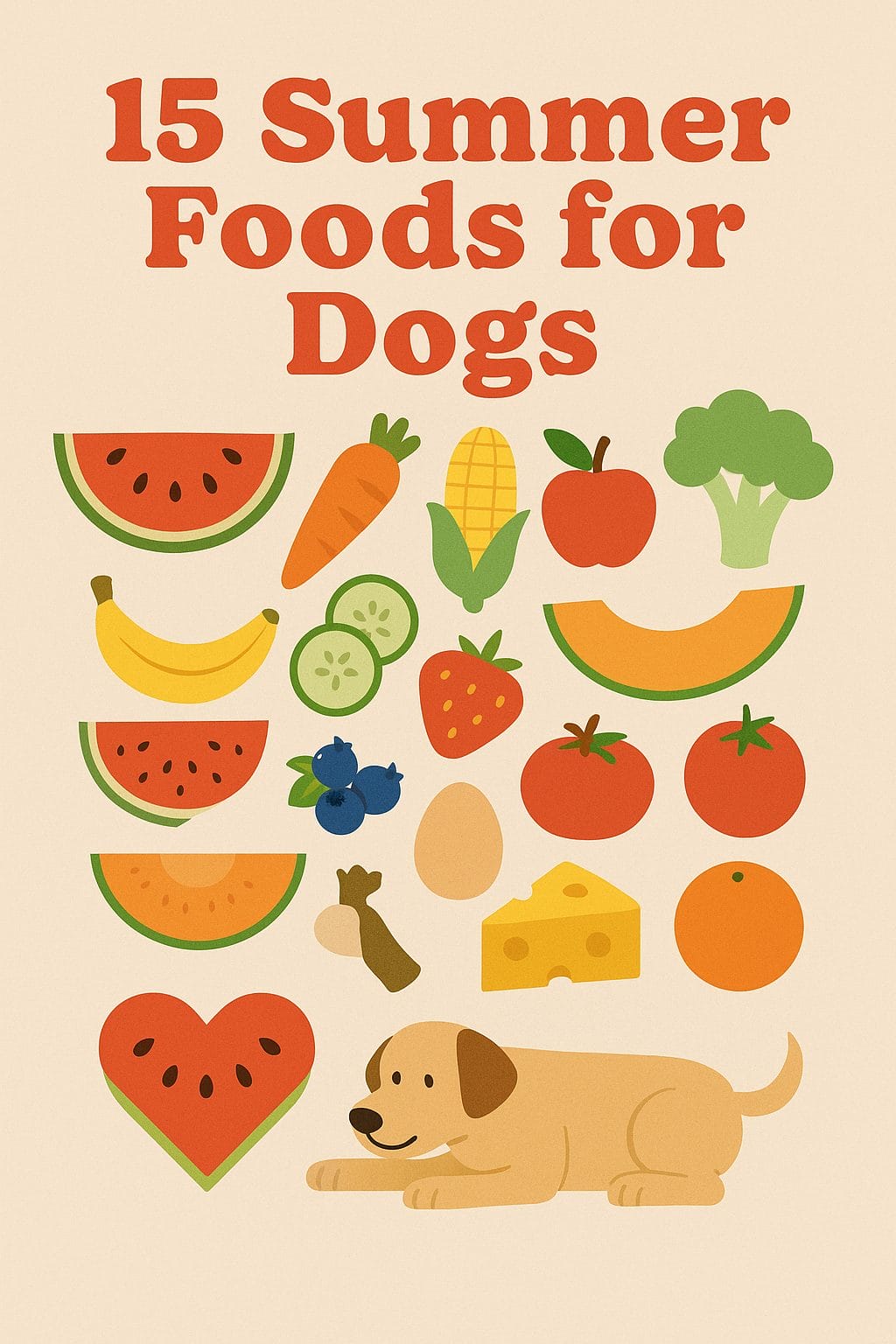
Yes, dogs can eat watermelon in moderation. It is a hydrating, low-calorie fruit that provides vitamins A, B6, and C, and is over 90% water, making it an excellent summer treat for dogs.
Benefits of Watermelon for Dogs
- Hydration during hot weather
- Vitamins for immune support
- Low in calories, making it a guilt-free snack
Precautions
- Remove seeds: Watermelon seeds can cause intestinal blockages in dogs.
- Remove the rind: The rind is tough to digest and may lead to gastrointestinal upset.
- Moderation: Too much watermelon can cause diarrhea due to its high water and fiber content.
Cut watermelon into small, seedless chunks to serve safely.
15 Summer Foods Dogs Can & Can’t Eat
Here is a clear breakdown of summer foods, separating what you can and cannot share with your dog during picnics, hikes, and barbecues.
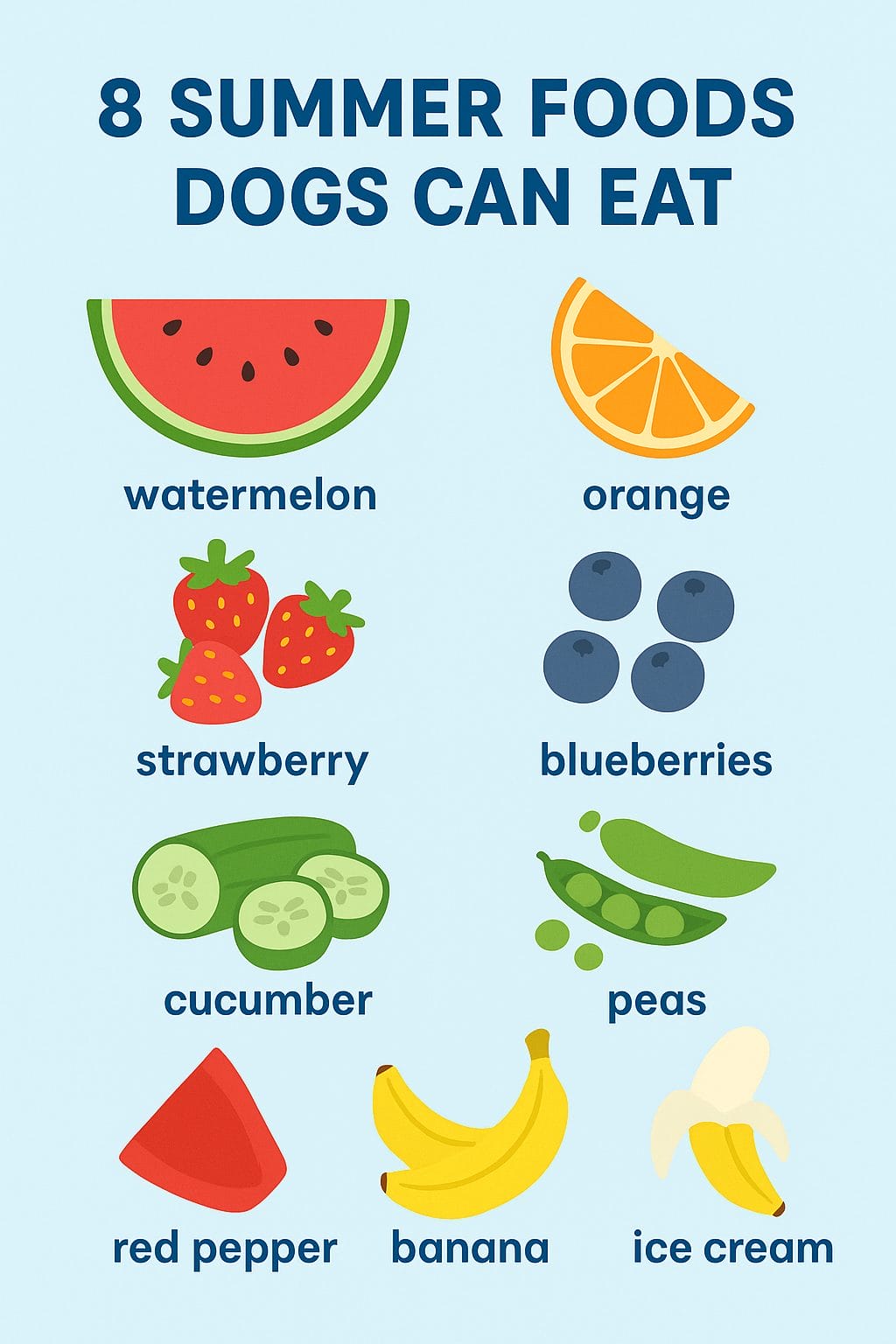
8 Summer Foods Dogs Can Eat
- Watermelon (seedless and rind removed): Hydrating and safe.
- Blueberries: Packed with antioxidants and fiber.
- Strawberries: Rich in vitamin C; feed in moderation.
- Cucumbers: Low-calorie, hydrating snack.
- Apples (no seeds or core): Crunchy and full of vitamins.
- Carrots: Great for crunching and dental health.
- Green beans: Low-calorie, nutrient-rich treat.
- Plain cooked chicken: A good source of lean protein.
These foods can be served as small, bite-sized treats during summer activities or frozen in water for cooling enrichment.
7 Summer Foods Dogs Can’t Eat
- Grapes and raisins: Highly toxic, can cause kidney failure.
- Onions and garlic: Can damage red blood cells, leading to anemia.
- Corn on the cob: The cob can cause choking or intestinal blockage.
- Avocado: Contains persin, which can cause vomiting and diarrhea.
- Cherries: Pits pose a choking hazard and contain cyanide.
- Chocolate: Toxic to dogs and can cause seizures and cardiac issues.
- Ice cream: Contains sugar and dairy, which can upset your dog’s stomach and contribute to obesity.
These foods should be kept out of your dog’s reach at all times, especially during gatherings where food may be left unattended.
Safe Summer Feeding Tips for Dogs
- Introduce new foods gradually: This helps prevent gastrointestinal upset.
- Monitor portions: Human foods should not exceed 10% of your dog’s daily caloric intake.
- Use puzzle feeders or frozen treats: Freeze dog-safe fruits in water for a cooling activity.
- Always supervise: Keep an eye on your dog during picnics or outdoor meals.
- Watch for signs of distress: Vomiting, diarrhea, lethargy, or bloating after eating require immediate veterinary attention.
DIY Frozen Watermelon Dog Treat Recipe
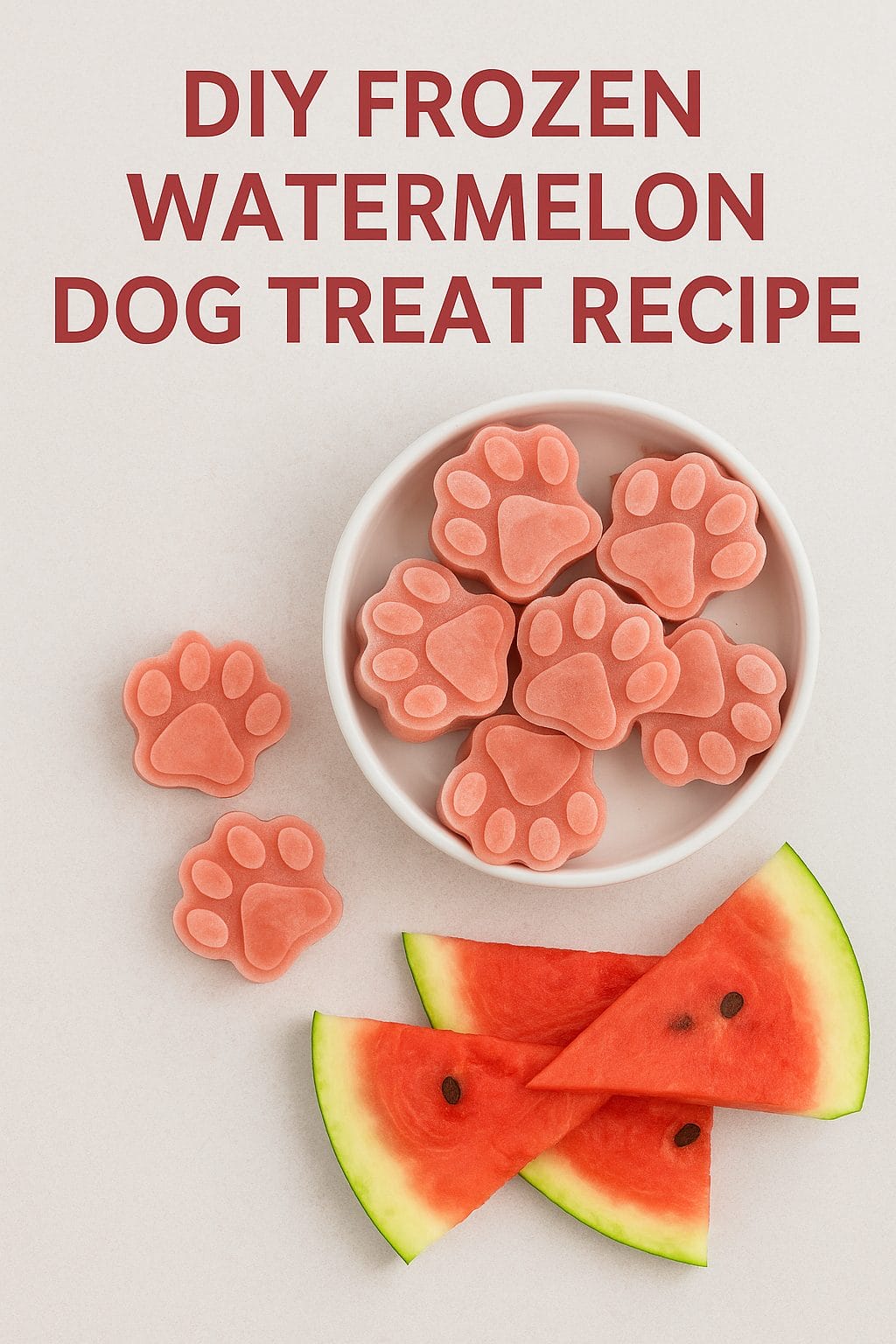
Here is a quick, dog-friendly frozen treat idea:
Ingredients
- Seedless watermelon chunks
- Plain Greek yogurt (optional)
Instructions
- Puree watermelon chunks in a blender.
- Mix with a small amount of plain Greek yogurt if desired.
- Pour into ice cube trays or silicone molds.
- Freeze for 2-4 hours.
- Serve one or two cubes as a cooling treat on hot days.
These frozen treats are perfect for providing hydration and enrichment while keeping your dog occupied.
Signs Your Dog May Have Eaten Something Toxic
If your dog accidentally eats a food on the “can’t eat” list, watch for:
- Vomiting or diarrhea
- Excessive drooling
- Weakness or lethargy
- Seizures
- Loss of appetite
- Abdominal pain
If any of these symptoms occur, contact your veterinarian or an emergency animal hospital immediately.

Final Thoughts
Watermelon and many other summer fruits can be safe, healthy treats for your dog when served in moderation and prepared properly. However, summer foods like grapes, chocolate, and onions should never be shared with dogs due to their potential toxicity.
By being mindful of what your dog eats during summer, you can enjoy the season together safely, keeping your pup hydrated, happy, and healthy.
FAQs
No, watermelon rind is tough for dogs to digest and may cause gastrointestinal upset or blockage. Always remove the rind before feeding watermelon to your dog.
Watermelon should be given in small amounts, as a treat, making up no more than 10% of your dog’s daily calories. Too much can cause diarrhea due to its water and fiber content.
Yes, frozen watermelon chunks can be a safe and enjoyable treat during summer, provided the seeds and rind are removed before freezing.
Yes, both strawberries and blueberries are safe for dogs in moderation. They are rich in antioxidants and vitamins, making them healthy summer treats.
Dogs should avoid grapes, raisins, cherries (due to pits), and avocados. These can be toxic or pose a choking hazard and should not be shared with your dog.

- Mushroom Complex Supplements for Dogs with Cancer: A Guide - March 25, 2026
- 15 Meaningful Dog Memorial Tattoo Ideas & Costs - March 20, 2026
- Best Horse Hoof Supplement Reviews for Beginners (2026) - March 19, 2026
GIPHY App Key not set. Please check settings