

 Lauryn Dell
Dogs are curious creatures. One moment they’re playing fetch, and the next, they’re nose-deep in the cat’s food bowl. If you’ve caught your pup munching on some feline kibble, you’re not alone. Many dog owners face this issue and wonder, “What happens if my dog eats cat food?”
While a small amount may not be life-threatening, cat food isn’t formulated for a dog’s nutritional needs and can lead to health problems if consumed regularly.
In this comprehensive guide, we’ll explore the key differences between cat and dog food, what to do if your dog eats cat food, and how to prevent it from happening again.
What are the Key Differences Between Cat Food and Dog Food?
Understanding why cat food isn’t suitable for dogs begins with the formulation.
Nutritional Requirements
- Cats are obligate carnivores, meaning they require a diet high in protein and certain amino acids like taurine, which are not naturally produced by their bodies.
- Dogs are omnivores, meaning their diet is more balanced with proteins, carbohydrates, fats, vitamins, and minerals.
Protein Content
Cat food generally contains higher levels of protein and fat than dog food. While dogs need protein, too much can overburden their organs, especially the liver and kidneys.
Added Nutrients
Cat food includes nutrients like taurine, arachidonic acid, and vitamin A, which dogs either synthesize naturally or don’t require in the same amounts.
Why Are Dogs Attracted to Cat Food?
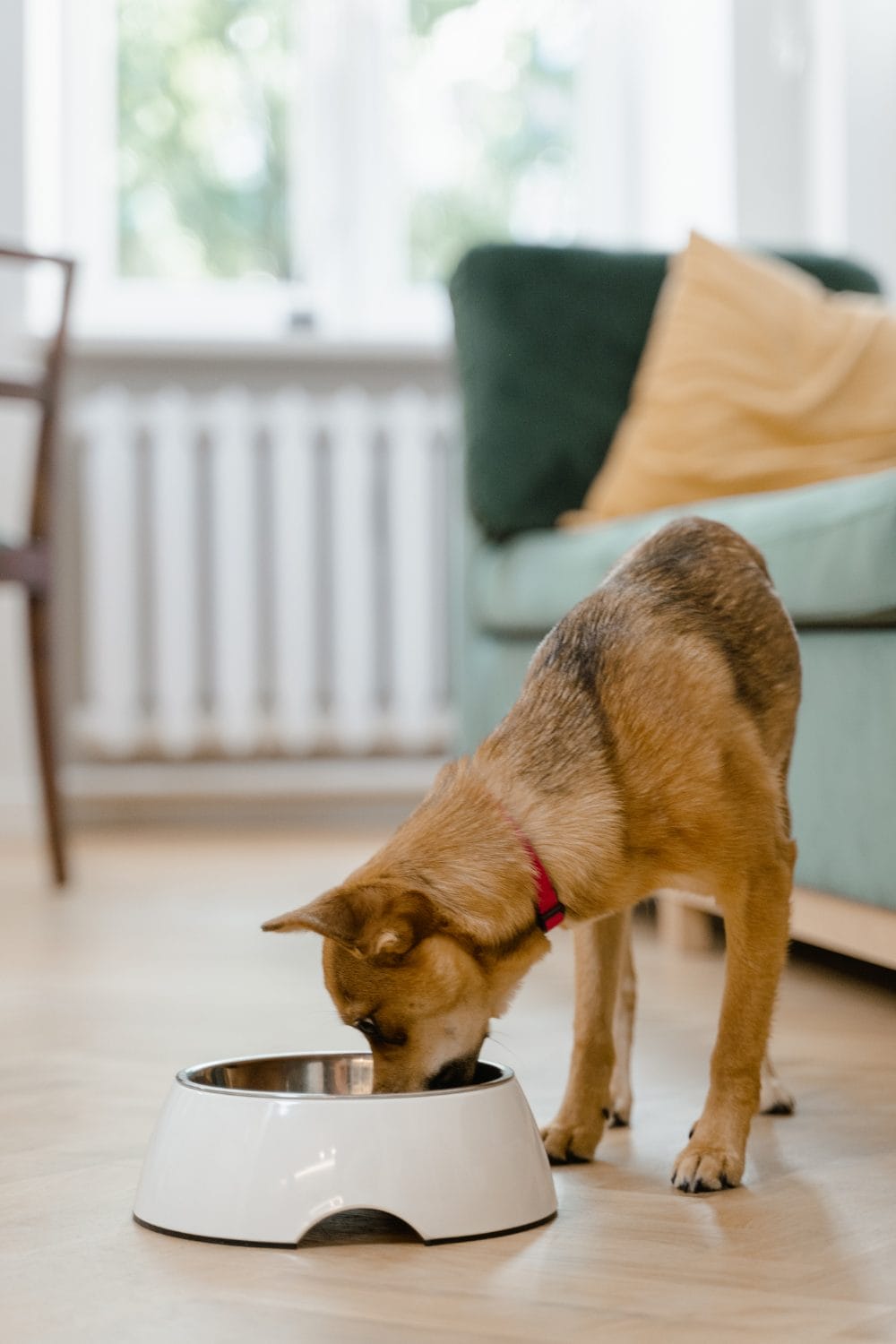
If your dog keeps sneaking into the cat’s food bowl, there are reasons:
- Smell and Taste: Cat food often has a stronger smell and more flavorful meat-based formulas, making it more appealing to dogs.
- Higher Fat Content: Dogs love fatty foods, and cat food is richer in fats and oils, which are appetizing to a dog’s palate.
- Availability: If the cat’s food bowl is left out all day, it becomes an easy target.
What Happens If a Dog Eats Cat Food?
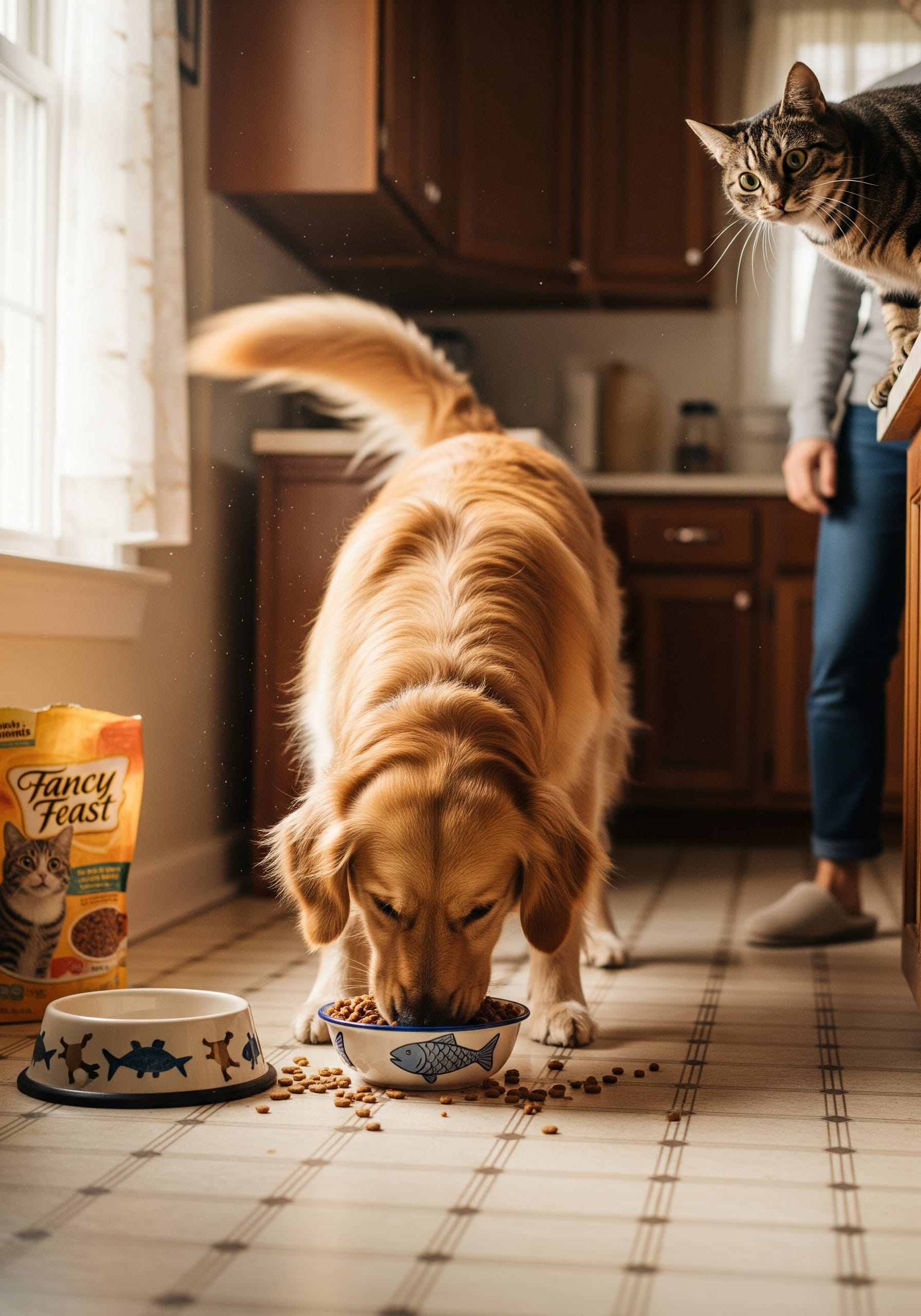
If your dog has eaten a small amount of cat food once, there’s probably no cause for alarm. However, frequent ingestion or consuming large quantities can lead to short-term and long-term issues.
Short-Term Effects
- Stomach upset (vomiting, diarrhea, gas)
- Increased thirst due to high sodium content
- Restlessness or bloating
Long-Term Risks
- Obesity: The high fat and calorie content can lead to unhealthy weight gain.
- Pancreatitis: A potentially life-threatening inflammation of the pancreas, often triggered by a high-fat diet.
- Kidney strain: Over time, too much protein can tax your dog’s kidneys.
- Nutritional imbalances: Your dog may miss out on essential nutrients if replacing dog food with cat food regularly.
What are the Symptoms to Watch For?
If your dog has eaten cat food, monitor them closely. Here are common symptoms that may appear:
- Vomiting or diarrhea
- Lethargy or weakness
- Loss of appetite
- Increased water intake
- Signs of abdominal pain (whining, restlessness, guarding belly)
If symptoms persist for more than 24 hours or worsen, contact your vet immediately.
What are the Long-Term Risks of Dogs Eating Cat Food?
While a nibble here and there might not cause harm, repeated access to cat food is dangerous:
1. Obesity
Dog bodies aren’t designed to handle the high-calorie density of cat food. Over time, this leads to weight gain and related health problems like arthritis, diabetes, and heart disease.
2. Pancreatitis
Cat food’s richness in fats can lead to pancreatitis, particularly in breeds prone to the condition (e.g., Miniature Schnauzers). This condition can be fatal if not treated promptly.
3. Liver and Kidney Strain
Excess protein and fat can burden organs, especially in senior dogs or those with pre-existing conditions.
4. Behavioral Issues
Allowing dogs to eat cat food may encourage food aggression or resource guarding, particularly in multi-pet households.
What to Do If Your Dog Eats Cat Food?
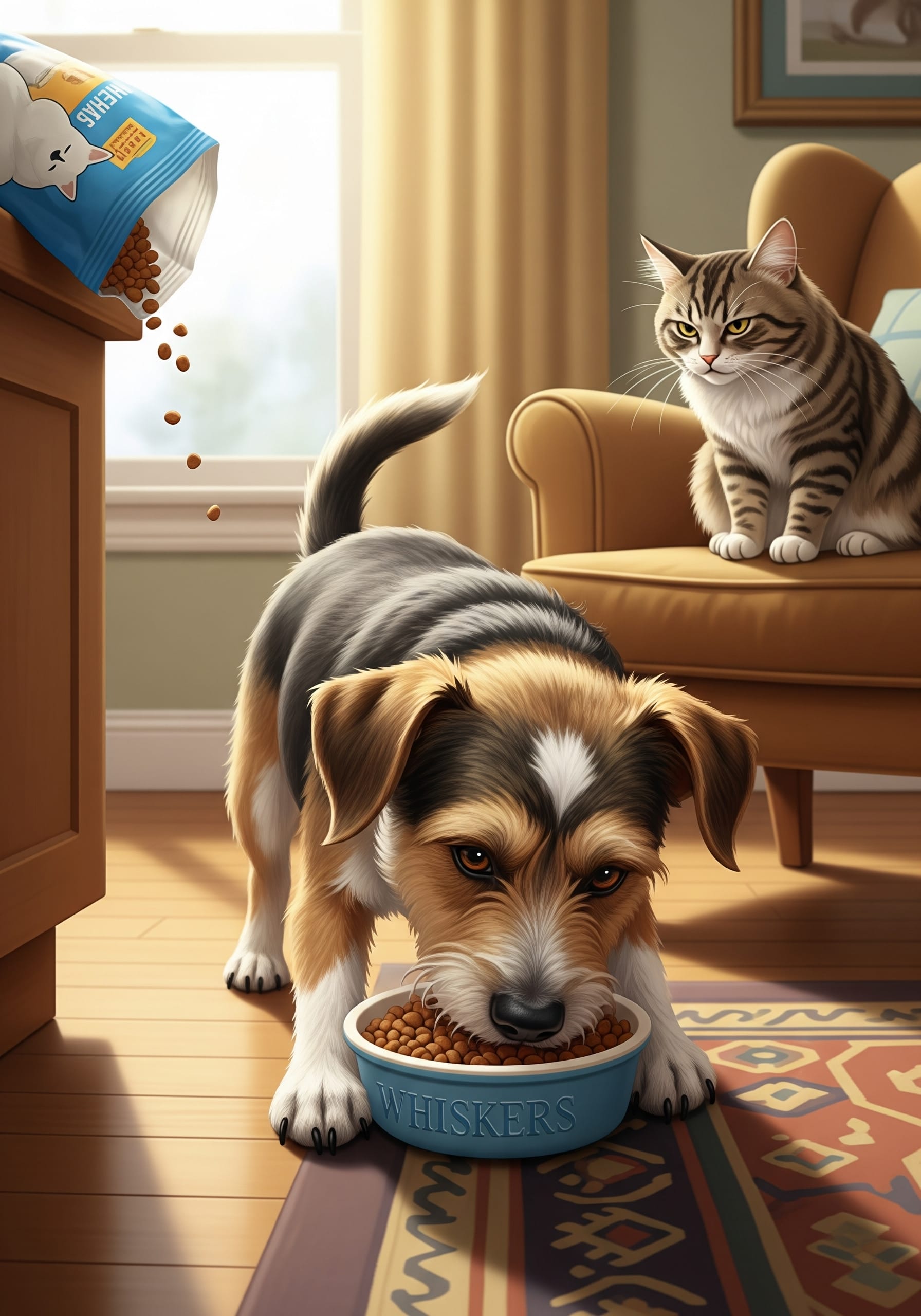
If your dog has indulged in a bit of cat food, follow these steps:
- Assess the Quantity: Did they eat a few kibbles or the whole bowl?
- Watch for Symptoms: Monitor for any digestive issues or behavioral changes.
- Provide Fresh Water: The sodium and protein levels may increase thirst.
- Avoid Feeding More Food Right Away: Let their stomach settle before the next meal.
- Call Your Vet if Symptoms Appear: Especially if vomiting, lethargy, or bloating occur.
Pro tip: Write down the brand and amount of cat food eaten. This helps your vet assess the situation more accurately.
How to Prevent Dogs From Accessing Cat Food?
To avoid future incidents, try these prevention tips:
1. Separate Feeding Areas
Feed your cat in a location your dog can’t access on a high counter, windowsill, or gated room.
2. Scheduled Feeding
Instead of leaving cat food out all day, switch to timed feeding sessions so leftovers aren’t available.
3. Use Pet Feeders with Sensors
Automated feeders can restrict access by recognizing microchip-activated collars, ensuring only your cat can access the food.
4. Train Your Dog
Use basic commands like “Leave it” or “No” to establish boundaries and discourage stealing food.
5. Remove Temptation
Always store cat food in airtight containers, away from your dog’s reach.
Conclusion
Can dogs eat cat food? Technically, yes, but that doesn’t mean they should.
An occasional nibble likely won’t hurt, but regular consumption can cause serious health issues. Cat food is tailored to feline needs, not canine ones.
If your dog develops a habit of eating cat food, take immediate steps to separate feeding areas and reinforce good behavior.
Your dog deserves the nutrition that’s made specifically for their body, lifestyle, and health. When in doubt, consult your vet about the best diet options for dogs and how to handle food-related challenges in multi-pet homes.
Frequently Asked Questions
Not typically, unless eaten in large quantities or if the dog has underlying conditions. However, repeated ingestion can lead to severe illnesses like pancreatitis, which may become life-threatening.
Monitor for vomiting, diarrhea, or lethargy. Wet cat food is richer and may upset your dog’s stomach more quickly than dry kibble. Contact your vet if symptoms occur.
Cat food has higher fat and protein content, making it smell and taste more appealing to dogs.
No. Puppies have even more sensitive digestive systems, and eating cat food may cause serious digestive upset or nutritional imbalances during critical growth stages.
Use obedience training to reinforce “Leave it” commands. Also, feed pets in separate areas and remove food bowls when not in use.

- Mushroom Complex Supplements for Dogs with Cancer: A Guide - March 25, 2026
- 15 Meaningful Dog Memorial Tattoo Ideas & Costs - March 20, 2026
- Best Horse Hoof Supplement Reviews for Beginners (2026) - March 19, 2026
GIPHY App Key not set. Please check settings