

 Lauryn Dell
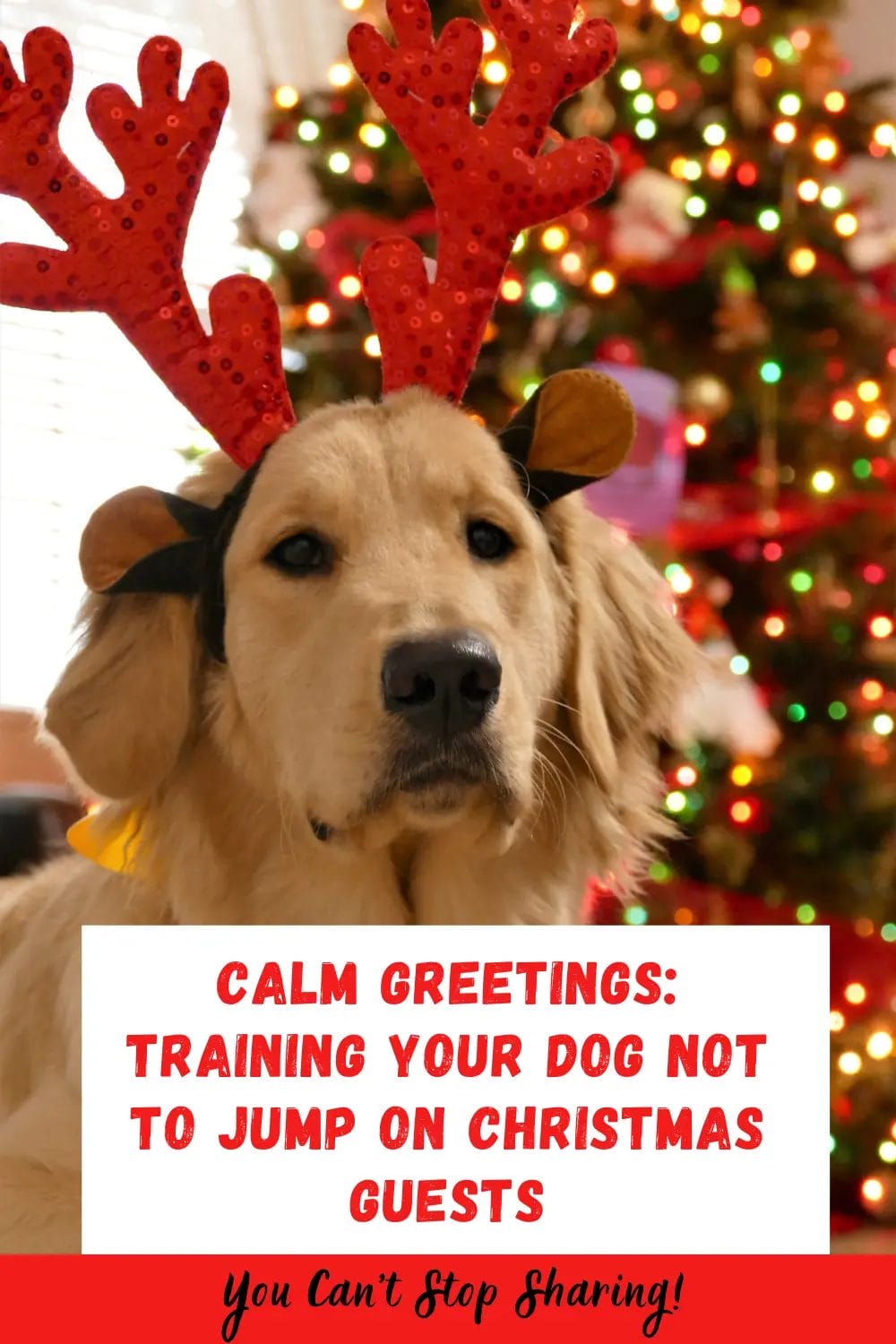
The holiday season is a time for warmth, light, and connection. Yet, for those of us on a path of self-healing, it can also bring unique challenges.
We work diligently throughout the year to cultivate inner peace and a sense of calm in our homes, only to have that tranquility threatened by the sheer excitement of a ringing doorbell.
Your beloved canine companion, filled with the purest joy and a desire to greet, can turn an anticipated arrival into a moment of overwhelm. That enthusiastic leap of affection, while well-intentioned, can be jarring for a new visitor and deeply frustrating for you.
If you’ve been dreading the thought of your dog’s exuberant greetings this December, know that you are not alone.
This is not a failure on your part but simply an opportunity for gentle guidance and self-compassion. Preparing your dog for the calm reception of friends and family is an act of love for your pet, your guests, and, most importantly, for your peace of mind.
This article is designed to be your supportive guide, offering more than just quick fixes. We’ll explore positive, relationship-building techniques for training your dog not to jump on Christmas guests.
We will unpack the ‘why’ behind the jumping, introduce compassionate training exercises, and provide actionable strategies to manage the holiday chaos with grace.
By focusing on consistency, patience, and self-awareness, you will gain the tools to transform chaotic greetings into peaceful, joyful connections.
Get ready to embrace a holiday season where you can welcome guests with a sense of calm control, confident that your dog will greet them with four paws on the floor.
The Heart of the Leap: Understanding Why Dogs Jump
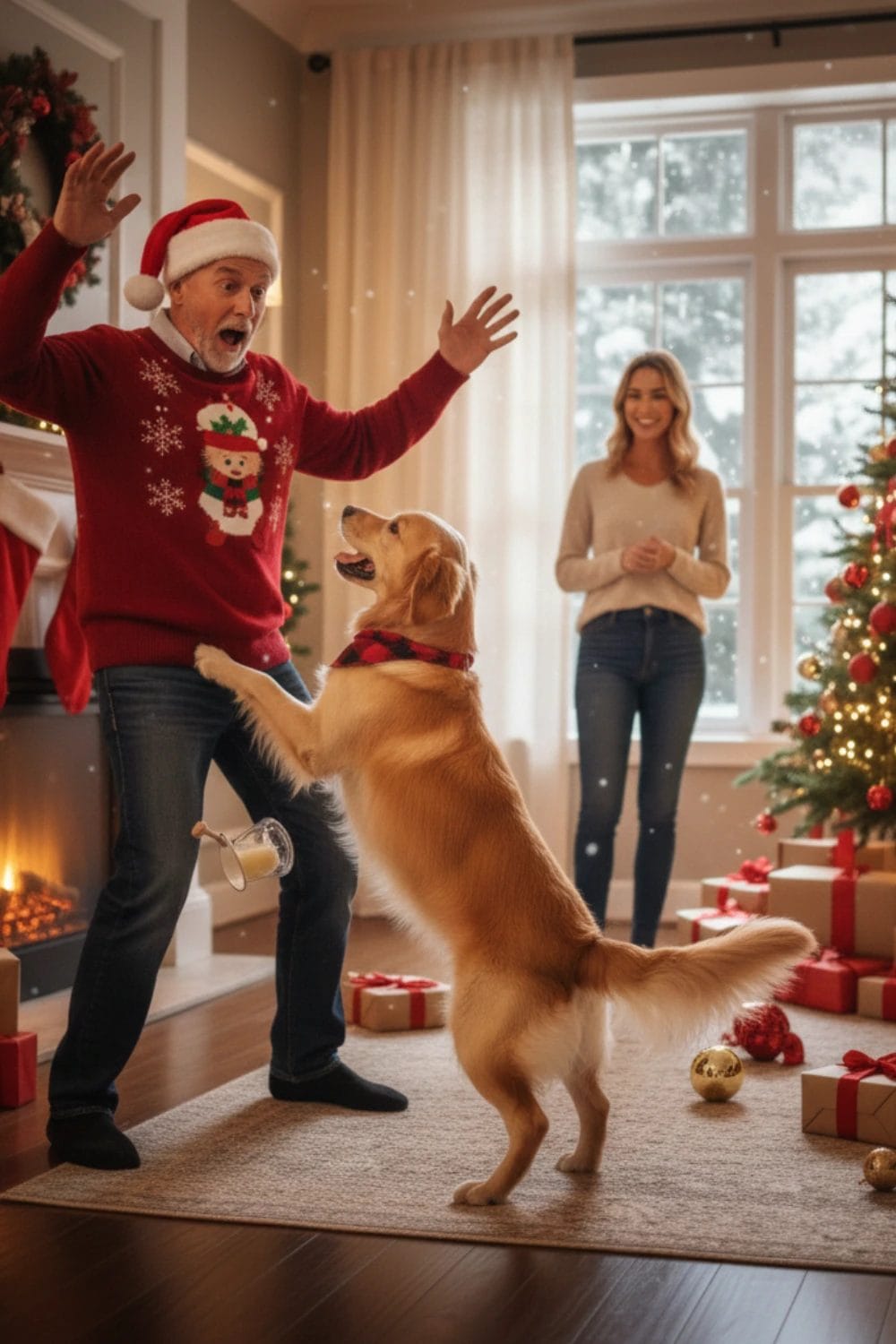
Before we dive into the techniques for training your dog not to jump on Christmas guests, we must first look at the behavior through a lens of empathy. Jumping is rarely an act of dominance or defiance; it is almost always a deeply rooted, enthusiastic, and natural communication tool.
Decoding Your Dog’s Excitement
When a dog jumps, they are essentially trying to get closer to your face, which is a key social greeting signal in the canine world. They are driven by:
- Seeking Attention: Any response, even a negative one like pushing them off or saying “No!”, is attention. For an excited dog, this reinforces the behavior.
- A Heightened State of Arousal: The sound of the doorbell, the sight of a coat and bags, and the energy shift in the house triggers a rush of excitement that your dog hasn’t been taught how to manage calmly.
- The Power of Practice: If the dog has successfully jumped on a guest before and received attention or a reward (like a treat or a happy-sounding voice), that success solidifies the jumping habit.
Understanding this allows us to shift from viewing the jump as a nuisance to seeing it as a request for guidance. Our goal is to teach them a replacement behavior that is equally rewarding but incompatible with jumping.
Laying the Foundation: Essential Skills for a Calm Greeting
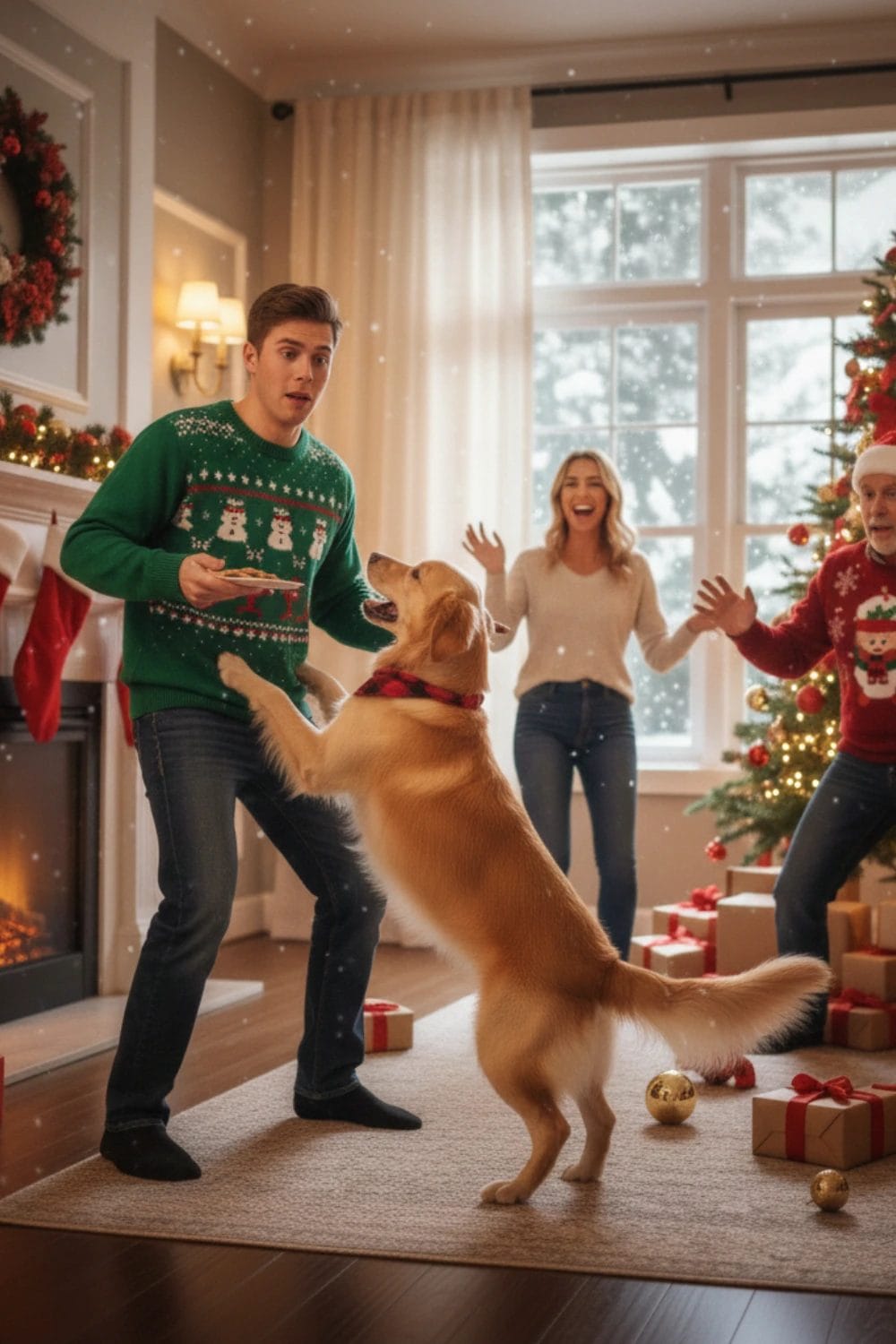
The success of training your dog not to jump on Christmas guests hinges on consistency and practicing in a low-stakes environment before the real event.
Building Reliable Control Behaviors
The best defense against jumping is a strong offense: teaching your dog a rock-solid alternative. The two most effective replacement behaviors are the “Four on the Floor” Sit and the “Place” command.
The “Four on the Floor” Sit: The Default Greeting
This is the cornerstone of calm greetings. Every time your dog wants something (food, a leash clip, a pet), ask for a sit.
- The Prompt: Hold a highly desirable treat near your dog’s nose and move it in an arc over their head. Their rear end should naturally drop into a sit. As soon as their butt touches the floor, say your marker word (“Yes!”) and give the treat.
- Add the Cue: Once they are reliably sitting, add the verbal cue, “Sit,” right as you start the motion.
- Practice in High-Value Situations: Practice this before everything: before opening the door, before a meal, before you throw a toy. This makes the Sit their go-to behavior, even when excited.
The “Place” Command: Creating a Safe Haven
Teaching your dog to go to a designated “Place” (a mat, bed, or crate) and stay there is invaluable for holiday gatherings. It gives your dog a safe, predictable job to do while guests are arriving.
- Luring to Place: Lure your dog onto the mat with a treat. When all four paws are on the mat, mark and reward. Repeat this until they willingly step onto the mat.
- Introducing Duration: Once they are on the mat, ask for a Sit or a Down. Reward them for staying for just a few seconds. Gradually increase the time.
- Adding Distraction: Practice with increasing levels of distraction, such as walking past the mat, talking on the phone, or dropping a non-threatening object nearby.
Stepping into the Season: Practical Strategies for the Holidays
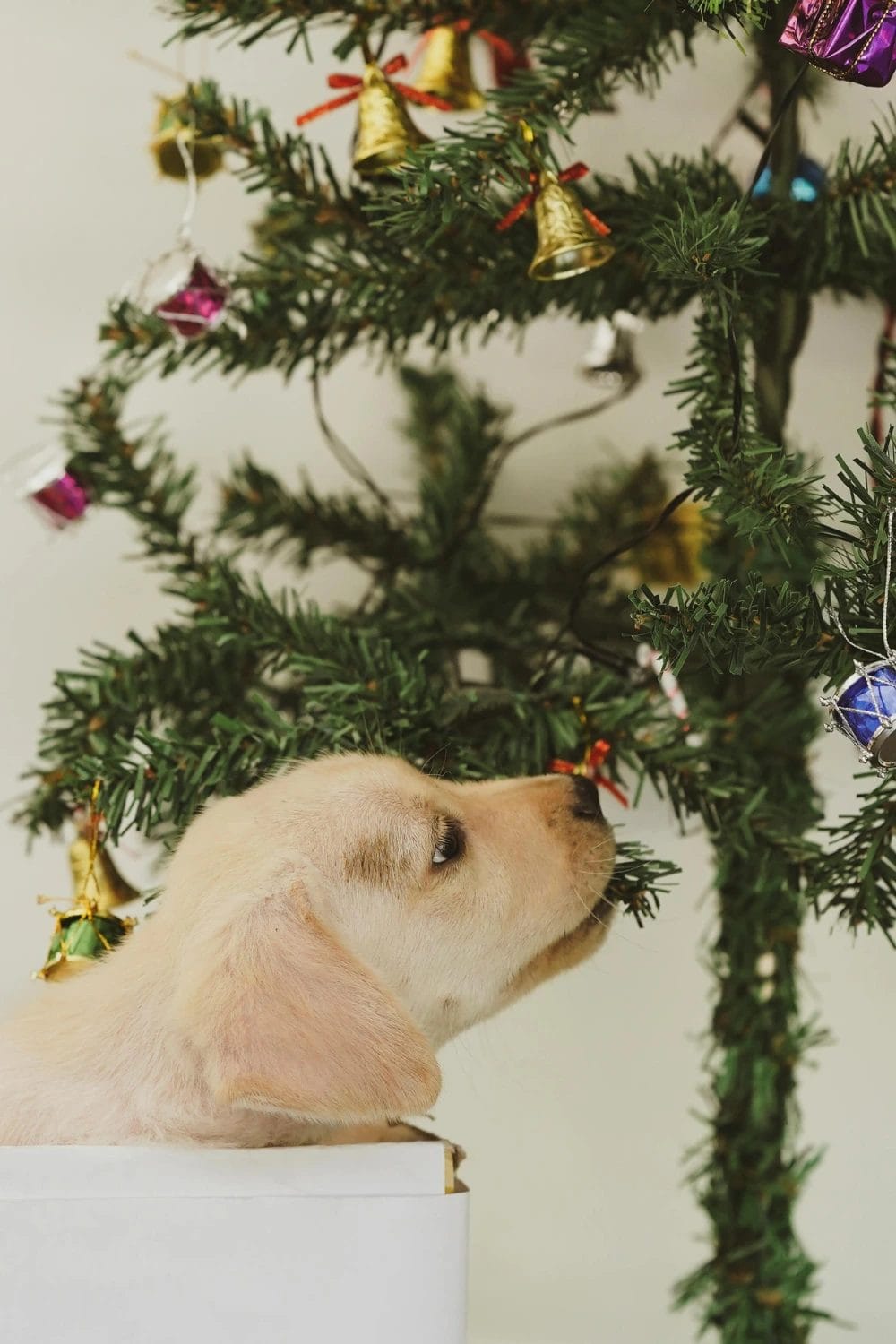
The true test comes when the first guest arrives. These strategies are crucial for successfully training your dog not to jump on Christmas guests in a real-world scenario.
Setting Up for Success: Management Tools
Before any training can work, you need a strong management plan to prevent rehearsal of the jumping behavior. Every time your dog jumps and is rewarded (even accidentally), the habit grows stronger.
- The Leash Method: Keep your dog on a leash in the house for the first 15-20 minutes after guests arrive. This allows you to gently prevent jumping by stepping on the leash or redirecting them into a Sit or Place.
- The Safe Space Retreat: If you feel yourself becoming overwhelmed, or if the guests aren’t following your instructions, put your dog in a separate, comfortable room with a long-lasting chew toy (like a stuffed Kong). This removes the pressure and reinforces your own self-healing commitment to non-reactive behavior.
The “Doorbell” Game: Desensitizing the Trigger
The doorbell is often the greatest trigger. We can neutralize its power through desensitization. This is a powerful technique for training your dog not to jump on Christmas guests.
- The Setup: Have a family member or friend ring the doorbell without actually entering the house.
- The Response: When the bell rings, your immediate reaction should be to calmly cue your dog to go to their Place or perform a Sit-Stay.
- The Reward: If they comply, reward them heavily. If they explode with excitement, simply ignore the bell for a moment until they offer a moment of calm, and then cue and reward.
- Gradual Entry: Once your dog can stay calm for the ringing, progress to having the person open the door, step in, and then immediately step back out. Only reward if your dog remains calm and “four on the floor.”
Enlisting Your Guests as Training Assistants
It is essential to communicate clearly with your guests, particularly those who struggle to resist giving attention to a jumping dog. This is not about being rude; it’s about advocating for your peace and your dog’s progress.
Three Clear Rules for Greeting
Before your guests even touch the doorknob, send a polite message (email, text, or spoken word) with these instructions:
- No Eye Contact/Touch on Arrival: Ask them to completely ignore your dog for the first five minutes. No talking, no petting, no looking. This allows your dog’s excitement level to naturally drop.
- Reward the Right Behavior: Ask them to only engage with your dog after the dog has offered a Sit or is calmly lying on their Place mat.
- The “If I Jump, You Leave” Game: If your dog does jump, the guest should immediately turn their back, cross their arms, and freeze. The moment your dog puts their paws down, the guest can turn back and offer a low-key pet or a calm greeting. This teaches the dog that jumping makes the fun stop, while staying calm makes the fun start.
A Journey of Self-Compassion and Consistency
The process of training your dog not to jump on Christmas guests mirrors the journey of self-healing in so many ways. It requires consistency, even on the days you feel tired or stressed. It demands patience and the ability to look at setbacks not as failures, but as data points that inform your next step.
When you feel frustrated, take a deep breath. Acknowledge that you are doing the hard work of breaking a habit.
Every successful moment where your dog chooses a calm Sit over a chaotic leap is a victory for your relationship, and a testament to your ability to remain calm and intentional in the face of pressure.
You are teaching your dog, and you are teaching yourself, that a peaceful, joyful life is possible, even when the doorbell rings.
Conclusion: Embracing a Peaceful Holiday
You have taken the courageous step of transforming a holiday stressor into a positive training opportunity.
By implementing the “Four on the Floor” Sit, utilizing the power of the “Place” command, and enlisting your Christmas guests as compassionate training assistants, you are setting the stage for a calm, connected holiday.
Remember that this journey is about progress, not perfection. Be kind to yourself and celebrate the small wins. A calm dog is a reflection of a calm and confident owner, and that is a truly wonderful gift to give yourself this season.
Don’t wait for the holidays to start practicing! Pick one core skill, the “Four on the Floor” Sit, and practice it five times a day for the next week. Commit to this one act of consistent training, and watch how quickly your dog, and your own peace, begin to transform. What is the first step you will take today to ensure your door is a gateway to calm connection? Share your commitment below!

- Halloween Names for Cats: 150+ Spooky, Cute & Funny Ideas - October 16, 2026
- Halloween Dog Treats Recipe: 5 Easy Homemade Pumpkin Treats - October 15, 2026
- Thanksgiving Dog Treats: Safe Recipes & Foods to Avoid - October 8, 2026
GIPHY App Key not set. Please check settings