

 Emily Walker
With hantavirus back in the news, a lot of pet owners are wondering the same thing: can my dog catch it? The good news is no — but the story does not stop there.
The Short Answer — And Why It’s Not the Whole Story
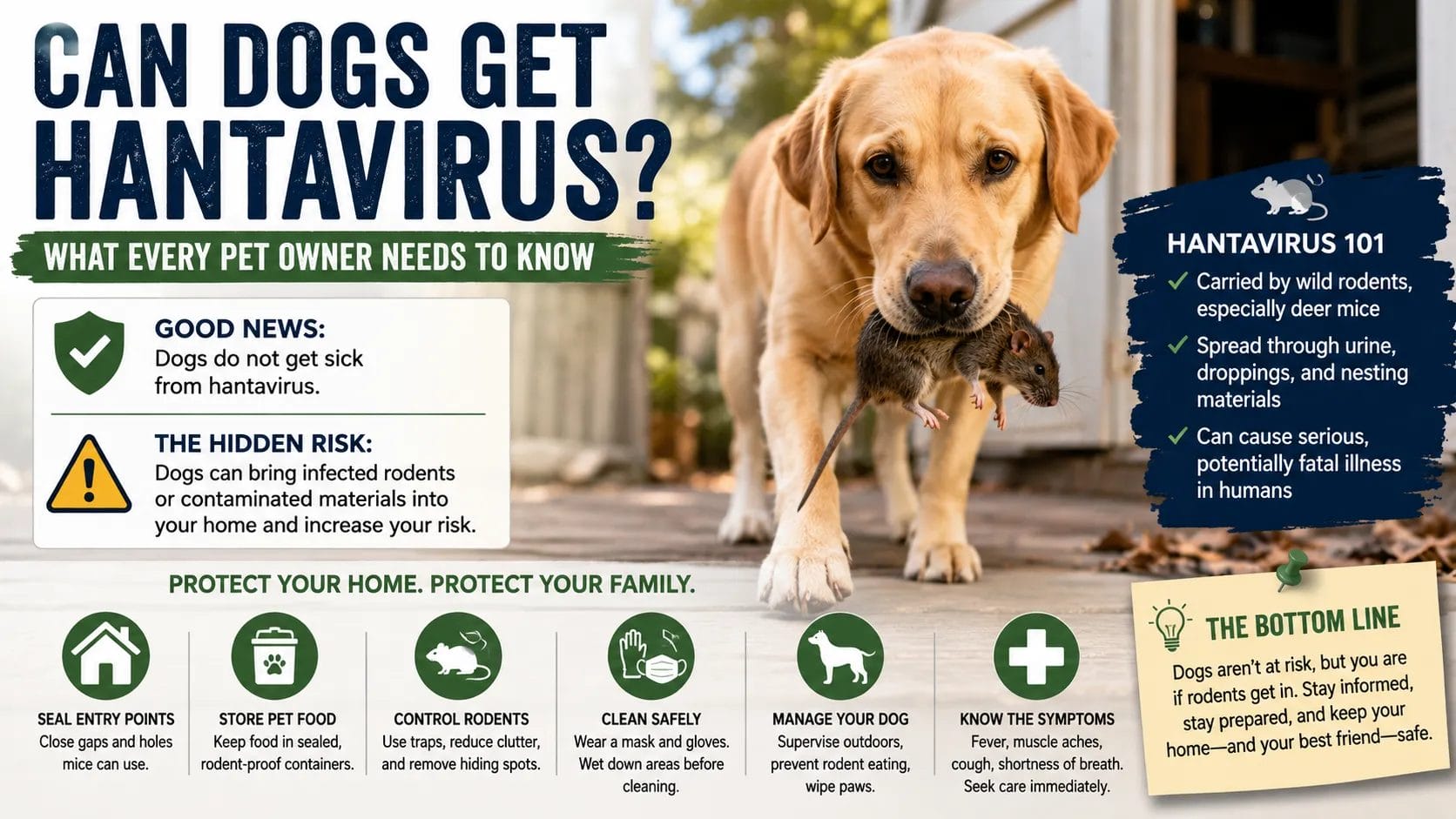
Dogs do not get sick from hantavirus. Health agencies say dogs and cats are not known to be infected or to show symptoms from it, even if they come near infected rodents. That is the relief part.
But here is the part that matters: your dog can still become part of the problem if it drags rodent-contaminated stuff into your home.
So the real question is not just “Can my dog get it?” It is “Can my dog help bring the danger closer to me?” And unfortunately, yes, that can happen.
What Is Hantavirus, Exactly?
Hantavirus is a virus carried mostly by wild rodents. In the U.S., deer mice are the big troublemakers, but other rodents can carry it too.
In people, it can cause two serious illnesses:
- Hantavirus Pulmonary Syndrome (HPS) — the more dangerous one in the Americas
- Hemorrhagic Fever with Renal Syndrome (HFRS) — more common in Europe and Asia, and it affects the kidneys
HPS is scary because it can be deadly. Once symptoms start, some people do not survive, which is why doctors take it very seriously. Tiny virus, huge drama.
People usually catch hantavirus by:
- Breathing in contaminated dust — this is the most common way, especially when rodent droppings or nesting material get stirred up
- Touching contaminated surfaces and then touching the eyes, nose, or mouth
- Rodent bites — rare, but possible
There is no special cure for hantavirus. Treatment is mostly supportive, which means getting fast medical care can make a big difference.
Can Dogs Get Hantavirus? The Science Explained
The science is actually pretty reassuring: dogs do not get hantavirus. Experts say that even if a dog catches or chases an infected mouse, the virus cannot survive properly inside a dog’s body.
Basically, hantavirus looks at a dog and goes, “Nope, wrong species.”
Health agencies have also confirmed something a lot of worried pet owners ask: you are not going to get hantavirus because your dog licked you after catching a mouse.
Gross? Maybe. Dangerous in this case? Thankfully, no. There are no known cases of hantavirus spreading that way.
The Hidden Risk: How Dogs Can Indirectly Expose You
Even though dogs do not get sick, they can still accidentally bring the danger closer to you — kind of like an overexcited furry delivery service nobody asked for.
1. Bringing Dead Rodents Inside
If your dog proudly drops a dead mouse at your feet like it just won an Olympic medal, that can bring contaminated droppings, fur, or saliva into your home.
2. Tracking Contaminated Material Indoors
Dogs love sniffing weird places. Unfortunately, that can include rodent nests or burrows. Tiny contaminated particles can stick to their paws or fur and get tracked inside without anyone noticing.
3. Disturbing Rodent Habitats
Dogs digging around barns, sheds, woodpiles, or fields can stir up contaminated dust into the air. If you are nearby and breathe it in, that is where the real risk begins.
What About Symptoms? When to Worry About Your Dog
Because dogs cannot get hantavirus, any symptoms they show after chasing a mouse are caused by something else. But that does not mean you should ignore them.
Rodents are like tiny furry troublemakers. They can carry other diseases that do make dogs very sick, including:
- Leptospirosis — a serious bacterial infection spread through rodent urine
- Plague — rare, but still found in some parts of the southwestern United States
- Rat-bite fever — bacteria spread through bites and scratches
- Tapeworms and other parasites — often picked up when a dog eats a rodent (because apparently some dogs think mice are snacks)
If your dog develops fever, vomiting, tiredness, loss of appetite, stiff muscles, or trouble breathing after exploring rodent-heavy areas, call your vet right away. It is not hantavirus, but it could still be something serious.
Hantavirus in 2025–2026: Why This Matters More Than Ever
Hantavirus has been getting a lot more attention lately because of several real-world tragedies.
In 2025, Betsy Arakawa died from hantavirus in New Mexico, which shocked many people who had never heard of the disease.
Then in 2026, an outbreak linked to the MV Hondius led to multiple deaths and sparked international concern.
These stories are a reminder that hantavirus is rare, but very real. Think of it like a shark attack: most people will never experience one, but if you are swimming in the wrong waters, you absolutely want to know the rules.
If you live in or visit rural, wooded, or rodent-heavy areas, a little caution can go a long way in protecting both you and your dog.
How to Protect Yourself and Your Dog: A Practical Guide
The good news? Your dog is not the real target. The real villain is the mouse sneaking around like it owns the place. Protecting your family means making your home a terrible place for rodents to live.
Rodent Control at Home
- Seal entry points — if a hole is bigger than a pencil, a mouse may treat it like an open front door
- Store pet food in sealed containers — mice think an open dog-food bag is an all-you-can-eat buffet
- Clear clutter — fewer hiding spots means fewer surprise tenants
- Use traps when possible — poison can create new risks for curious pets
Safe Cleaning Practices
- Never sweep or vacuum dry droppings — that can send contaminated dust into the air
- Wear gloves and a mask when cleaning rodent messes
- Spray with a bleach solution first before wiping up
- Wash your hands thoroughly afterward
Managing Your Dog’s Outdoor Behavior
- Watch your dog around barns, sheds, woodpiles, and trails where rodents love to hang out
- Teach “leave it” so dead mice do not become a disgusting snack
- Wipe your dog’s paws after adventures in rodent-heavy areas
- Ask your vet about leptospirosis vaccines, especially if your dog spends lots of time outdoors
Know the Symptoms — in Yourself
If you have been around rodents and later develop fever, muscle aches, coughing, or trouble breathing, get medical help immediately.
Hantavirus can start like an ordinary flu and then hit like a freight train. That is why speed matters. When it comes to this virus, acting early can save your life.
Frequently Asked Questions
No. Dogs cannot be infected with hantavirus, so they cannot spread it. However, they can indirectly increase human exposure by bringing infected rodents or contaminated material into the home.
The same rules apply to cats as dogs. Cats cannot get sick from hantavirus and cannot spread it directly to humans, but a cat that regularly brings home dead mice creates real indirect risk for the people in the household.
In the United States, the primary carrier is the deer mouse. White-footed mice, rice rats, and cotton rats are also carriers. Domestic pets like hamsters, guinea pigs, and rabbits are not wild rodent species and carry zero hantavirus risk.
No. Dog droppings do not carry hantavirus. Only rodent droppings (urine, feces, saliva, nesting material) from infected wild species pose a risk.
The Takeaway
Hantavirus is very serious, but your dog is not the one getting sick from it.The CDC says dogs and cats are not known to become infected in the United States.
Think of your dog as an enthusiastic treasure hunter with terrible judgment. They might not catch the virus, but they can proudly bring home a dead mouse like, “Look what I found!” That is where the real risk begins.
The best defense is surprisingly simple: keep rodents out of your home, stop your dog from treating mice like chew toys, and pay attention to symptoms in yourself after rodent exposure.
Knowledge is your superpower here. When you understand the real danger, you can protect both your family and your four-legged best friend — without losing sleep every time your dog sniffs a bush.

- Catahoula Leopard Dog: The Complete Guide to Louisiana’s State Dog - August 12, 2026
- Can Cats Eat Watermelon? What Every Cat Owner Should Know - August 10, 2026
- Lapponian Herder: The Complete Guide to Finland’s Reindeer Dog - August 5, 2026
GIPHY App Key not set. Please check settings