

 Emily Walker
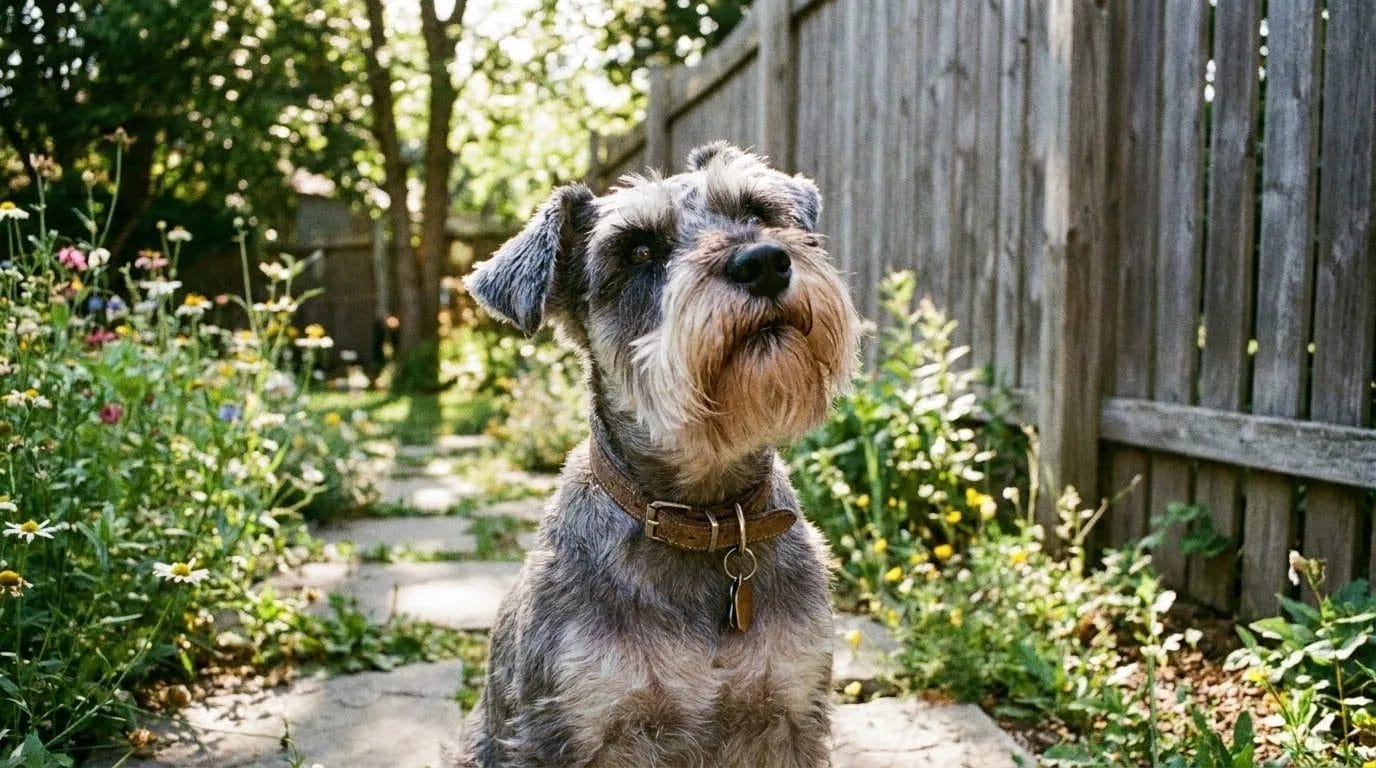
At first glance, the Miniature Schnauzer looks like a tiny fancy old man — big eyebrows, a beard for days, and the kind of face that says, “I am the boss here.” But don’t let the cute outfit fool you.
This little dog was built to work, and that explains a lot about the barking, digging, and fearless attitude.
Once you know what Mini Schnauzers were bred for, they make so much more sense. Their strong instincts, bold personality, and nonstop energy all come from a long history of real work in Germany — and that’s exactly why they act like such tiny drama kings today.
Origin
Germany, 19th century
Primary Role
Ratter & Farm Watchdog
AKC Recognized
1926
Group
Terrier (AKC)
The Schnauzer’s Ancient Roots
To really get Miniature Schnauzers, you’ve gotta go way back — like medieval Germany back. Their ancestors show up in 15th-century art, even in a painting by Albrecht Dürer, where there’s this scruffy little dog that looks exactly like a Schnauzer. That’s how long they’ve been around — basically OG farm dogs.
The original version, called the Standard Schnauzer, wasn’t just hanging around looking cute.
These dogs did everything — herding animals, guarding farms, and most importantly… hunting rats. And not in a casual way.
Think of them as tiny, fearless pest-control machines. Farmers even held rat-catching competitions to keep them sharp. Yeah, your dog’s ancestors had literal battle tournaments.
By the 1800s, farmers had a problem: rats were sneaky and loved hiding in tight spaces where bigger dogs couldn’t reach. So they thought, “What if we made a smaller version of this fearless dog?” And boom — the Miniature Schnauzer was born.
Why Farmers Needed a Smaller Schnauzer
Back then, rats weren’t just gross — they could wipe out food supplies and seriously mess up a farm. Big dogs could guard the outside, but when it came to chasing rodents under floors or inside walls? Useless.
So farmers got smart. They bred smaller Standard Schnauzers with scrappy little dogs like Affenpinscher, Miniature Pinscher, and even small Poodles.
The goal? Keep the bravery and brains, shrink the body.
And it worked really well. Mini Schnauzers turned into absolute rat-hunting pros — honestly, even more intense than their bigger cousins.
They were fast, stubborn, and didn’t back down from anything. The breed officially showed up in 1899, and one of the first famous Minis was a dog named Findel — basically one of the original tiny legends.
The Miniature Schnauzer’s Two Primary Jobs
1. Rat Catcher and Vermin Controller
First job: professional rat hunter. And I don’t mean casually chasing a mouse for fun — I mean full-on “this is my life’s mission” energy.
Mini Schnauzers were built to clear out barns, fields, and every creepy corner of a farm.
And here’s the cool part: their look actually comes from this job. That iconic beard? It helped protect their face from bites.
The wiry coat and those big eyebrows? Same idea — built-in armor. Even things like tail docking and ear cropping originally had a purpose: fewer spots for a desperate rat to grab onto.
So yeah, your dog doesn’t just look tough… it literally evolved to fight tiny enemies.
2. Farm Watchdog and Property Guardian
Second job: alarm system. And honestly? They took that job very seriously.
Mini Schnauzers weren’t meant to fight off intruders — bigger dogs handled that.
Their job was to notice everything and yell about it immediately. A stranger? Bark. A weird noise? Bark. A leaf moving suspiciously? You already know… bark.
That’s why they’re so alert, a little territorial, and weirdly brave for their size. They love their people like crazy, but when it comes to strangers? They’re like, “Hmm… I’m watching you.”
Basically, your Mini Schnauzer isn’t being dramatic — it’s just doing the exact job it was bred for… 150 years later.
A Breed History Timeline
15th Cent: Earliest Depictions
Way before dog shows and Instagram, Schnauzer-type dogs were already hanging out on German farms — so iconic they even showed up in paintings by Albrecht Dürer. Imagine that — your dog’s ancestors were basically famous hundreds of years ago.
1876: Distinct Breed Emerges
This is when people finally said, “Okay, these dogs are their own thing.” Standard Schnauzers got officially recognized, and by 1884, they even had a written “rulebook” for what they should look and act like. Yeah… dogs got a style guide before most people.
1888: First Named “Miniature Schnauzer”
The name “Miniature Schnauzer” shows up for the first time, thanks to a dog named Findel. Think of Findel as one of the original trendsetters — the moment where the smaller, scrappier version started getting real attention.
1899: First Breed Exhibition
Mini Schnauzers finally stepped into the spotlight as their own breed in Germany. This was like their official debut — “Hey world, we’re small, but we’re not messing around.”
1924: Arrival in The United States
Only four Mini Schnauzers made it to the U.S., brought over by a breeder named Marie Slattery. Just four! And here’s the wild part — most Mini Schnauzers in America today can trace their family tree back to those original dogs. That’s like your entire school coming from four people.
1926: AKC Recognition
The American Kennel Club officially recognized the breed and placed it in the Terrier Group — even though it didn’t come from the UK like most terriers. Basically, the Mini Schnauzer is the one kid in class who came from somewhere else… and still fits in perfectly.
How Ancient Instincts Shape Today’s Companion
Here’s the thing most people miss: your Mini Schnauzer isn’t being “weird” — it’s basically running ancient farm software in a modern house.
Everything they do makes sense once you connect it back to their original jobs.
- High prey drive: See a squirrel? Your dog turns into a missile. That’s not bad behavior — that’s generations of expert rat-hunting kicking in.
- Vocal alerting: Why do they bark at everything? Because, back then, that was literally their job. Stranger? Bark. Noise? Bark. Suspicious leaf? Definitely bark.
- Intelligence and trainability: These dogs are smart. They had to think fast while hunting, so now they pick up commands quickly, and sometimes outsmart you too.
- Fearless courage: Mini Schnauzers have zero idea how small they are. They’ll square up to bigger dogs, strangers, anything.
- Strong family loyalty: They were bred to stay close and protect their people, and they still take that job seriously.
- Energy and exercise needs: They were built to work all day. If they don’t get enough exercise, they’ll find their own “job”… like destroying your stuff or barking non-stop.
The Miniature Schnauzer Today: Still Working, Just Differently
Mini Schnauzers might not be chasing rats in barns anymore, but don’t get it twisted — they’re still working dogs.
They just traded farms for competitions, living rooms, and occasionally… your backyard.
All that energy, intelligence, and “I must complete a mission” mindset? It shows up in dog sports where they absolutely thrive.
Stuff like sniffing out scents, racing through obstacle courses, or solving little challenges with their humans — it’s basically the modern version of their old farm jobs. Same skills, just less dirt and fewer rats.
What Mini Schnauzers Excel At Today
- AKC Earthdog Trials — crawling through tunnels like tiny underground ninjas
- Barn Hunt — finding hidden rats in hay (yeah… they still love this job)
- Scent Work — using their nose like a detective on a mission
- Agility and obedience — fast, smart, and showing off a little
- Therapy and emotional support — surprisingly gentle and super loyal when it matters
As family dogs, they’re kind of the full package: smart, loyal, not too big, and they don’t shed much (thank their Poodle relatives for that).
That’s why the American Kennel Club still ranks them among the most popular breeds.
Conclusion: The Dog Built for the Job
The Miniature Schnauzer isn’t just a cute dog — it’s like a perfectly designed little worker.
Every bark, every burst of energy, every “I will fight this thing twice my size” moment comes from generations of German farmers who needed a tough, smart, no-nonsense dog to protect their farms and wipe out rats.
And once you get that, everything clicks.
- The barking? That’s your built-in alarm system.
- The squirrel-chasing? Ancient hunter mode activated.
- Following you everywhere? That’s loyalty on a whole different level.
The farm might be gone, but your dog didn’t get the memo. Those instincts are still alive — and honestly, that’s what makes Mini Schnauzers so fun, intense, and impossible not to love.

- Catahoula Leopard Dog: The Complete Guide to Louisiana’s State Dog - August 12, 2026
- Can Cats Eat Watermelon? What Every Cat Owner Should Know - August 10, 2026
- Lapponian Herder: The Complete Guide to Finland’s Reindeer Dog - August 5, 2026
GIPHY App Key not set. Please check settings