

 Emily Walker
Scroll through Instagram or TikTok long enough, and you will see them: tiny, giant-eyed little fluffballs hanging off a finger or tucked into a pouch like they own the place.
Bush babies and sugar gliders are wildly cute, a little weird, and honestly impossible to ignore.
But here is the fun part: they look alike, but they are not even close relatives. A bush baby is a primate from Africa, and a sugar glider is a marsupial from Australia.
That is just nature doing its best “copy-paste” trick. If you are thinking about getting one, this guide breaks down the real stuff that matters: care, cost, legality, and which one actually fits your life.
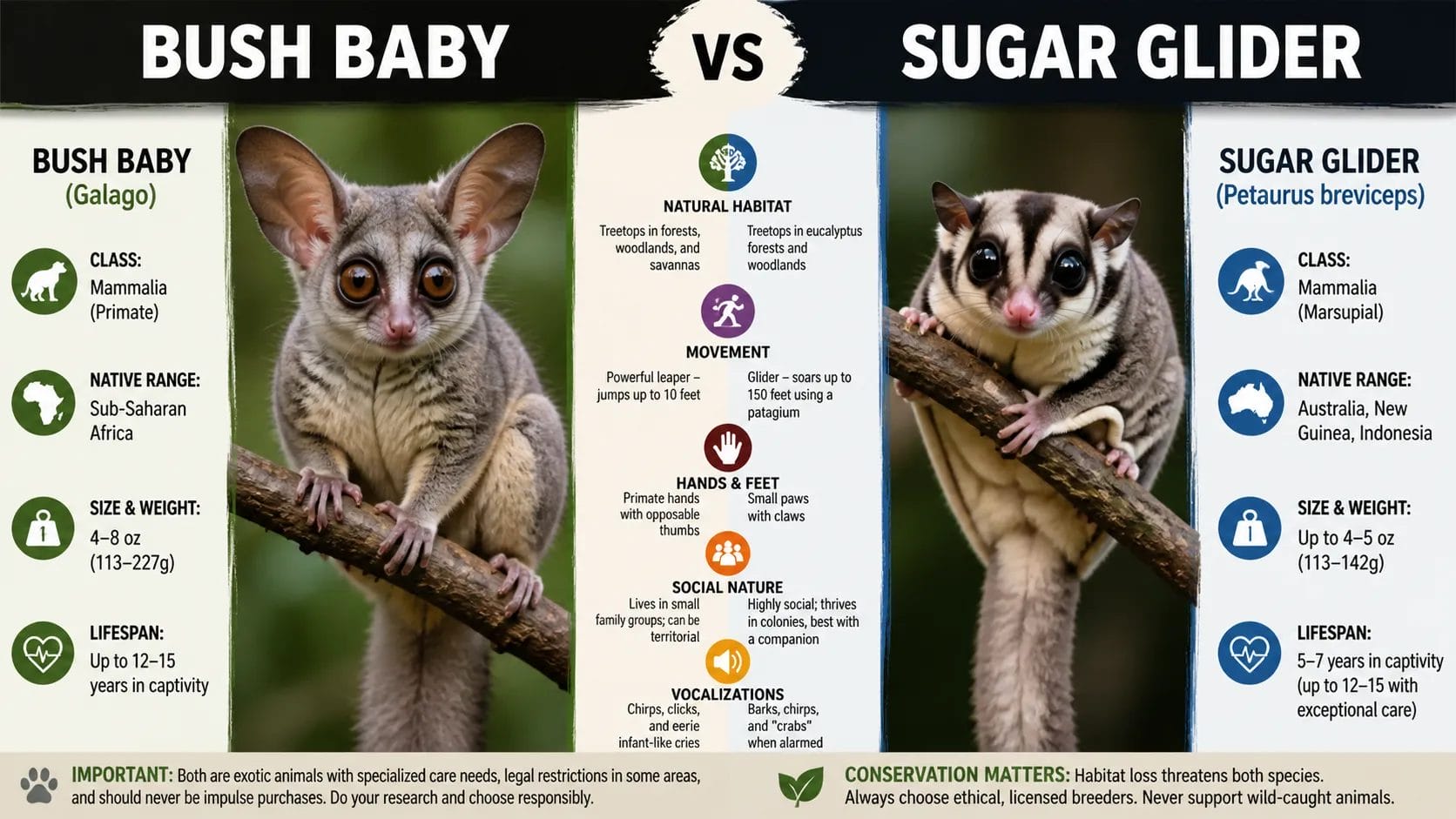
What Are They? Origins and Classification
The Bush Baby (Galago)
Bush babies — or galagos — are tiny primates from Africa. And when I say primate, I mean they’re actually closer to monkeys and apes than anything else on this list. Yeah, that big-eyed fluffball? It’s basically a mini tree-dwelling cousin of a chimp.
There are 20+ species, and scientists are still finding more — one was literally discovered just because of its unique nighttime scream (imagine identifying someone by their yell). They live high up in trees across African forests and rarely come down.
Key biological facts:
- Class: Mammalia (Primate)
- Family: Galagidae
- Native range: Sub-Saharan Africa
- Lifespan: Up to 12–15 years in captivity
- Weight: About 4–8 ounces (super tiny, like a small snack bag of chips)
The Sugar Glider (Petaurus breviceps)
Sugar gliders are marsupials — so think kangaroos, but pocket-sized and way more chaotic. Their babies (called joeys) grow up inside a pouch, which is honestly one of the coolest things in the animal world.
They’re from Australia and nearby islands, and their signature move? Gliding through the air like a tiny superhero using a skin flap between their arms and legs. It’s not flying — but it’s close enough to make you jealous.
Scientists used to think they were one species, but now they believe there might be three. Even the experts are still arguing about it.
Key biological facts:
- Class: Mammalia (Marsupial)
- Family: Petauridae
- Native range: Australia, New Guinea, Indonesia
- Lifespan: 5–7 years (can reach 12–15 with amazing care)
- Weight: Around 4–5 ounces (basically feather-light, but with big personality)
Physical Differences: Spotting the Difference Up Close
At first glance, bush babies and sugar gliders look like long-lost twins — same huge glowing eyes, big ears, soft fur, and total night-owl energy. You could honestly mistake one for the other in a blurry TikTok.
But up close? Totally different vibes.
| Feature | Bush Baby | Sugar Glider |
| Size | 4–8 oz; rabbit-sized ears |
4–5 oz; slightly smaller overall
|
| Limbs | Powerful elongated hind legs for leaping |
Patagium (gliding membrane) between wrists and ankles
|
| Tail | Long and bushy for balance |
Bushy tail used as a gliding rudder
|
| Movement | Leaps up to 10 feet in a single bound |
Glides up to 150 feet between trees
|
| Hands | Primate hands with opposable thumbs |
Small clawed paws
|
A bush baby moves like it just had three energy drinks — bouncing everywhere. A sugar glider? It climbs up, jumps, and suddenly turns into a tiny flying squirrel.
Behavior and Temperament: What’s It Like to Live With One?
Bush Baby Behavior
Bush babies are like tiny, hyper little geniuses. They’re curious, fast, and surprisingly smart — but also a bit… chaotic. They chirp, click, and sometimes make a cry that literally sounds like a human baby. First time you hear it at night? Yeah, it’s creepy.
They can bond with you, but don’t expect instant cuddles. Think of them like that one shy kid at school — takes time, patience, and consistency. Strangers? Not a fan. And here’s the weird part: they pee on their hands to grip things better. Totally normal for them… slightly less fun for you (hello, tiny diapers).
Sugar Glider Behavior
Sugar gliders are the social butterflies of the two. In the wild, they live in groups, so having just one is kind of like forcing someone to live without friends — not great. They do best with a buddy.
They’re super vocal too — barking, chirping, and making this wild “crabbing” sound when they’re scared (it sounds like a tiny chainsaw, not even kidding). But once they trust you? They’re sweet, playful, and love bonding. People even carry them around in little pouches like a hoodie pocket — it helps them feel safe.
Compared to bush babies, sugar gliders are way easier to tame and generally more beginner-friendly… if you’re ready for the commitment.
Care Requirements: What Does Daily Life Look Like?
Housing
Both of these guys are tree-lovers, so think tall jungle gym, not hamster cage. They need space to climb, jump, and (in the glider’s case) pretend they’re superheroes.
- Bush baby cage: At least 2×2 feet, but honestly, bigger is always better. These guys can get close to small-cat size.
- Sugar glider cage: Around 3×3 feet minimum, and taller is even better.
And no, you can’t just let them run around your room. They’re fast, sneaky, and will disappear into places you didn’t even know existed.
Diet
This is where things get real — feeding them is not as simple as tossing in some pellets.
- Bush babies: Basically tiny insect hunters. Think crickets, worms, plus some fruit and tree sap. It’s a bit of work (and yeah… bugs).
- Sugar gliders: Sweet tooth mode. They love nectar, fruit, and a special homemade diet called BML. Mess this up, and they can get seriously sick.
Exercise
They are NOT couch potatoes.
- Bush babies: Need daily playtime (about 15 minutes), or they’ll go full chaos mode.
- Sugar gliders: Even more — at least 30 minutes. They need interaction, not just a cage and vibes.
Veterinary Care
Here’s the part people ignore — and regret later. You need a vet who actually understands exotic animals. Not every clinic does.
Sugar gliders can get bone disease if fed wrong. Bush babies can have dental and liver issues. So yeah… this isn’t a “low-maintenance cute pet” situation. It’s a real commitment.
Legality: Can You Even Own One?
This is the part people skip… and then regret big time.
Just because you saw someone cuddling one on TikTok doesn’t mean you’re allowed to have one. Laws can be super strict — and they don’t mess around.
- Bush babies: Often legal in many U.S. states, but it really depends on where you live. Rules can change literally from one state to the next.
- Sugar gliders: Straight-up banned in some places (like California, Alaska, and Hawaii). Some countries don’t allow them at all.
Real talk: imagine bonding with one… then finding out it’s illegal and you have to give it up. That’s rough — for you and the animal.
Always check your local laws first. Not after. Not “maybe later.” First.
Cost: What Should You Budget?
| Cost Category | Bush Baby | Sugar Glider |
| Purchase price | ~$1,500 |
$200–$500 (from a reputable breeder)
|
| Enclosure | $150–$400 | $150–$300 |
| Monthly food | $50–$100 (insects + supplements) | $30–$70 |
| Vet visits | $100–$200+ per visit (exotic specialist) |
$100–$200+ per visit
|
| Lifespan cost | Higher (longer lifespan) |
Lower initial investment
|
Bush Baby vs Sugar Glider: Which Is Right for You?
Choose a Bush Baby If:
- You already have experience with exotic animals (this is not beginner mode)
- You want a long-term companion (they can be with you for 15 years)
- You’re okay handling live insects regularly (yep… bugs are part of the deal)
- You’ve got space, money, and patience for a more demanding pet
Choose a Sugar Glider If:
- You’re newer but serious about learning
- You want a more social, easier-to-bond pet
- You’re okay getting two (they hate being alone)
- You want something playful and interactive
Important note:
Neither of these are “kids’ pets.” They’re fragile, get stressed easily, and will bite if handled wrong. This is a real commitment — not a cute phase.
Conservation Note: Wild Animals Deserve Wild Homes
Here’s the part most people don’t talk about: these animals come from real ecosystems that are being destroyed.
Bush babies deal with deforestation in Africa. Sugar gliders lose habitat in Australia. So if you’re getting one, it has to be from a legit, ethical breeder — never wild-caught.
Conclusion: Two Worlds, One Choice
These animals might look like twins, but living with them feels completely different. One is like a tiny, jumpy primate with attitude. The other is like a social, gliding sidekick that wants to hang out with you all the time.
If you’re serious, don’t rush it. Talk to vets. Meet owners. See them in real life.
Because the right pet isn’t just “cool” or “legal.”
It’s the one you can actually take care of — every single day — for years.

- Catahoula Leopard Dog: The Complete Guide to Louisiana’s State Dog - August 12, 2026
- Can Cats Eat Watermelon? What Every Cat Owner Should Know - August 10, 2026
- Lapponian Herder: The Complete Guide to Finland’s Reindeer Dog - August 5, 2026
GIPHY App Key not set. Please check settings