

 Emily Walker
The Doberman Pinscher is one of those dogs that turns heads fast — sleek, powerful, and loyal like a superhero with a serious job. But here’s the twist: not all Dobermans are built the same.
A European Doberman and an American Doberman may share the same German roots, but years of different breeding have made them look and act a bit differently, kind of like cousins who grew up in different cities.
If you are thinking about bringing one home, this matters a lot. In this guide, we will break down the real differences in size, temperament, training, health, and which type fits which kind of person best.
A Brief History: One Breed, Two Paths
Back in the 1880s, a German tax collector named Karl Friedrich Louis Dobermann basically said, “I need a dog that looks scary but has my back 100%.” And boom — the Doberman Pinscher was born.
The breed spread fast and became a go-to for police work, military jobs, and loyal companionship.
But here’s where it splits into two vibes. In the U.S., the American Kennel Club leaned toward a sleeker, more elegant dog — still protective, but calmer and more suited for families and dog shows.
In Europe, breeders stuck with the original “working dog” energy — stronger, tougher, and required to prove themselves through strict International Dobermann Club tests.
Same roots, totally different lifestyles. One’s like a bodyguard who also models on weekends, the other is still in full action-movie mode.
Physical Differences at a Glance
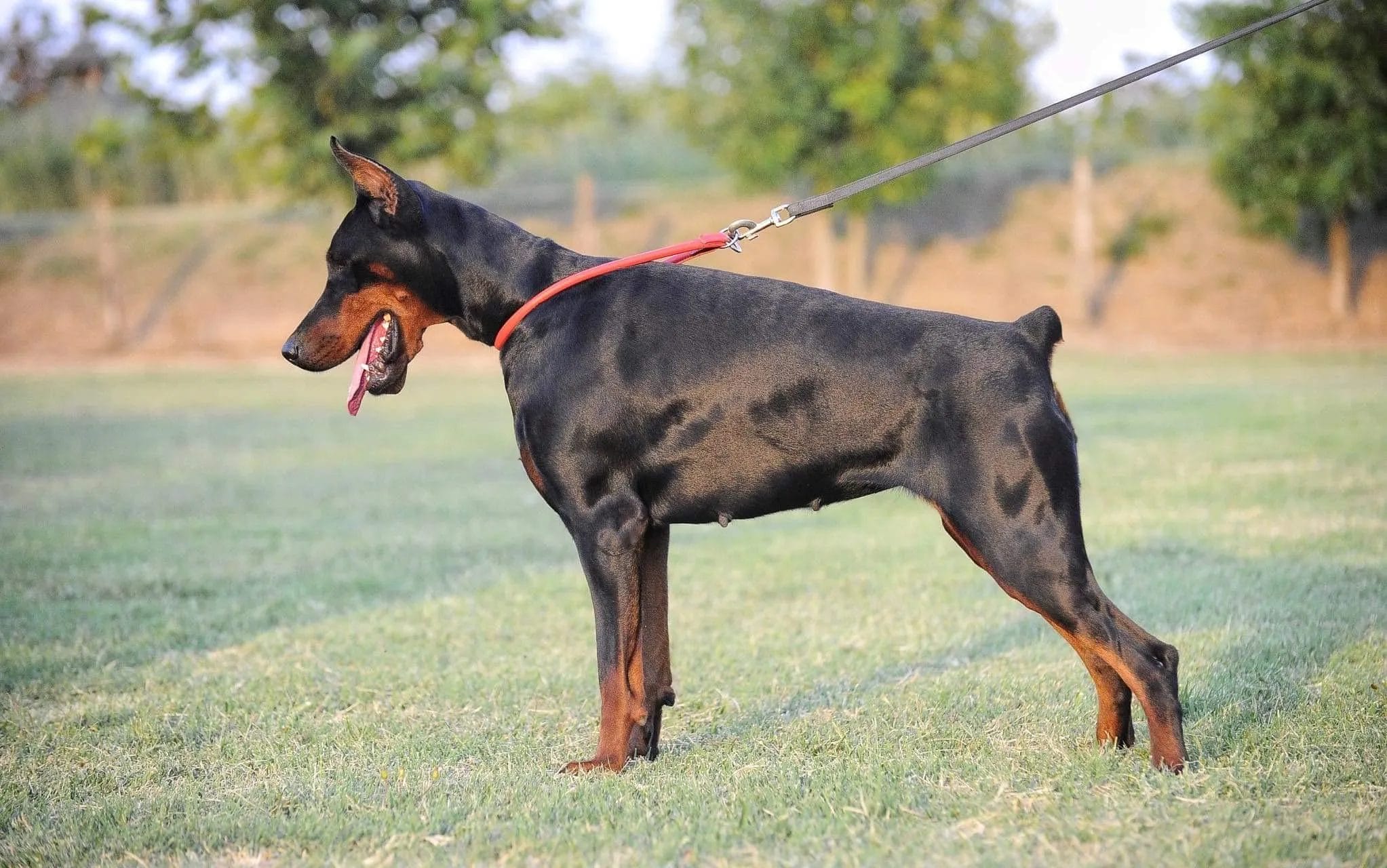
You can spot the difference pretty quickly. European Dobermans look like they hit the gym daily — bigger, thicker, and more muscular. American Dobermans? More like athletes with a clean, sharp look — lean, smooth, and kind of fancy.
EU male weight
88–99 lb
40–45 kg
US male weight
75–100 lb
34–45 kg
EU build
Stocky
Deeper chest, thicker bone
US build
Lean
Narrower, more refined
Both still have that classic Doberman look, sleek coat and those signature colors (black & rust, red & rust, blue & rust, fawn & rust).
Cropped ears and docked tails are still common in some places, but a lot of countries are starting to ban that, so you’ll see more natural-looking Dobies now.
Temperament: The Biggest Divide
If the physical differences are notable, the temperament differences are even more significant — and far more consequential for the average owner.
| European Doberman |
American Doberman
|
| Working Drive |
Family Companion
|
| High prey drive and sharp guarding instincts |
Softer temperament, more sensitive disposition
|
| More assertive and dominant with strangers |
Friendlier toward strangers and new environments
|
| Requires experienced handling and firm training |
Easier to manage for novice owners
|
| Excels in Schutzhund, IPO, and protection sports |
Bred primarily for show and companionship
|
| Reserved but deeply loyal to its pack |
Affectionate, velcro-dog attachment to family
|
| Not ideal for first-time dog owners |
Still alert, but less intensely protective
|
Training Requirements: Not Optional
Dobermans are seriously smart — like “figured-it-out-before-you-finished-saying-it” smart — but that also means they need real structure. If you do not give them clear rules, they will absolutely make up their own, and trust me, that gets messy fast.
European Dobermans especially need a handler who knows how to work with high-drive dogs. They can be stubborn in that very “don’t tell me what to do” way, so training has to be calm, consistent, and reward-based — not harsh or bossy.
A lot of owners use Schutzhund-style training because it gives the dog a job, and honestly, these dogs love having a purpose.
American Dobermans are usually a little easier for everyday obedience and family life. They still need training — no free passes here — but they’re often a better fit for people who are new to big, serious working breeds.
That said, both types need:
| Requirement | European Doberman |
American Doberman
|
| Daily exercise | 2+ hours, vigorous |
1–2 hours, moderate
|
| Mental stimulation | High — critical |
Moderate to high
|
| Socialization | Extensive from puppyhood |
Important, more forgiving
|
| Ideal owner | Experienced, active, consistent |
Novice to intermediate
|
| Best environment | Space, ideally rural or suburban |
Adapts to urban with proper exercise
|
Health Considerations
Here’s the real talk: Dobermans are amazing, but they’re not a “set it and forget it” kind of dog when it comes to health. The big one you have to know about is Dilated Cardiomyopathy (DCM). It’s a serious heart condition, and yeah — it shows up a lot in this breed. That’s why regular heart checks aren’t optional… they’re part of the deal.
They can also deal with stuff like von Willebrand’s disease (basically blood doesn’t clot properly) and Wobbler Syndrome (which affects their neck and movement). It sounds scary, but this is exactly why good breeders test their dogs before breeding.
European lines sometimes have stricter testing standards, but honestly, what matters most is your breeder doing the right checks — no shortcuts.
If you’re getting a Doberman, expect regular vet screenings like heart ultrasounds, rhythm monitoring, hip checks, and genetic testing. It’s part of loving the dog properly. Most Dobermans live around 10–13 years, and good care can make a huge difference.
Which Doberman Is Right for You?
The honest answer is that neither type is universally “better.” The right choice depends almost entirely on your lifestyle, experience, and goals as an owner.
Choose the European Doberman if
- You have previous experience with high-drive working breeds
- You want a dog for protection sports, Schutzhund, or professional working roles
- You lead an active lifestyle and can commit to 2+ hours of daily structured activity
- You want a more imposing physical presence and stronger natural guarding instinct
- You’re prepared to invest in ongoing training and potentially work with a professional trainer
Choose the American Doberman if
- You’re a first-time Doberman owner or relatively new to working breeds
- You want a devoted family companion who integrates easily into home life
- You’re interested in AKC conformation showing or obedience competition
- You live in an urban or suburban setting with moderate space
- You want a dog more tolerant of strangers and new environments
Finding a Reputable Breeder: Don’t Skip This Step
This is the part people rush… and regret later. A good breeder isn’t optional — it’s everything. Bad breeding can lead to dogs with serious health issues and unstable behavior, no matter which type you pick.
For European Dobermans, look for breeders whose dogs actually prove themselves through working titles and health tests. For American lines, the Doberman Pinscher Club of America is a solid place to find legit breeders who track health records.
Big red flags? No health testing, no pedigree, puppies always available (like it’s a supermarket), or vague answers when you ask questions. Good breeders usually have a waiting list — yeah, it’s annoying, but it’s also a sign you’re doing it right.
Conclusion: Two Dogs, One Legacy
At the end of the day, it’s the same dog with two different styles. European Dobermans are like full-time working athletes — intense, powerful, always ready for action. American Dobermans are more like loyal best friends who still have that protective edge but fit easier into everyday family life.
Neither is “better.” It’s about what fits you. If your lifestyle doesn’t match the dog, things get stressful fast — for both of you.
But get it right? You’re getting one of the most loyal, smart, ride-or-die dogs out there. The kind that sticks with you through everything. And honestly… that bond hits different.

- Catahoula Leopard Dog: The Complete Guide to Louisiana’s State Dog - August 12, 2026
- Can Cats Eat Watermelon? What Every Cat Owner Should Know - August 10, 2026
- Lapponian Herder: The Complete Guide to Finland’s Reindeer Dog - August 5, 2026
GIPHY App Key not set. Please check settings