

 Emily Walker
If you have ever looked into a Brussels Griffon’s big, serious little eyes, you already know the trick: this tiny dog acts like it runs the whole household.
With that scruffy beard, expressive face, and giant personality, Griffs are impossible not to love. But like any breed with a few quirks, they come with health issues owners should know about.
The good news is that Brussels Griffons often live 12–15 years, and many make it even farther with good care.
One 2024 UK study found an average lifespan of 13.3 years for the breed. In this guide, we will look at the most common health problems, the warning signs to watch for, and how to help your Griff live a long, happy life.
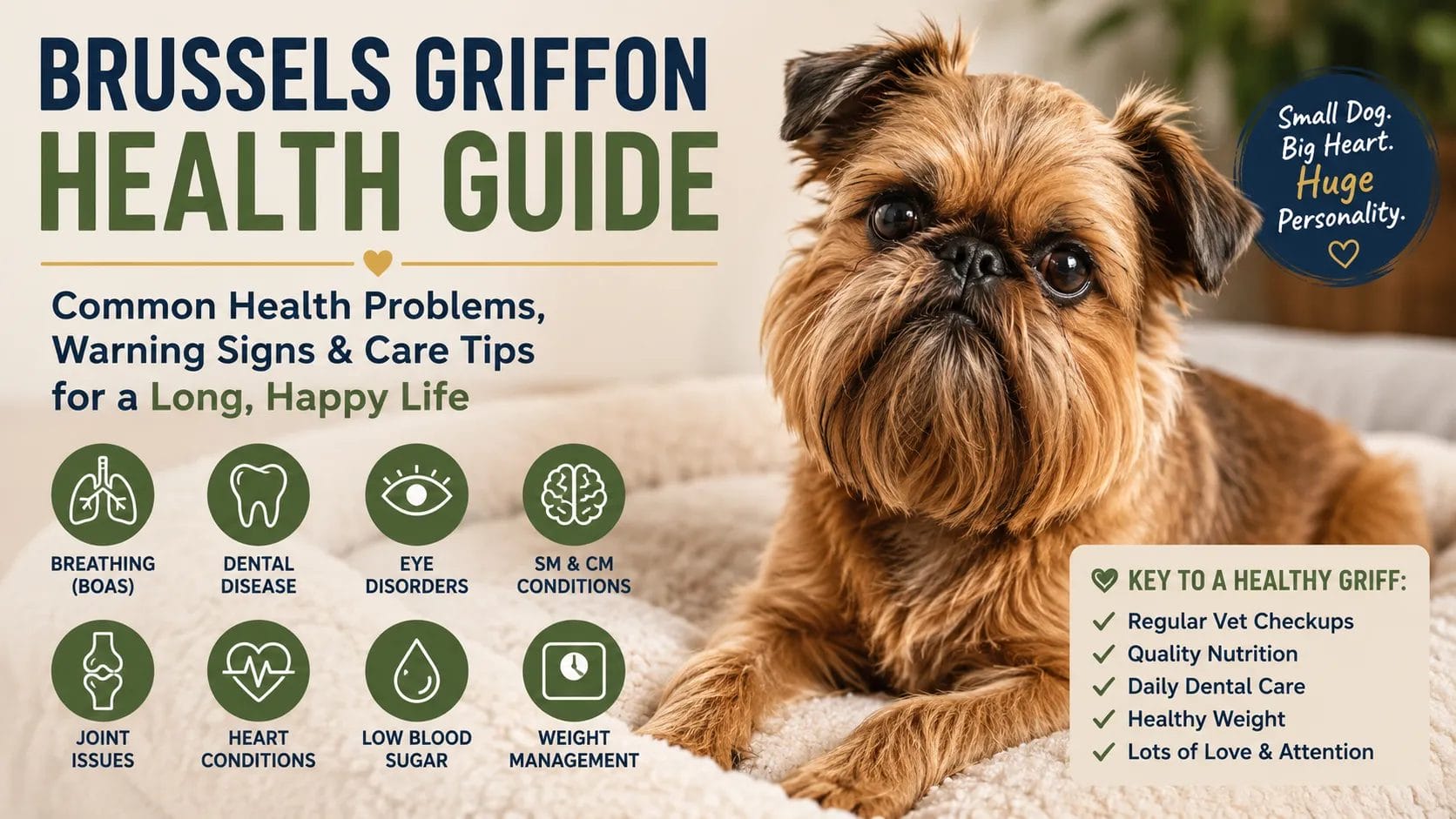
Why Brussels Griffons Are Prone to Specific Health Problems?
Before we get into the specific issues, here is the big reason Griffs can be a little fragile: they are built like tiny, dramatic little shadow kings.
They started out in Belgium as rat-catching dogs, and now they usually weigh just 6 to 15 pounds, with short noses and those giant, unforgettable eyes.
That cute flat face is also what causes a lot of the trouble. Brussels Griffons are brachycephalic, which is just a fancy way of saying “short-snouted.”
That can mean snoring, breathing issues, and having a rough time in hot, humid weather. It does not mean your Griff is doomed — it just means you need to stay alert and be the smart, caring human in charge.
1. Brachycephalic Obstructive Airway Syndrome (BOAS)
This is the biggest health issue to watch for in Brussels Griffons. Their adorable squished faces may look like they ran into a wall and came out even cuter, but that flat nose can make breathing much harder than it should be.
Some Griffs sound like tiny snoring grandpas even when they are just lying on the couch.
They may struggle to breathe during walks, especially on hot days, and severe cases can become emergencies very quickly.
Warning Signs to Watch For:
- Loud or difficult breathing, even while resting
- Snoring that seems unusually intense
- Coughing or gagging after exercise
- Bluish gums (this is an emergency)
- Heavy panting when the weather is not very hot
What You Can Do:
Treat your Griff like the little heat-sensitive royalty they are. Walk them during cooler parts of the day, keep exercise gentle, and never ignore breathing problems.
In more serious cases, surgery can open their airways and make a huge difference. For some dogs, it is life-changing.
2. Dental Disease
If there is one health problem almost every Brussels Griffon will face, it is dental disease. And yes, bad teeth are a much bigger deal than most people think.
Because Griffs have short, flat faces, all 42 adult teeth are packed into a very small mouth. Imagine trying to fit an entire class of students into a tiny elevator.
Things get crowded fast. Food and plaque get trapped, tartar builds up, and gum disease can follow.
Left untreated, dental disease causes pain, bad breath, and can even damage the heart, kidneys, and liver. It can shorten a dog’s life by one to three years.
Daily Dental Care Checklist:
- Brush your Griffon’s teeth every day with dog-safe toothpaste
- Schedule professional dental cleanings once a year
- Use vet-approved dental chews
- Ask your vet about dental water additives
- Start brushing when your Griff is still a puppy
A Griff with healthy teeth is happier, more comfortable, and much more likely to stick around for years of snuggles and mischief.
3. Eye Disorders
A Brussels Griffon’s giant cartoon eyes are part of what makes them so lovable — but those eyes can also be pretty delicate. Griffs are more likely to develop cataracts, progressive retinal atrophy (PRA), and eye injuries.
Cataracts can make the eyes look cloudy and may lead to vision loss, but surgery often helps. PRA is more serious because it slowly causes blindness over time.
Many dogs first struggle to see at night before losing more vision later on. The sad part? There is no cure yet. The good news is that dogs are surprisingly good at adapting when their humans support them.
And because those eyes stick out so much, even a bush or scratch during a walk can cause problems.
Protective Measures:
- Schedule yearly eye exams with your vet
- Ask breeders about genetic testing for PRA
- Keep your Griff away from thorny plants and rough brush
- Watch for redness, squinting, or pawing at the eyes
Their eyes may look dramatic enough to deserve their own movie close-up, but they need extra protection.
4. Syringomyelia (SM) and Chiari-Like Malformation (CM)
This is one of the most serious health problems in Brussels Griffons, and many owners have never even heard of it.
Basically, the skull can be too small for the brain, putting pressure on the nervous system. That pressure can create painful fluid pockets in the spinal cord.
Some dogs show strange behaviors that seem random at first — like scratching at the air near their neck, yelping when picked up, or suddenly acting grumpy because they are in pain.
Signs to Watch For:
- “Phantom scratching” near the neck or shoulder
- Pain when touched or picked up
- Weakness or wobbliness
- Sensitivity around the head or neck
- Sudden mood changes or irritability
If you notice these signs, a vet or veterinary neurologist should check them out. Some dogs only need pain management, while others may need surgery. Catching it early can make a huge difference.
5. Patellar Luxation and Hip Dysplasia
Brussels Griffons may be tiny, but their joints can be surprisingly fragile. One common problem is patellar luxation, which means the kneecap slips out of place.
If your Griff suddenly does a weird little bunny hop, skips a few steps, or limps, this could be the reason.
They can also develop hip dysplasia, where the hip joint does not fit together quite right. Thankfully, because Griffs are so small, many live comfortably with treatment and good care.
Preventive Strategies:
- Keep your Griff lean — extra weight is like making them carry a backpack full of bricks
- Give vet-approved omega-3 supplements for joint support
- Avoid too much jumping on and off furniture
- Protect those tiny legs like the delicate toothpicks they sometimes seem to be
A healthy weight and gentle exercise can save your little sidekick from years of discomfort.
6. Heart Conditions
As Brussels Griffons get older, their hearts deserve extra attention.
The most common issue is mitral valve disease, where one of the heart valves becomes worn out and starts leaking. Think of it like a door that no longer closes all the way. Over time, the heart has to work harder and harder.
The tricky part is that dogs are experts at hiding health problems. Your Griff may still act like the boss of the house while their heart is quietly struggling.
What You Can Do:
- Schedule yearly heart checkups, especially after age five
- Ask your vet about any heart murmurs
- Watch for coughing, tiring easily, or trouble breathing
Catching heart disease early can give your Griff many more happy years of cuddles, zoomies, and dramatic stares.
7. Hypoglycemia
Because Brussels Griffons are so tiny, their blood sugar can drop faster than you might expect — especially when they are puppies.
One minute they are bouncing around like caffeinated gremlins, and the next they may seem weak, sleepy, shaky, or even collapse.
The best defense is simple: feed small, regular meals and do not let young puppies go too long without eating.
If your Griff suddenly becomes limp or unusually tired, call your vet right away. With little dogs, low blood sugar can turn serious very quickly.
8. Obesity
A chubby Griff might look extra adorable, but those few extra pounds can put a huge strain on their tiny body.
Obesity can worsen joint problems, heart disease, back pain, and digestive issues. In other words, every extra treat adds weight to a body that is already working hard enough.
And yes, your Griff will absolutely stare at you like you have betrayed them if you say no to a snack. Stay strong.
Those dramatic eyes are powerful, but keeping your dog lean is one of the greatest gifts you can give them.
What You Can Do:
- Measure meals instead of guessing
- Limit treats and count them as part of daily calories
- Choose playtime and walks over extra snacks
A fit Griff is more energetic, more comfortable, and much more likely to enjoy a long life by your side.
Building a Preventive Health Plan for Your Brussels Griffon
Understanding potential health concerns is only half the equation — the other half is proactive management. Here’s a practical framework:
Annual and Routine Vet Care:
- Full physical exam at least once per year; twice yearly for senior dogs (7+)
- Dental exam and professional cleaning as recommended
- Eye and cardiac screening
- Parasite prevention year-round (heartworm, fleas, ticks)
At-Home Daily Habits:
- Brush teeth daily
- Check ears for redness, odor, or discharge
- Inspect eyes for cloudiness or redness
- Monitor weight and body condition score
- Keep 30–45 minutes of gentle, low-impact exercise per day
Breeder and Genetic Screening:
- When selecting a puppy, ask breeders for health certifications related to SM/CM, PRA, patellar luxation, and hip dysplasia
- Work with breeders who are transparent about the health history of parent dogs
Diet:
- Provide balanced nutrition enriched with omega-3 fatty acids for joint support.
- Choose small-breed formulas appropriate for their size and life stage
- Consider a vet-approved dental diet given their dental vulnerabilities
Final Thoughts: Love Your Griff, Know Your Griff
A Brussels Griffon is basically a tiny, dramatic best friend with a huge heart. Yes, they come with some real health risks, but most of them can be handled if you stay alert, feed them well, and keep up with vet visits.
The trick is simple: know what is normal for your Griff, spot problems early, and do the little daily stuff that adds up over time. Brush the teeth, watch the weight, notice the weird coughs or scratches, and never ignore those “something’s off” moments.
Love them hard, stay smart, and enjoy every ridiculous, velcro-dog second with your Griff.

- Catahoula Leopard Dog: The Complete Guide to Louisiana’s State Dog - August 12, 2026
- Can Cats Eat Watermelon? What Every Cat Owner Should Know - August 10, 2026
- Lapponian Herder: The Complete Guide to Finland’s Reindeer Dog - August 5, 2026
GIPHY App Key not set. Please check settings